The modern parenting playbook is being rewritten in real-time, moving from weathered advice columns and frantic group chats to the prompt bar of a large language model. For many new parents, the cognitive load of newborn care is an overwhelming torrent of contradictory information and sleep-deprived guesswork. It is into this fragile, high-stakes environment that Sam Altman is attempting to insert OpenAI, not merely as a search replacement, but as a fundamental pillar of the domestic experience. The vision is one where AI doesn't just answer questions about colic or sleep training, but actively manages the emotional and logistical choreography of a household.
The Blueprint for a Domestic AI Ecosystem
OpenAI has moved beyond theoretical discussions of AI in the home and entered a concrete execution phase. The company recently posted a job opening for a Product Manager specifically tasked with building trust-sensitive consumer experiences for parents and families. This is not a generalist role; the requirement for experience in trust-sensitive design indicates that OpenAI recognizes the family unit as a unique demographic with a significantly lower tolerance for error than the average enterprise user. In the context of parenting, a hallucination is not a minor inconvenience—it is a potential safety risk.
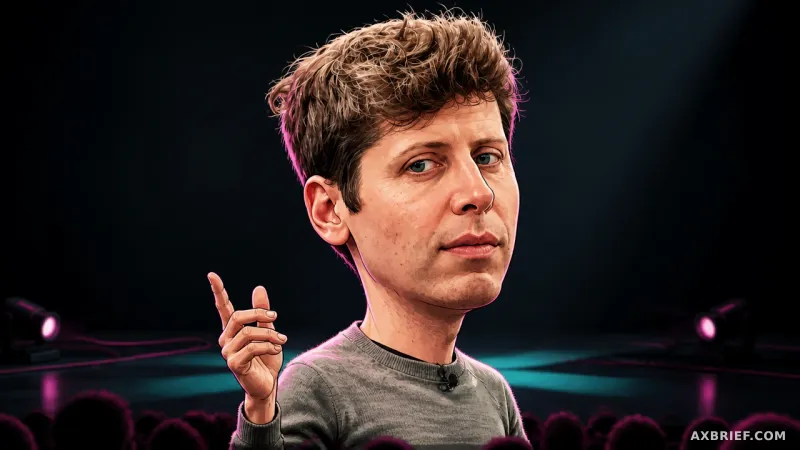
This strategic pivot toward the family market was highlighted during Sam Altman's appearance on The Tonight Show with Jimmy Fallon. Altman was candid about his own reliance on the technology, declaring that he cannot imagine the process of figuring out how to raise a newborn without the assistance of ChatGPT. While he acknowledged that previous generations managed to raise children successfully without silicon-based guidance, his admission serves as a manifesto for the integration of AI into the most intimate spheres of human life.
To illustrate the practical application of this vision, Altman pointed to a workflow utilizing ChatGPT Work, the company's collaboration tool for organizations. He proposed a scenario where the AI acts as a personalized curator for a child's daily routine. By connecting a family calendar and inputting a child's specific interests, the AI can synthesize a custom morning podcast for the school commute. This audio content would weave together the child's soccer schedule, upcoming birthdays, and relevant current events, transforming static data into an engaging, real-time narrative. This represents a shift from AI as a reactive chatbot to AI as a proactive agent that manages the flow of information within a family.
This drive toward efficiency mirrors the habits of other tech leaders. Satya Nadella, CEO of Microsoft, has already transitioned his own information consumption from linear to non-linear. Rather than listening to podcasts in their entirety during his morning drive, Nadella now uses AI chatbots to query the content, extracting core insights and summaries. By removing the time cost of sequential listening, Nadella has reclaimed the agency over his information intake—a model of efficiency that OpenAI now seeks to scale for the family unit.
The Friction Between Utility and Emotion
However, the gap between technical utility and emotional acceptance is proving to be a chasm. While Altman envisions a world of streamlined parenting, a significant portion of the public views the automation of parental attention as a fundamental violation of the parent-child bond. The tension peaked when Alex Hirsch, the creator of the animated series Gravity Falls, responded to Altman's suggestions with a simple, devastating question: Why not just talk to your children?
The digital response to Hirsch's critique was overwhelming, revealing a stark contrast in sentiment. Hirsch's post garnered approximately 122,000 likes and 9,000 reposts, dwarfing the engagement on Altman's original proposal, which saw 9,600 likes and 300 reposts. The fact that the counter-argument received twelve times the engagement suggests that for many, the value proposition of an AI-generated morning podcast is eclipsed by the perceived loss of human connection. The public is not merely questioning the tool, but the philosophy of outsourcing parental engagement to an algorithm.
This emotional resistance is compounded by severe legal and ethical liabilities. OpenAI is currently facing multiple lawsuits from parents who claim that the company's models played a role in the delusions or suicides of their loved ones. These cases highlight a terrifying edge case: when an AI moves from being a productivity tool to an emotional companion, the stakes shift from accuracy to existence. OpenAI has responded by implementing additional safety features for parents and refining how the model handles sensitive interactions, but these are technical patches for a deeply human problem.
The conflict here is a clash of paradigms. OpenAI is approaching parenting as an optimization problem—reducing the friction of scheduling and information gathering. The critics, and the litigants, are approaching it as a sacred relationship that cannot be optimized without being diminished. The hiring of a trust-sensitive PM is an admission that the current safety guardrails are insufficient for the domestic market. Trust in a family context is not about the absence of hallucinations; it is about the presence of empathy and accountability, two things a transformer-based architecture cannot inherently provide.
OpenAI's insistence on entering the family market despite this backlash indicates that they view the B2C expansion as an existential necessity for the company's growth. The success or failure of this specific PM hire will be the primary indicator of whether OpenAI can successfully transition from a tool used by developers and office workers to a trusted member of the modern household.