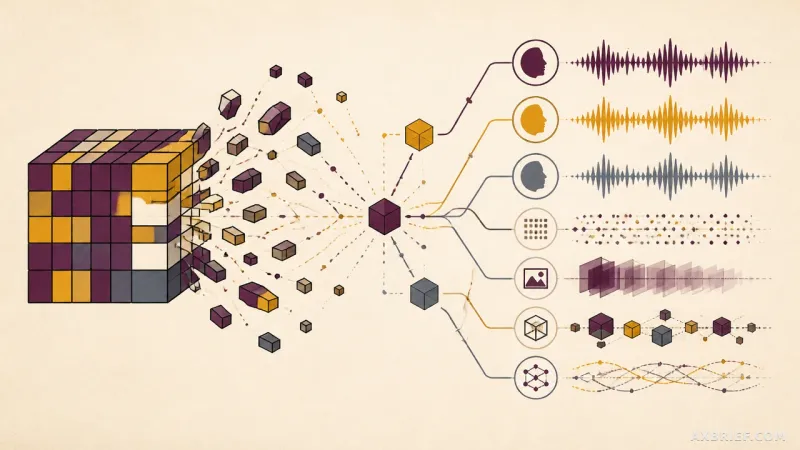
For most AI startups, the distance between a successful API call and a scalable business model is a chasm that swallows more companies than it elevates. The current industry trend sees thousands of developers integrating Large Language Models into their stacks, yet very few manage to translate raw model performance into a distinct competitive advantage or a sustainable user experience. The technical hurdle is no longer accessing the model, but rather architecting a product where the AI is not just a feature, but the core engine of value. This friction point is where most early-stage ventures stall, trapped in a cycle of endless prototyping without a clear path to commercialization.
The Architecture of 100 Percent Adoption
Google addressed this systemic gap through the 2026 Google for Startups Accelerator (GFSA), a program designed to move early-stage companies from technical experimentation to global market readiness. The results, unveiled during a Demo Day on July 15, 2026, at the Shilla Hotel in Seoul, were absolute: every single one of the 14 selected AI startups successfully integrated Gemini into their services. This 100% adoption rate represents a significant shift in how AI acceleration is measured, moving the goalpost from mere participation to full-scale technical implementation.
The demand for this pathway was evident in the application numbers, which saw a 50% increase compared to the previous year. From hundreds of applicants, Google selected 14 companies based on their potential for global growth and their ability to create synergy with Google's multimodal AI capabilities. Over a compressed 10-week period starting in April, these companies were pushed through a rigorous pipeline designed to eliminate the typical bottlenecks of AI deployment. The goal was not simply to provide API access, but to ensure that Gemini—which handles text, images, and audio simultaneously—was woven into the actual service architecture of each startup.
The scale of the support system was quantified by the sheer volume of interaction. The program delivered a total of 294 mentoring sessions, a number that underscores the intensity of the intervention. This support was broken down into 22 specialized educational seminars, 84 dedicated office hours for one-on-one troubleshooting, and 118 individual mentoring sessions. By focusing on these high-touch interactions, the GFSA ensured that no startup remained stuck on a specific technical bug or architectural flaw for more than a few days.
Moving Beyond the API Key
What separates this outcome from standard incubator programs is the rejection of the API-first mentality. Most accelerators provide a credit grant and a documentation link, assuming the startup can figure out the implementation. GFSA reversed this by starting with a three-day immersive bootcamp that lowered the technical barrier to entry before a single line of production code was written. Instead of general learning, the program utilized a strict OKR (Objectives and Key Results) framework, where each startup established specific, measurable technical indicators that tied directly to their business viability.
The curriculum was heavily weighted toward execution, with 73% of all seminars dedicated exclusively to AI-focused sessions. This depth was made possible by a hybrid mentorship pool that combined Google's internal global expertise with local industry veterans. Technical guidance came directly from specialists within Google DeepMind, Google Cloud, Google Ads, and Google Play. This was augmented by the strategic insights of prominent Korean AI leaders, including Nam Se-dong of VoyagerX, Shin Jung-gyu of Lableup, and Hong Seok-won of AttentionX. This combination allowed startups to diagnose architectural defects in real-time while simultaneously refining their go-to-market strategies.
This structured density created a pipeline where technical success triggered immediate business opportunities. For Artigen Space, Countdown AI, and Team Limited, the successful integration of Gemini led to invitations to Google I/O, the company's premier annual developer conference. This transition from a local accelerator to a global stage demonstrates that when the technical implementation is handled with precision, the business outcome follows naturally. Furthermore, the program leveraged a virtuous cycle with the Chang-gu program—a joint initiative between Google Play, the Ministry of SMEs and Startups, and the Korea Institute of Startup & Entrepreneurship Development—ensuring that companies already vetted for growth potential were funneled into the high-intensity AI training of GFSA.
The diversity of the applications shows the versatility of the multimodal approach. The cohort developed solutions spanning healthcare platforms utilizing complex medical data, immersive AR services, visual technology, and autonomous AI agent platforms. One notable example is CodeCrayon, which developed Soully, a content-tech service that integrates AI character technology to create new forms of digital interaction. By the time the Demo Day arrived, these companies were no longer presenting prototypes; they were presenting market-ready products that had already begun attracting external investment and global customers.
The ultimate takeaway from the 2026 cohort is that the gap between a foundation model and a successful business is not a lack of talent or a lack of API access, but a lack of structured support density. When 73% of the educational focus is placed on AI and nearly 300 mentoring sessions are deployed across 14 companies, the probability of failure drops precipitously. The 100% adoption rate is not a fluke of selection, but a result of a system that treats AI implementation as a rigorous engineering discipline rather than a creative experiment.
The bridge between a foundation model and a market-ready product is built not with API keys, but with the sheer density of structured technical mentorship.