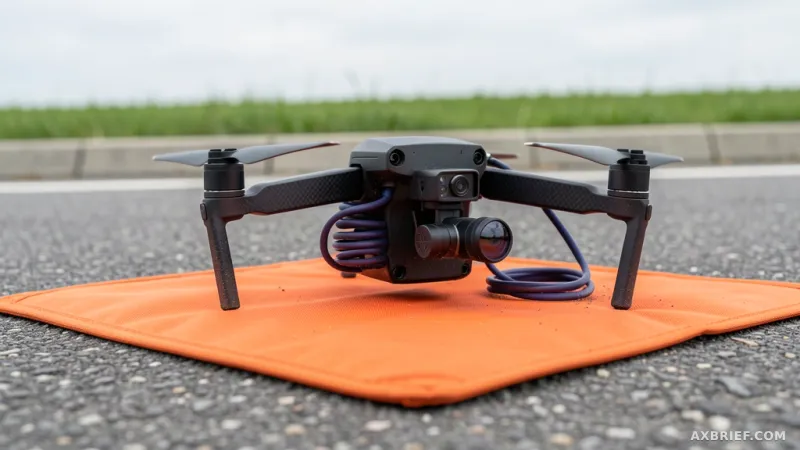
Emergency dispatchers are currently racing against a clock that rarely favors the responder. In the minutes it takes for a police cruiser or fire engine to navigate urban congestion, critical situational data is lost and the window for life-saving intervention narrows. The industry is now pivoting toward a model where the first responder is not a human in a vehicle, but a drone launched automatically upon a 911 call. This shift toward Drone as First Responder (DFR) operations is moving out of the experimental phase and into the realm of standardized public safety infrastructure.
The Blueprint for Large-Scale Aerial Security
To address the operational complexities of this transition, the DRONERESPONDERS Public Safety Summit and its accompanying program management training course have been announced. The event is scheduled to take place from September 1 to 3, 2026, at the Caesars Forum in Las Vegas. This summit marks the debut of a specialized manager training curriculum developed through a partnership between DRONERESPONDERS and the Airborne International Response Team (AIRT).
The curriculum is structured as a two-day intensive program designed to move beyond basic flight skills. A primary pillar of the event is a two-part session on Counter-UAS (C-UAS) strategies, specifically drawing from the operational experiences and lessons learned during the 2026 FIFA World Cup. By analyzing the challenges of securing one of the world's largest sporting events, the summit aims to provide a practical framework for neutralizing rogue drones in high-density environments. Detailed registration and program information are available via the official website.
From Hardware Acquisition to Systemic Governance
The critical tension in public safety aviation is no longer about which drone has the best camera or the longest battery life. Instead, the industry is facing a crisis of coordination. When multiple agencies deploy drones simultaneously over a single incident, the risk of mid-air collisions and frequency interference increases exponentially. This is where the concept of shared-airspace management becomes the central point of failure or success.
The DRONERESPONDERS summit addresses this by shifting the focus from the aircraft to the airspace. The training provides specific guidelines on reducing deployment times and managing complex routing to ensure that DFR units can support fire suppression or accident scene assessment without compromising safety. The insight here is a fundamental reversal in strategy: the goal is no longer to simply buy a drone, but to build a command-and-control system that can govern a fleet. By treating the drone as a node in a larger management system rather than a standalone tool, agencies can transition from fragmented equipment use to a scalable operational standard.
This evolution signals the end of the early adoption era for public safety drones, moving the industry toward a disciplined era of aerial governance.