The global AI investment landscape is currently undergoing a quiet but violent correction. For the past two years, the venture capital world was obsessed with the frontier, pouring billions into the massive compute clusters and foundational models that power the current LLM era. However, a new consensus is emerging among seasoned investors: the real commercial value is no longer in building the engine, but in designing the vehicle that actually takes the user somewhere. This shift is particularly evident in emerging markets where the gap between a generic global model and a localized, functional product remains vast.
The Mechanics of Fundamentum's Third Cycle
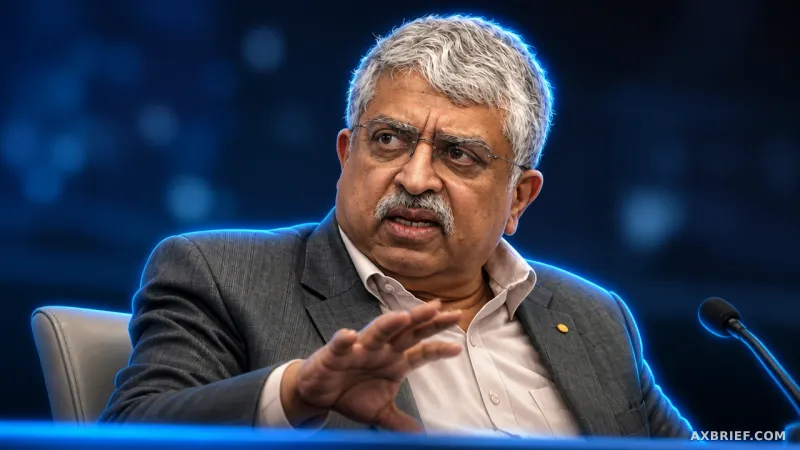
Fundamentum Partnership is leaning directly into this shift with the launch of its third fund, targeting approximately $200 million in total capital. This milestone coincides with a significant leadership transition at the firm. Nandan Nilekani, the co-founder of Infosys and a pivotal figure in India's digital infrastructure, is stepping down from his role as General Partner. While he is relinquishing the GP title, Nilekani is not exiting the ecosystem; he is transitioning into the role of an anchor investor for the third fund, where he will continue to provide strategic guidance and mentoring to portfolio companies.
The fund's deployment strategy is surgical. Rather than spreading capital thin, Fundamentum aims to support 8 to 10 early-stage startups focusing on consumer technology, fintech, and AI-driven products. The initial investment per company is pegged at approximately 10 billion rupees, which translates to roughly $10.5 million. The operational leadership of the fund now rests with a senior investment team including Sanjeev Aggarwal, Prateek Jain, Mayank Kachhwaha, and Sanjay Chaturvedi. The fundraising process is expected to conclude over the next 12 to 18 months, though the firm has already begun deploying a portion of its available capital.
The Pivot from Frontier Models to Vertical Application
To understand the significance of this fund, one must look at the structural evolution of the Indian venture capital ecosystem. Two decades ago, when firms like Helion Venture Partners were established, the Indian market was almost entirely dependent on US-based capital. Today, Fundamentum's third fund reflects a matured economy. The firm plans to source roughly half of its capital from overseas investors and the other half from domestic sources, including Indian institutions, family offices, and successful founders. This 50-50 split signals that India now possesses the internal capital depth to sustain its own innovation cycles without relying solely on Silicon Valley.
More critical, however, is the fund's specific thesis on artificial intelligence. Fundamentum is explicitly avoiding the high-cost, high-risk race to build frontier models. Instead, they are betting on the application layer. The firm believes the most significant AI opportunities in India lie in building specialized applications on top of existing global models, specifically targeting financial services, content creation, and vernacular consumer applications.
This strategy acknowledges a fundamental truth about the current AI era: a trillion-parameter model is a commodity, but a localized user experience is a moat. By focusing on vernacular applications, Fundamentum is targeting the linguistic and cultural nuances that global LLMs often miss. In a market as fragmented as India, the ability to integrate domain-specific knowledge with local language processing creates a vertical utility that a general-purpose model cannot replicate. This approach transforms AI from a technical curiosity into a tool for solving specific, regional pain points.
For developers and entrepreneurs, this represents a shift in what the market values. The prestige of training a model from scratch is being replaced by the prestige of achieving product-market fit in a vertical industry. The goal is no longer to compete with the compute power of Big Tech, but to out-execute them in the final mile of user delivery.
The battle for AI dominance is moving out of the data center and into the user interface.