The current era of generative AI has created a deceptive simplicity for the modern developer. For many, building an AI application has been reduced to a series of API calls to OpenAI or Anthropic, where the complexity of the model is hidden behind a prompt and a JSON response. This abstraction allows for rapid prototyping, but it creates a dangerous knowledge gap. As the industry moves from experimental wrappers to production-grade systems, the demand is shifting. The market no longer just needs people who can prompt a model; it needs engineers who can design, fine-tune, and deploy the underlying architecture. This shift marks the transition from the era of the AI consumer to the era of the AI architect.
The Curriculum for System-Level Machine Learning
To bridge this gap, a structured learning path is required that moves from high-level intuition to low-level implementation. The first step in this journey is establishing a conceptual map. Andrey Burkov provides this in The Hundred-Page Language Models Book. Designed for professionals who cannot afford to wade through thousand-page academic texts, this resource acts as a high-signal guide. It strips away the noise and focuses on the core mechanisms that allow modern language models to function. By providing a condensed theoretical framework, it prevents the fragmented learning that often occurs when developers rely solely on scattered blog posts or documentation snippets.
Once the conceptual map is in place, the challenge becomes visualizing the abstract mathematics of the Transformer. Jay Alammar and Maarten Grootendorst address this in Hands-On Large Language Models. Alammar is renowned for his visual essays that translate complex linear algebra into intuitive diagrams. This approach is critical because the Transformer architecture is fundamentally a spatial and mathematical operation. By visualizing how attention mechanisms weight different parts of an input sequence, learners can bridge the gap between a mathematical formula and the actual behavior of the model. This visual intuition serves as the foundation for all subsequent implementation work.
For those ready to move from observation to creation, Sebastian Raschka offers a rigorous path in Build a Large Language Model (From Scratch). This is where the abstraction of the API is completely removed. Raschka guides the developer through the manual construction of an LLM, starting with the most basic elements. This includes the process of tokenization, where raw text is broken into discrete units, and the subsequent conversion of those tokens into vectors. The reader is forced to implement the matrix multiplications that power the attention mechanism and write the actual code for the loss functions and optimization algorithms. By manually coding the gradient descent loop and observing how hyperparameter changes affect the loss curve in real-time, the engineer gains a level of technical intuition that is impossible to achieve through library calls alone.
Moving from a custom-built model to an industry-standard implementation requires familiarity with the open-source ecosystem. Natural Language Processing with Transformers, co-authored by engineers from Hugging Face, serves as the definitive manual for this stage. While Raschka teaches the how of the internal logic, the Hugging Face team teaches the how of the professional ecosystem. This resource focuses on the applied practitioner layer, demonstrating how to use the transformers library to implement, optimize, and scale models. It transforms theoretical knowledge into a standardized engineering process, ensuring that the resulting AI systems are not just functional, but are maintainable and scalable within a professional software environment.
The final stage of the pipeline is the transition from a trained model to a live product. Iusztin and Labonne provide the necessary operational framework in The LLM Engineering Handbook. This text focuses on the engineering gap that exists after a model is trained: the challenges of reliability, scalability, and maintainability. It provides a manual for managing inference costs, optimizing response latency, and ensuring system stability when scaling to thousands of concurrent users. This is the operational layer where the model meets the real world, and where the difference between a research project and a commercial product is decided.
The Shift from Black Box to Transparent System
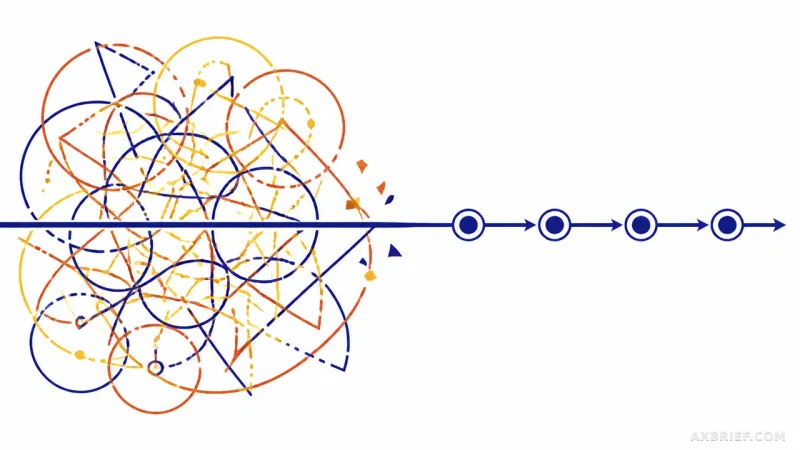
The progression through these resources reveals a fundamental tension in modern AI development: the trade-off between abstraction and control. For the past two years, the industry has leaned heavily toward abstraction. The API-first approach allowed for an explosion of AI apps, but it treated the LLM as a black box. When a black-box model hallucinates or fails in production, the only lever the developer has is to change the prompt. This is a fragile strategy that lacks predictability and precision.
By moving through the stages of conceptualization, visualization, implementation, and operation, the engineer replaces the black box with a transparent system. Understanding how weights are updated during fine-tuning or how memory is managed during inference allows an engineer to diagnose failures at the systemic level. The shift is not merely about learning new tools, but about adopting a new design philosophy. It is the difference between being a driver who knows how to steer a car and a mechanic who knows how to rebuild the engine. In a production environment, the ability to optimize the engine is what determines the stability and cost-efficiency of the service.
This journey creates a clear mapping for professional growth. Beginners start with Burkov or Alammar to build a mental model of the field. Those seeking deep technical mastery move to Raschka to understand the mathematical machinery. Practitioners looking to standardize their workflow turn to the Hugging Face guides, and those tasked with scaling products rely on the LLM Engineering Handbook. This sequence ensures that the developer does not just learn to use AI, but learns to engineer it.
This trajectory leads toward a future where the most valuable engineers are those who can navigate the entire stack from the first line of a custom loss function to the final deployment of a global inference cluster.