Imagine a Tuesday afternoon where a single multi-agent workflow triggers 400 API calls across four different services. For most developers, this isn't a productivity win; it is a race against a soft limit and a mounting bill of token costs. Beyond the financial drain, there is the lingering anxiety of data sovereignty—the knowledge that every proprietary function and internal architectural secret is being streamed to a third-party server for inference. When the API rate limit finally hits, the development flow doesn't just slow down; it crashes, leaving the engineer to wait for a quota reset while the momentum of the build vanishes.
The Architecture of Local Autonomy
Google DeepMind addressed this friction on April 2, 2026, with the release of Gemma 4, an open-weights model family designed to shift the center of gravity from the cloud to the local workstation. The standout performer in this family is the Gemma 4 26B MoE model, which has fundamentally rewritten the expectations for local agentic performance. In the $\tau^2$-bench test—a rigorous benchmark that measures a model's ability to call tools, execute multi-step workflows, and recover from errors—Gemma 4 26B MoE recorded a score of 86.4%. To put this in perspective, its predecessor, Gemma 3 27B, managed only 6.6% on the same benchmark. This is not a marginal improvement; it is a generational leap in reliability.
This reliability extends to raw code generation, where the 26B MoE variant secured a 77.1% score on LiveCodeBench v6. For a developer using an agent loop like Claude Code, these numbers translate to a critical reduction in hallucinations. Previous open-weights models often failed at the precise moment of tool invocation, generating malformed parameters that sent the agent into an infinite loop or caused the session to terminate. Gemma 4 stabilizes this process, ensuring that file reads, patch applications, and test executions flow without manual intervention.
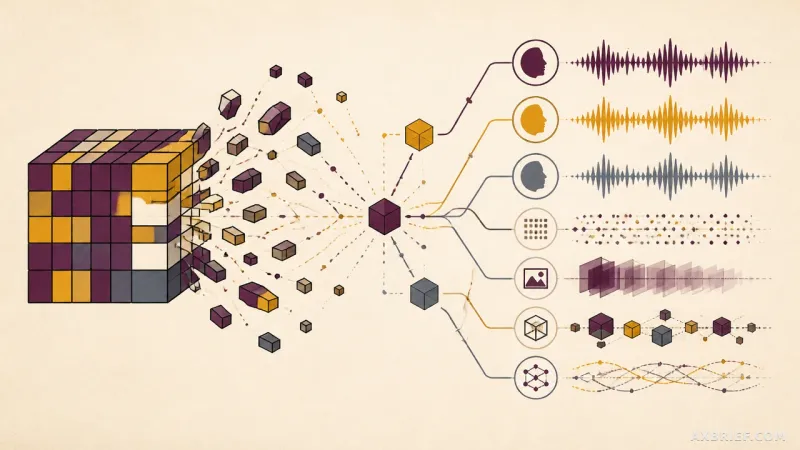
The efficiency of this performance stems from its Mixture-of-Experts (MoE) architecture. While the model is categorized as 26B, it employs 128 small experts, activating only 8 experts and one shared expert per token. This means the actual computational load during a forward pass involves only 3.8B parameters. The result is a model that delivers the reasoning quality of a 31B dense model but operates with the speed and memory footprint of a much smaller system. Furthermore, Google shifted the licensing to Apache 2.0 for the first time in the Gemma series. By removing the ambiguous custom licenses that previously triggered lengthy corporate legal reviews, Google has cleared the path for immediate integration into production pipelines and internal tooling.
The Implementation Gap and the Hybrid Strategy
Deploying Gemma 4 locally via Ollama is not a plug-and-play experience if one expects agentic behavior. The primary bottleneck is the default context window, which Ollama caps at 4K tokens. While 4K might suffice for a simple chat, it is a death sentence for a coding agent. Gemma 4 is designed to handle between 128K and 256K tokens. When an agent attempts to refactor a service class of 200 lines, a 4K limit causes the model to forget the beginning of the file by the time it reaches the end. This leads to the generation of incomplete code that often destroys dependent sub-modules.
To fix this, developers must create a custom Modelfile to explicitly expand the context window and tune inference parameters. Beyond the context, the connection between Claude Code and Ollama requires a specific configuration. The endpoint must be set to `http://localhost:11434`. A common mistake is appending the `/v1` path to mimic OpenAI compatibility; however, because Claude Code utilizes the Anthropic Messages API protocol, it must map directly to the root endpoint. Using `/v1` typically results in authentication errors or malformed response formats. For those managing multiple projects, creating a `.claude/settings.json` file allows for project-specific overrides, ensuring that the model tag and temperature are optimized for the specific complexity of the codebase.
This setup reveals a deeper truth about the current state of AI engineering: the local agent is not a total replacement for the cloud, but a specialized tool for a specific type of work. The local stack—Gemma 4, Ollama, and Claude Code—is peerless for the iterative loop of analyzing a Python module, writing a test suite, and fixing bugs based on execution results. It provides a physical air-gap for source code, eliminating the risk of leakage while removing the cost-per-token anxiety.
However, a divide remains. When the task shifts from refactoring a module to designing a complex architecture across hundreds of interconnected files, or when solving SWE-bench level repository issues, the massive scale of cloud models still holds the advantage. The real efficiency gain comes from a bifurcated strategy: delegating high-level system design to the cloud and offloading the daily grind of debugging and testing to the local workstation.
Engineering productivity is no longer about choosing the biggest model, but about matching the inference environment to the nature of the task.