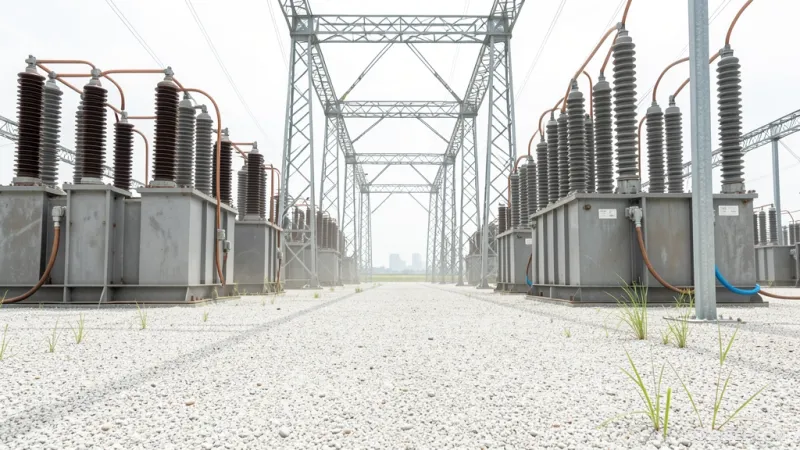
The most expensive line item in a modern AI data center budget is often the one that does not appear on a monthly invoice. It is the silent cost of the interconnection queue. For developers of massive AI factories and semiconductor fabs, the ability to build a state-of-the-art facility is irrelevant if the power grid remains a locked door. In recent years, the gap between completing construction and receiving the final approval to plug into the high-voltage grid has become a primary bottleneck for the AI revolution, turning multi-billion dollar investments into dormant warehouses of silicon and steel.
The 60-Day Fast Track for Large-Load Interconnection
To break this administrative deadlock, the Federal Energy Regulatory Commission (FERC) has overhauled the Large-load interconnection process. This regulatory shift is not a mere clerical update but a strategic move aligned with the national energy directives of U.S. Energy Secretary Chris Wright. The goal is to modernize how the grid absorbs massive surges in demand from AI factories, semiconductor manufacturing support systems, and advanced industrial plants. By streamlining the approval pipeline, FERC aims to expand the industrial base and accelerate the scaling of artificial intelligence infrastructure across the United States.
The centerpiece of this policy is a new accelerated pathway reserved for customers who can demonstrate operational flexibility. Under the new rules, facilities that can actively manage their power consumption—either by shifting heavy loads to off-peak hours or temporarily limiting usage during grid stress—can see their interconnection review periods slashed by up to 60 days. This creates a direct incentive for AI infrastructure architects to move away from static power profiles. Instead of requesting a flat, unwavering stream of gigawatts, developers must now prove they can act as a relief valve for the grid. The administrative reward for this technical flexibility is a significantly faster route to operational status, effectively turning grid-friendly design into a competitive advantage for speed-to-market.
The Paradox of Demand and the Cost of Power
Conventional wisdom suggests that a sudden spike in electricity demand leads to higher prices. However, the economics of the power grid operate on a different logic rooted in massive fixed costs. The infrastructure required to transmit and distribute power—the lines, transformers, and substations—represents a colossal capital investment that must be maintained regardless of how much electricity flows through it. When the interconnection queue is clogged and new large-scale users are kept waiting, these fixed costs are distributed among a smaller pool of existing customers, keeping retail rates artificially high.
Data from the Lawrence Berkeley National Laboratory (LBNL) provides a concrete mathematical basis for this phenomenon. Their research indicates a striking inverse correlation between demand growth and retail pricing: for every 10% increase in state-level electricity consumption, retail electricity rates drop by approximately 6 cents per kWh. When large-load facilities like AI factories are integrated efficiently into the grid, they provide the scale necessary to amortize the cost of infrastructure across a much larger volume of energy. In this model, the AI factory is not a burden on the community but a financial engine that lowers the monthly power bills for local households and small businesses.
Conversely, regions that fail to attract these high-demand anchors face a distinct economic risk. Without the influx of large-scale industrial users to share the burden of system maintenance, the cost of grid upkeep falls heavily on a shrinking base of residential consumers. This creates a precarious cycle where a lack of industrial growth leads directly to higher energy costs for the general public. Consequently, the rapid integration of AI factories is no longer just a corporate priority for tech giants; it is a regional economic imperative to ensure long-term energy affordability.
NVIDIA and the Rise of the Flexible Grid Asset
Recognizing that regulatory speed now depends on technical flexibility, NVIDIA is redefining the AI factory as a grid-interactive asset. Through a partnership with Emerald AI, NVIDIA is implementing a design philosophy where the AI factory functions as a Flexible Grid Asset. This marks a fundamental transition from the traditional role of a passive consumer to that of an active grid participant. Instead of simply drawing power, these facilities are engineered to sense the real-time health of the grid and adjust their behavior accordingly.
In practice, an NVIDIA-powered AI factory can modulate its consumption based on grid load. During periods of peak demand when the grid is unstable, the facility can automatically throttle non-critical compute tasks or shift heavy training workloads to a different time window. When there is a surplus of energy—such as during peak solar or wind production—the factory can ramp up its operations to absorb the excess. This capability effectively flattens the peak load curve, reducing the risk of system-wide overloads and increasing the overall utilization rate of the existing grid. By transforming the data center into a giant, programmable battery of demand, NVIDIA is aligning the needs of AI scaling with the requirements of grid stability.
This model of the flexible AI factory is slated for commercial deployment in the second half of this year. The timing is deliberate, coinciding with FERC's regulatory changes to ensure that new deployments can immediately qualify for the 60-day fast-track approval. For infrastructure designers, the priority has shifted from simply securing a specific amount of power to implementing the systemic controls required to prove flexibility. The ability to demonstrate this agility is now the primary determinant of both the timeline for activation and the long-term operational cost of the facility.
Power Infrastructure as the New Metric of National Competitiveness
The strategic importance of power access is already manifesting in a fierce competition between U.S. states. Regions such as North Dakota, Mississippi, Louisiana, and Virginia are utilizing a national on-ramp strategy to attract investment. In these areas, the relationship between the power provider and the AI developer has evolved. Large-load customers are no longer passive applicants waiting in a queue; they are becoming active partners in the design and construction of the transmission lines and substations they will eventually use. By co-investing in the grid's physical expansion, these companies are bypassing traditional bottlenecks and securing their own energy destiny.
This shift toward active infrastructure participation is becoming the new global standard for AI and semiconductor deployment. For practitioners designing AI data centers and semiconductor fabs, the lesson is clear: quantitative power procurement is no longer sufficient. The focus must move toward qualitative grid integration. Facilities that are designed as flexible assets—capable of shifting loads and supporting grid reliability—will be the only ones to secure rapid administrative approval and lower operating costs.
Ultimately, the success of an AI project is no longer decided solely by the number of GPUs in the cluster or the efficiency of the cooling system. It is decided by the facility's relationship with the grid. Those who treat power as a static utility will remain trapped in the interconnection queue, while those who design for flexibility will unlock the path to rapid scaling and economic efficiency.