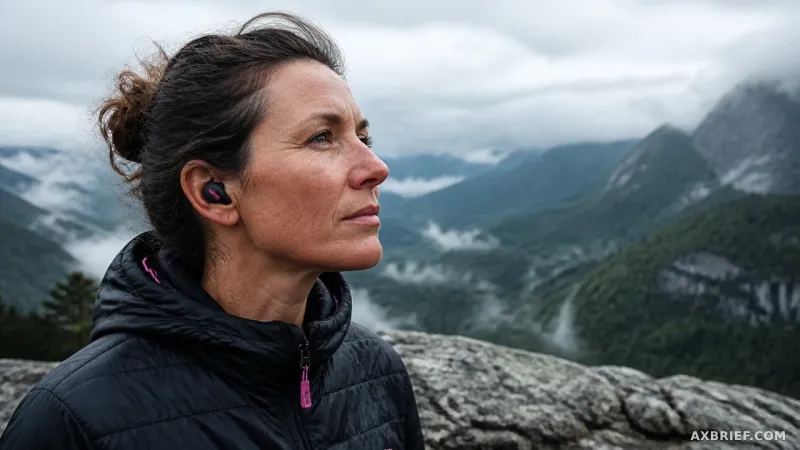
A traveler stands in the center of a historic plaza, clutching a smartphone. Every few steps, they stop, tilt their head down, and scroll through a digital list to match a numbered plaque on a wall with a paragraph of text on a screen. They are physically present in one of the world's most beautiful cities, yet their primary interaction is with a piece of glass and silicon. This friction—the constant oscillation between the physical world and a digital interface—has become the default experience of the modern tourist, turning exploration into a chore of data matching.
The Infrastructure of Invisible Guidance
Wrinkles enters this space as a location-based AI audio guide designed to eliminate the screen as a barrier. Available on both iOS and Android, the application leverages a massive global database comprising 1.3 million points of interest (POI) spanning 177 countries. Rather than requiring users to search for information or follow a manual map, the system recognizes the user's precise location and automatically triggers audio narratives that reveal the hidden histories and local stories of the surrounding environment. The goal is a seamless transition where the city itself becomes the interface.
From a business perspective, Wrinkles diverges from the traditional B2C subscription or pay-per-tour model. The service remains free for the end user, shifting the financial burden to a B2B supply chain. Museums, tourism boards, universities, and hotels can integrate their own content into the Wrinkles infrastructure, bypassing the prohibitive costs and time required to develop and maintain proprietary apps. These partners distribute and manage their content through the platform, transforming the app into a utility for institutional outreach.
Revenue is generated through a transaction-sharing model. Partner organizations can embed direct links within the audio experience for tour bookings, table reservations, or ticket purchases. When a user moves from listening to a story to making a purchase, Wrinkles shares the resulting transaction fee with the partner. This creates a direct pipeline from location-based curiosity to concrete economic consumption.
From Static Lists to Conversational Space
The catalyst for this approach was a moment of frustration at the British Museum in London. Co-founder David Stemler recalls a self-guided tour where he spent the majority of his visit looking down at his phone, matching numbers on the wall to a list on his screen. The result was a profound lack of immersion; he had visited the museum, but he had not actually seen the art. This realization shifted the product philosophy from providing information to facilitating presence. The core thesis of Wrinkles is that if a device knows where a user is, the location should speak to the user, rather than the user querying the device.
This shift transforms the AI from a narrator into an interactive companion. Unlike traditional audio guides that play a linear recording, Wrinkles allows for real-time, bidirectional interaction. A user learning about the construction of the Trevi Fountain can interrupt the narrative to ask specifically about the source of the water, receiving an immediate AI-generated answer based on the location's data. This mimics the experience of a human guide, where curiosity drives the flow of information rather than a pre-set script.
Beyond institutional data, the platform introduces a layer of personal and social curation. Users can attach their own photos, videos, or voice recordings to specific coordinates, effectively turning the global map into a spatial scrapbook of family memories. This social dimension extends to following creators or specific organizations, allowing users to save and share customized maps. By blending official historical data with personal narratives and AI interactivity, the platform evolves from a simple guide into a living archive of human experience.
This transition toward screenless interaction suggests a future where the digital layer of our world becomes entirely ambient, returning our gaze to the physical environment while keeping the sum of human knowledge accessible through sound.