The experience of talking to a modern voice AI often feels like a series of interrupted breaths. A user asks a question, and then comes the void—a heavy, artificial silence that lasts just long enough for the user to wonder if the connection dropped or if the system has frozen. In the world of human conversation, a gap of 200 to 300 milliseconds is a natural pause; however, in the realm of AI, we are currently fighting a battle against a Time to First Token (TTFT) that typically ranges from 0.8 to 3 seconds. When that delay crosses the 500-millisecond threshold, the illusion of intelligence vanishes, replaced by the friction of a machine processing data. If the lag hits 3 seconds, most users simply hang up.
The Engineering Shift from Sequential to Streaming Pipelines
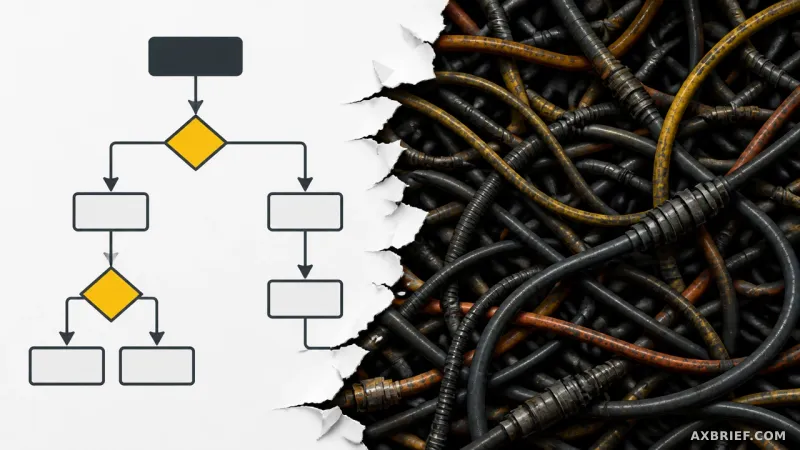
To understand why voice agents feel sluggish, one must look at the traditional sequential pattern of AI orchestration. In a linear pipeline, the system operates like an assembly line where each station must completely finish its task before passing the product to the next. First, the Speech-to-Text (STT) engine waits for the user to stop talking, transcribes the entire utterance into text, and then hands that complete string to the Large Language Model (LLM). The LLM then generates the entire response in its entirety before passing the full block of text to the Text-to-Speech (TTS) engine, which finally synthesizes the audio for the user. This vertical stacking of latency means that even if each individual model is fast, the cumulative wait time is devastating to the user experience.
Industry standards are shifting toward a streaming architecture to dismantle this bottleneck. Instead of waiting for completion, each stage of the pipeline now pushes data to the next as soon as a usable fragment is available. STT engines stream partial transcriptions to the LLM while the user is still speaking. The LLM, in turn, streams tokens to the TTS engine the moment they are generated. The TTS engine does not wait for the full paragraph; it begins synthesizing audio as soon as the first coherent segment is identified. By transforming a linear sequence into a parallel flow, the perceived latency is slashed, moving the system closer to the 0.83-second mark and maintaining the continuity of human dialogue.
Orchestrating the Flow: WebSockets, Silence, and Chunking
The real technical divergence occurs in how the system handles the transition between hearing and speaking. A production-grade streaming STT system does not use standard HTTP requests, which are too slow and blocking. Instead, it relies on WebSockets to maintain a persistent, bidirectional connection, transmitting audio in tiny chunks of approximately 50 milliseconds. This allows the server to process audio in real-time, but it introduces a new problem: the volatility of partial transcriptions. As a user speaks, the STT model constantly guesses the words, often correcting a previous guess as more context arrives.
In a professional implementation, such as the AssemblyAI Voice Agent API, the system distinguishes between Partial and Final events. While Partial events are useful for updating a UI in real-time to show the user the AI is listening, they are dangerous triggers for logic. If an LLM were to react to every Partial event, it would trigger a cascade of redundant API calls and fragmented responses. The architectural standard is to ignore the noise of partials and trigger the LLM or function calls only upon the arrival of a Final event. This ensures that the automation workflow is based on confirmed intent rather than a mid-sentence guess.
Developers can verify this event flow by implementing a basic streaming client:
python streaming_stt.pyHowever, relying solely on the STT's Final event for turn-taking is often too slow. This is where the twist in modern voice design appears: Turn Detection is decoupled from text transcription. Instead of analyzing what was said, the system analyzes the audio stream's silence patterns. By treating silence as a primary data signal rather than an absence of data, developers can fine-tune the rhythm of the conversation.
Two critical variables govern this behavior: `min_silence_ms` and `max_silence_ms`. Typically, `min_silence_ms` is set to 600ms. If a user pauses for 300ms to 500ms, the system enters a silence_pending state, assuming the user is simply thinking. The turn only ends if the silence exceeds the minimum threshold. Conversely, `max_silence_ms` acts as a safety hard-cap, usually set around 1500ms. Even if the semantic analysis suggests the sentence is incomplete, the system will force a response once this limit is hit to prevent the AI from appearing dead. This logic can be tested independently of the LLM:
python turn_detection.pyThe final piece of the latency puzzle is the TTS response strategy. To maximize responsiveness, the system employs sentence-level chunking. Rather than waiting for the LLM to finish its entire thought, the orchestrator monitors the token stream for sentence boundaries—such as periods, question marks, or exclamation points. As soon as the first complete sentence is formed, it is immediately dispatched to the TTS engine. While the user is listening to the first sentence, the LLM continues generating the rest of the response in the background, and the TTS prepares the subsequent chunks. This creates a seamless audio experience where the AI appears to be thinking and speaking simultaneously.
python sentence_chunker.pyThis granular control allows for domain-specific tuning that transforms the AI's personality. In healthcare settings, particularly for elderly care, the `max_silence_ms` might be pushed to 2500ms to accommodate slower speech patterns and breathing pauses, preventing the AI from rudely interrupting the user. In contrast, a high-efficiency business tool might drop the `min_silence_ms` to 300ms to create a snappy, rapid-fire interaction. By adjusting these thresholds, the system moves beyond mere technical processing and enters the realm of UX psychology, where the timing of the silence is just as important as the accuracy of the answer.
When the architecture shifts from waiting for completion to managing a continuous stream of fragments, the AI stops feeling like a chatbot with a voice and starts feeling like a present conversational partner.