A student sits before a complex algebra problem, stuck on the third step. They turn to an AI tutor for guidance. Within seconds, the AI provides a detailed, step-by-step walkthrough, neatly unfolding the logic and delivering the final answer. The student feels a surge of relief and copies the solution into their notebook. On the surface, the interaction is a success: the student has the correct answer, and the AI was helpful. In reality, the learning process has just been sabotaged. By removing the productive struggle—the mental friction required to actually synthesize new information—the AI has transitioned from a teacher to a crutch.
This paradox defines the current state of LLM-based education. Most large language models are RLHF-tuned to be as helpful as possible, a trait that serves them well as executive assistants but fails them as educators. In a classroom, the most effective intervention is often the one the teacher chooses not to make. The challenge for the next generation of EdTech is not making AI smarter, but making it know when to step back.
The Architecture of Educational Judgment
TutorMoments emerges as a specialized framework designed to quantify this delicate balance between assistance and autonomy. Rather than measuring whether an AI can provide the correct answer, TutorMoments measures the quality of the AI's decision to intervene. It treats tutoring as a series of judgment calls: should the model provide scaffolding to support a struggling student, or should it maintain rigor to force the student to think deeper?
The framework relies on the TutorMoments-Preview dataset, a rigorous collection of 462 math tutoring transcripts involving students from the second to seventh grades. To establish a ground truth, 27 professional mathematics teachers analyzed these transcripts and annotated over 1,500 key moments. These key moments are the critical junctures where a tutor must decide between offering a hint or demanding more effort from the learner.
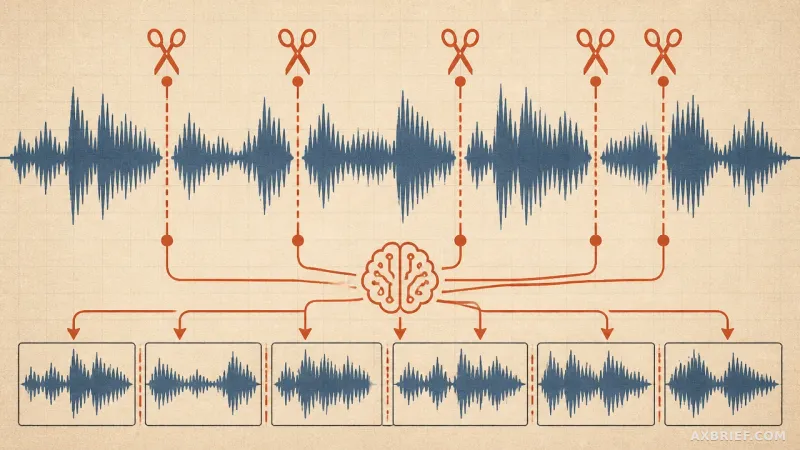
To evaluate a model, TutorMoments employs a replay pipeline. The system feeds a transcript into the LLM up to a specific key moment and then hands control over to the AI tutor. The AI then interacts with a simulated LLM student—an Oracle Student that knows the correct answer but follows a specific persona—for five subsequent turns. This simulation allows researchers to observe how the AI handles the immediate aftermath of a critical decision point in a controlled environment.
The performance of the AI is then measured across three primary metrics. The first is appropriate scaffolding, which tracks if the AI provides help when the student is genuinely stuck. The second is appropriate rigor, measuring if the AI pushes the student to work harder when they are capable of progress. The third is the prevention of over-scaffolding, which penalizes the AI for giving away the answer too early. These scores are represented as a value between 0 and 1, where a 0.50 in appropriate rigor indicates the model made the correct decision in half of the instances where rigor was required.
The Prompting Gap and the Poverty of Strategy
The results of the TutorMoments evaluation reveal a stark contrast between general-purpose AI and educationally-aware AI. When tested with a plain prompt—essentially telling the AI to be a good tutor—most models struggled to identify the correct moments for intervention. They defaulted to their native helpfulness, frequently over-scaffolding and robbing the student of the opportunity to learn.
However, the introduction of an evaluation-aware prompt changed the trajectory. By explicitly defining the trade-off between scaffolding and rigor, the models' ability to intervene appropriately rose significantly. In some instances, models using these specialized prompts outperformed human tutors on the specific metrics of the dataset. Human tutors recorded scores of 0.458 for appropriate scaffolding, 0.182 for appropriate rigor, and 0.496 for over-scaffolding prevention. The fact that AI could exceed these numbers is less a testament to AI superiority and more a reflection of the dataset's design, which specifically highlighted missed opportunities and errors made by the original human tutors.
Despite the numerical gains, a deeper analysis reveals a strategic void in AI tutoring. While the models became better at following the rules of intervention, they lacked diversity in how they achieved it. Human teachers employ a vast array of Socratic questioning, analogies, and psychological nudges. In contrast, the AI tutors relied heavily on a single, repetitive strategy: asking the student to explain their reasoning. This reliance on explanation-seeking is a mechanical approximation of tutoring rather than a flexible pedagogical strategy.
This suggests that while prompt engineering can raise the performance floor, the ceiling is determined by the model's underlying reasoning capabilities. Even the top-tier models struggle to implement complex educational instructions with the nuance of a human professional. The AI can follow the instruction to be rigorous, but it cannot yet intuitively sense the frustration or confidence of a student to calibrate that rigor in real-time.
For developers building AI tutors, the TutorMoments research suggests a fundamental shift in KPIs. The industry has long obsessed over accuracy and response speed, but for education, the key metric should be the appropriate intervention rate. Success should be measured by how often the AI successfully guides a student to an answer without providing the answer itself.
Practical implementation requires moving beyond the simulation. While the Oracle Student is useful for initial prompt optimization, real students exhibit erratic patterns, conceptual misunderstandings, and simple clerical errors that a simulated persona cannot fully replicate. The final stage of validation must involve a qualitative-quantitative loop where actual learning logs are sampled, and AI responses are compared against the judgment of expert teachers.
The goal is to move the AI tutor away from being a correct-answer machine and toward being a facilitator of cognitive effort. By codifying the constraints of restraint into the prompt and measuring the success of that restraint, developers can ensure that AI enhances the learning process rather than replacing it.
The true value of an AI tutor is measured not by how quickly it solves a problem, but by how effectively it empowers the student to solve it alone.