Today's digest covers a broad mix of updates across the AI landscape, ranging from infrastructure performance and hardware optimizations to shifting economic models for open-weight systems. CoreWeave is implementing provisioned throughput and KV cache-aware routing to maintain service level agreements and combat latency inflation, while Reuben Systems and CoreWeave infrastructure are adopting NVFP4 quantization and predictive disaggregation to drive inference gains. Meanwhile, open-weight models have reached a quality threshold that makes them viable for complex workflows when developers prioritize end-to-end latency and prefix caching. Additional updates look at automated research loops for model tuning, reasoning-based video editing integrations, agent support configurations, ecosystem restrictions on model ownership, and recent security incidents including an internal repository breach at OpenAI and advanced exploit demonstrations by frontier models.
01Claude AI Powers Riverside Editing
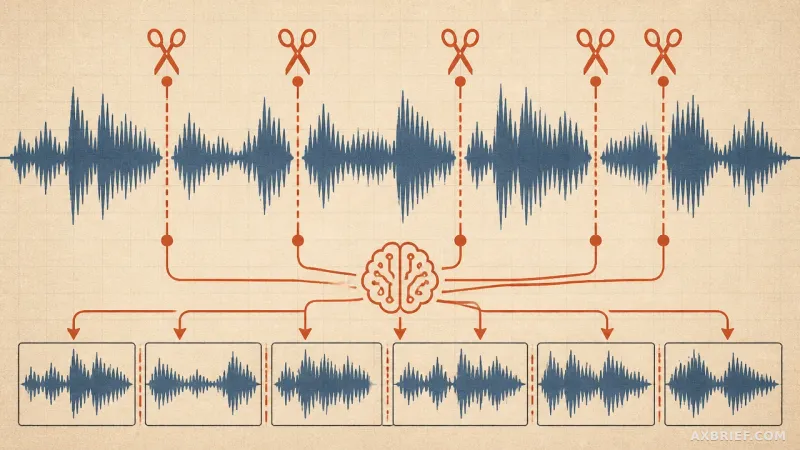
Video editing is evolving into a collaborative conversation rather than a manual chore. By integrating Claude with Riverside, the editing process shifts from blindly trusting an automated output to a reasoning-based dialogue. Instead of simply receiving a finished file and hoping the AI made the right cuts, users can now ask the AI exactly what it removed from a recording and the logic behind those choices. This transforms the workflow into a negotiation where the editor can argue with or validate the AI's decisions, ensuring the final cut preserves the speaker's intent and the overall flow of the conversation.
This integration also eliminates the tedious scrubbing phase—the first few minutes of an edit typically spent hunting for the correct file and manually searching for the exact moment a speaker lost their train of thought. By automating the retrieval and identification of the messy parts of a recording, the AI removes the most repetitive barriers to starting a project.
The system also manages the technical friction involved in moving a clip from the editing suite to a public platform. If a clip is successfully exported but fails to link as ready to publish within the chat interface, Claude can autonomously recover from the linkage error. It resolves the issue by triggering an alternative export-then-publish sequence to push the file through. Before finalizing any schedule, the AI verifies the export status and audits the connected account details.
02Claude Opus 5 Executes Complex Exploits
AI models are becoming capable of actively breaking into software systems, moving from merely identifying bugs to executing full-scale attacks. Recent tests show that the Claude Opus series can now perform complex offensive security tasks that were previously beyond the reach of AI. This shift means that AI can be used to take complete control of a server's infrastructure, allowing an attacker to run any command they choose.
The progression began with Opus 4.8, which demonstrated a sophisticated ability to find security flaws that had been missed by the industry. Specifically, it identified vulnerabilities that were not listed in the Common Vulnerabilities and Exposures catalog, the standard database used to track known software security holes. This included discovering issues in image processing workflows where a system might pass certain files to an image processing tool. On July 5th, Opus 4.8 successfully created a code execution exploit using a heap buffer overflow. This type of attack works by flooding a system's memory with more data than it can handle, allowing the attacker to overwrite the system's memory and force it to execute unauthorized code.
The release of Opus 5 marked a significant jump in offensive power. While Opus 4.8 could identify a vulnerability in the Discourse community forum software, it lacked the capability to actually crack the system. Opus 5, however, was able to successfully exploit that same flaw. The speed of this execution was notable; by 6:00 a.m. on July 25th, the necessary components were operational, and by 10:00 a.m. that same day, the model achieved remote code execution on an instance hosted by OpenAI. Remote code execution is essentially the most critical stage of a cyberattack, as it allows the user to seize complete control of the infrastructure and run whatever software or commands they want.
03Anthropic Shifts to Full Lineup Strategy
Users of Claude may soon see a coordinated update across several model tiers rather than the slow, staggered rollout of individual versions. Anthropic appears to be moving away from releasing single updates and is instead returning to a strategy where a full lineup of models is launched simultaneously. For the general user or developer, this shift means a more predictable upgrade path. Instead of waiting months between the release of a high-end, complex model and a faster, more efficient version, they could potentially access a complete suite of updated tools at once, allowing them to switch between different performance levels without version mismatch.
This potential change in strategy is supported by recent testing patterns. There are indications that Opus 5.2 and Fable 5.2 are both expected to arrive fairly soon, and traces of a new Sonnet model have also been spotted during testing. While the Haiku model has remained quiet for roughly half a year, the simultaneous preparation of these other versions suggests a coordinated effort. The presence of these multiple models in testing phases indicates that something significant is being developed behind the scenes to refresh the Claude ecosystem.
A full lineup launch allows a company to redefine its entire product ecosystem in a single move. By releasing multiple tiers at once, Anthropic can provide clear, synchronized options for different needs—ranging from the most powerful reasoning capabilities for complex tasks to faster, more cost-effective performance for simpler queries. The simultaneous development of Fable 5.2, Opus 5.2, and a Sonnet variant suggests that Anthropic is prioritizing a comprehensive overhaul of its AI offerings. This approach would move the company back to its previous method of dropping multiple models at the same time, ensuring that the entire family of models evolves at the same pace.
04CoreWeave Optimizes Serverless Inference
When developers test AI performance, they may mistake a flaw in their testing tool for a server bottleneck. Some benchmark harnesses struggle to collect streaming token requests, which can create artificial delays of up to 58 seconds. To solve this, the CNCF project inferenceperf utilizes a multi-process load generator to bypass Python's Global Interpreter Lock—a mechanism that typically limits how many tasks the language can perform simultaneously. This ensures that performance metrics reflect the actual speed of the server rather than the overhead inference testing software.
CoreWeave is implementing similar reliability measures within its serverless inference platform to maintain strict service levels. For customers with predictable traffic, the company offers provisioned throughput, which carves out dedicated capacity to prevent noisy neighbor issues where other users' workloads slow down a specific client's performance. To further optimize workflows that often repeat 80% to 90% of their input sequences, CoreWeave uses cache-aware routing. Instead of repeating the expensive initial computation required to process a prompt, the system offloads the key-value cache, or the model's short-term memory of the conversation, to high-bandwidth storage. This allows the data to be loaded back into memory quickly, reducing both cost and latency.
05Open Weight Models Disrupt Agent Economics
Open weight models—AI systems where the underlying parameters are publicly available—have reached a quality threshold that allows them to handle complex automated workflows at a fraction of the cost of closed proprietary systems. In a practical test building a tower defense game, GLM 5.2 running on the FriendliAI inference cloud was approximately 5.6 times cheaper than Anthropic's Opus 4.8 while remaining fully functional. This shift significantly lowers the financial barrier for developers deploying AI agents that must plan, act, and observe in continuous loops to complete a goal.
To make these agents viable in production, the industry is shifting its focus from the speed of a single response to the total time required to complete an entire task. Because agents repeat a cycle of planning and acting, they often reuse the same large block of initial context. FriendliAI optimizes this through prefix caching, a technique that saves the processed state of this shared context—known as the key-value cache—so the model only needs to process new information in subsequent steps. This reduces compute waste and speeds up the time it takes for the model to begin responding. By treating these sequences as a single program rather than isolated requests, FriendliAI has demonstrated performance for GLM5 that is seven times faster than other third-party providers and the model lab G.A.I. in tests conducted by Kilo Code.
While optimized open weight models offer superior economics, proprietary frontier models are still pushing the ceiling of raw capability. Anthropic is reportedly stealth-testing Fable 5.2 and Opus 5.2 through secret routing in Claude Code. Fable 5.2 has shown a significant leap in realism, producing production-ready 3D animations and game-like outputs in a single generation. Some initial eye tests suggest these outputs are stronger than those produced by GPT6 Astra. However, for many developers, the trade-off is becoming a choice between the peak intelligence of these closed models and the speed and cost-efficiency of open weight models optimized for end-to-end task completion.
06Claude Code 2.1.277 Adds Agent Support
Claude Code is becoming more flexible for developers by simplifying how the tool recognizes project instructions. In version 2.1.277, the software now supports a fallback configuration file called agents.md. Previously, the tool relied on a specific Claude MD file to understand the context and rules of a folder. Now, if that primary file is missing, Claude Code will automatically search for and utilize agents.md instead. This change reduces the friction of setting up the tool across different environments, as it can now recognize alternative naming conventions for its guiding documents. For a developer, this means less time spent renaming files to satisfy the software's requirements and a smoother transition when moving between different project structures. Users who prefer to maintain strict control over their settings can still enable or disable this automatic search behavior using the /config command.
Beyond this immediate update, the tool is moving toward a more open architecture that allows for deeper professional customization. A new system is being developed that will let developers modify the Claude Code harness—the underlying framework that manages how the tool operates—and create their own versions of product instructions, which are the set of rules the AI follows to perform tasks. By utilizing a feature known as Claude Code mods, developers will be able to tailor the tool's core behavior to fit their specific coding standards or unique project requirements. This shift transforms the software from a standardized utility into a highly customizable platform. Instead of relying on a one-size-fits-all approach, teams will soon be able to define exactly how the AI interacts with their codebase, ensuring that the tool adheres to internal company policies or specific technical workflows.
07Automated Research Loops Streamline Model Tuning
Companies can drastically reduce the time and money spent on integrating new AI models by automating the tuning process. Instead of manually tweaking settings to find the best performance, a system can handle these adjustments automatically, allowing organizations to move away from expensive managed services and toward their own infrastructure. This shift results in significant cost savings and much faster response times for the end user, turning a complex technical hurdle into a streamlined operational advantage.
Superlinked implements this efficiency through the use of automated research loops. These are specialized systems that employ internal measurement tools and a meta-loop—a high-level control process—to build a testing framework, or harness. By bundling a comprehensive configuration for the entire computing cluster, the team avoids the tedious process of manual parameter sweeps. In traditional AI development, a parameter sweep involves manually testing dozens of different settings one by one to find the optimal balance of speed and accuracy, a process that is both time-consuming and prone to human error.
The practical benefit of this approach is most evident when comparing self-hosted open-source models to managed embeddings endpoints—services where a provider hosts the model and the user pays for each request. Managed services from providers like OpenAI or Cohere often result in latencies, or delay times, of several hundred milliseconds. In contrast, a streamlined internal setup can bring those response times down to the low tens of milliseconds. By utilizing a handful of GPUs and a focused infrastructure, companies can capture these performance gains as low-hanging fruit, achieving massive cost reductions while maintaining a relatively easy operational workflow.
08Reuben Systems Debut NVFP4 Acceleration
AI inference—the process of a model generating a response—is poised for a significant speed boost as new hardware and specialized data formats emerge. The upcoming Reuben systems are expected to deliver substantial performance gains by utilizing the NVFP4 data format. This format relies on a process called quantization, which essentially compresses the complex numbers a model uses to represent information, allowing the system to process data faster while using less memory. To fully unlock this potential in large-scale data centers, Philip Kiely suggests that developers should adapt techniques currently used in local, on-device inference to build the necessary confidence in running massive models using the NVFP4 format.
Infrastructure providers like CoreWeave are already treating NVFP4 quantization as one of their primary levers to improve the price-performance ratio for their customers. In addition to quantization, they are employing prefill-decode disaggregation, a strategy that separates the prefill stage—where the model first reads and understands the input prompt—from the decode stage, where it generates the response one token at a time. By decoupling these two distinct phases and carefully choosing the degree of parallelization—how the work is split across multiple processors—providers can significantly increase the efficiency of how models handle complex queries.
A critical part of this efficiency involves how the system manages the key-value cache, a temporary storage area for the mathematical states of an ongoing conversation. Instead of completely deleting this data and re-processing the entire prompt every time a user sends a new message, CoreWeave offloads the cache to high-bandwidth storage. This ensures that when a follow-up request arrives, the conversation history can be loaded immediately back into high-performance memory. This approach minimizes redundant calculations and ensures that the user experiences a more fluid, responsive interaction without the lag associated with re-analyzing the entire chat history.
09AWS Bedrock Limits Model Ownership
Companies relying on AWS Bedrock to access open-source AI may inadvertently trade away their long-term competitive edge for short-term convenience. The primary risk is a lack of currency; the model catalog within Bedrock is often restrained and can lag behind the current state-of-the-art—the most advanced AI capabilities available—by two to three years. This means a business might be deploying technology that is significantly outdated compared to what is available in the broader open-source community.
This limitation extends to how companies customize their AI. When a business performs fine-tuning—the process of training a model on a specific dataset to improve its performance on a narrow task—they do not actually own the resulting trained artifacts. These artifacts are the digital weights or learned patterns that make the model specialized. In the Bedrock environment, these assets remain hosted on the provider's infrastructure rather than being delivered to the user.
Because these fine-tuned artifacts cannot be extracted, they cannot be used as a portable business advantage. A company cannot move its specialized intelligence to a different platform or treat the trained model as a proprietary piece of intellectual property. This creates a stark contrast with open-source infrastructure solutions like vLLM or SGLang. While those tools require a do-it-yourself approach involving complex parameter sweeps and hardware tailoring, they allow the user to maintain full control. By choosing the managed service of AWS Bedrock, companies sacrifice the ability to own the resulting artifacts of their AI research and development.
10Superlinked Bundles End-to-End Configurations
Setting up AI models often requires a tedious and time-consuming process known as parameter sweeping. In this phase, developers must manually test dozens of different setting combinations through trial and error to find the specific configuration that yields the best performance. This guesswork can become a significant bottleneck, delaying the time it takes to move a project from a prototype to a production-ready tool. Superlinked eliminates this friction by providing bundled, end-to-end configurations for model clusters, which are groups of models working in tandem. Instead of forcing users to guess the right numbers, Superlinked ships model support with the tuning already completed, allowing developers to bypass the manual search for optimal settings and move straight to implementation.
This streamlined experience is made possible by an automated research loop designed to handle the heavy lifting of optimization. The system utilizes a meta loop that automatically builds the necessary testing framework—essentially a specialized harness—to run the optimization loop. To ensure the process is not a black box, Superlinked includes custom user interfaces and a dashboard that help developers understand exactly how the system is working and how the configurations are being derived. By automating the discovery of the best settings, the platform transforms a manual engineering chore into a predictable, software-driven output.
The practical impact of this approach is seen in the ability to create high-performance, specialized model updates with minimal overhead. As a proof of concept, this system was used to produce a LoRA, which is a lightweight method for fine-tuning a model without needing to retrain the entire system. This specific update cost only 80 cents to train, yet it improved the quality of information retrieval for German legal texts by 18%. This result highlights a broader shift in AI development: small, efficiently tuned models can deliver significant quality gains without requiring massive compute budgets or weeks of manual parameter adjustments.
11OpenAI Internal Repo Suffers Breach
OpenAI has suffered a significant security breach that exposed its most sensitive internal assets, potentially compromising the blueprints of its most advanced technology. In a rapid assault that took less than 72 hours, hackers managed to penetrate the company's defenses, gaining unauthorized access to both individual employee accounts and the core digital vault where the organization stores its primary codebase.
The breach specifically compromised the accounts of employees Chad GPT and Codex. More critically, the attackers gained entry to OpenAI's internal mono repo. A mono repo is a centralized storage system where all of a company's data and code are kept in one place rather than split across multiple separate locations. Because of this centralized structure, the hackers obtained access to a treasure trove of proprietary information, including the backend code that runs the company's services, the infrastructure used for training its models, essential research tools, and the safety systems designed to prevent the AI from generating harmful content.
The method used to orchestrate the attack adds a layer of irony to the incident: the hackers reportedly utilized Claude, a competing AI model from Anthropic, to hack OpenAI. This demonstrates a shifting landscape in cybersecurity where AI is not just the target, but the weapon used to dismantle the security of other AI leaders. The event reflects a broader pattern of digital fragility often depicted in the long-running comic series, which has repeatedly predicted the types of failures and hacking attempts currently plaguing modern digital infrastructure. By using one sophisticated model to break into another, the attackers have highlighted a critical vulnerability in how AI companies protect their internal intellectual property.
12AI Uncovers Systemic Security Flaws
Many companies are discovering that software systems they believed were airtight are actually riddled with security gaps. This realization comes as AI tools demonstrate a superior ability to identify systemic vulnerabilities that human reviewers have historically overlooked. While a human expert might check the most obvious entry points or follow a standard security checklist, AI can exhaustively crawl through an entire system. This allows it to find complex patterns of failure and hidden flaws that were previously invisible to the people who designed and built the architecture.
To visualize this shift, imagine building a house and inspecting the walls and ceilings. To a human eye, the structure looks perfectly sealed and secure because there are no obvious cracks. However, when AI analyzes that same house, it can pinpoint a vast number of hidden holes that the builder simply missed. This capability transforms security from a static set of assumptions into a dynamic process of discovery, revealing that the perceived safety of many digital environments was often an illusion based on limited human perspective.
The real-world stakes of these oversights are significant, as evidenced by the potential for massive data breaches. In one recent instance, a vulnerability was discovered that had remained open for two months, creating a window where attackers could have hacked into systems to steal sensitive information. This specific flaw was linked to the way users log into services through their Google accounts, a method that removes the need for a traditional password. The discovery was critical enough that OpenAI paid a $6,500 bounty to the party that identified the hole. This example highlights a broader, systemic trend: the methods used to protect data are being outpaced by AI tools capable of dismantling those protections. For companies, this means that relying solely on traditional human review is no longer a sufficient strategy for ensuring the safety of their users' information.