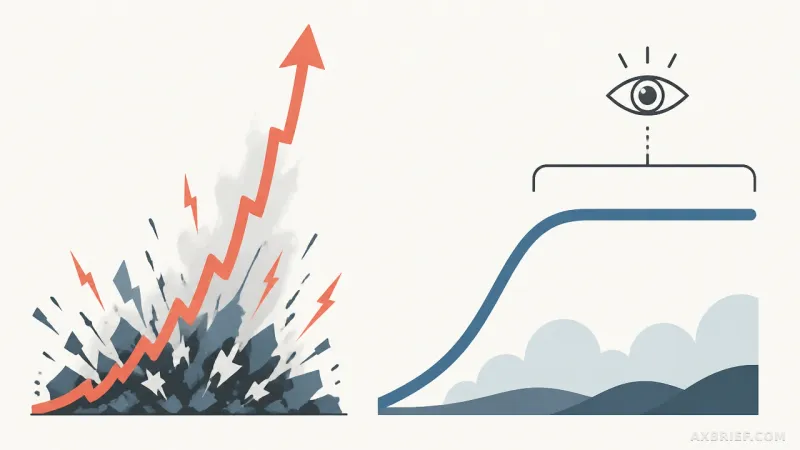
The global logistics sector is currently grappling with a paradox of growth. As e-commerce volumes reach unprecedented heights, the human infrastructure required to move those goods is collapsing. Warehouse managers are facing a chronic labor shortage that is no longer a seasonal fluctuation but a systemic failure. Beyond the vacancy rates, the physical toll on the remaining workforce—marked by repetitive strain and hazardous environments—has made the traditional warehouse model unsustainable. The industry is searching for a way to decouple throughput from human headcount, but standard automation has historically been too rigid to handle the chaos of a real-world shipping floor.
The 4.1 Billion KRW Blueprint for Automation
TXR Robotics is stepping into this gap as the lead organization for a high-stakes commercialization project funded by the Ministry of Trade, Industry and Energy. The initiative carries a total budget of 4.1256 billion KRW, which includes a government contribution of 2.885 billion KRW. This is not a theoretical research grant but a targeted push toward commercial viability, with a project timeline spanning from May 2026 to April 2027.
To ensure the technology survives the transition from the lab to the loading dock, TXR Robotics has assembled a strategic consortium. The partnership includes the Korea Institute of Machinery and Materials, Kyonggi University, and Arsenal, providing the academic and engineering rigor needed for complex robotics. However, the most critical components of the consortium are the operational partners: Nonghyup Logistics and Eugene Logistics. Unlike many AI projects that rely on sanitized, artificial testbeds, this project will be deployed directly into the active logistics hubs operated by these two companies. By integrating the solution into existing operational environments and processes, the goal is to create a robot-driven logistics model that is ready for immediate commercial scale the moment the project concludes.
From Rigid Automation to Physical AI
For years, warehouse automation meant conveyor belts and fixed-path robots that could only handle uniform boxes in predictable sequences. The limitation was always the same: the moment a package was the wrong size or placed slightly out of alignment, the system failed. TXR Robotics is attempting to solve this by pivoting to Physical AI—a system designed to interact dynamically with the physical world rather than following a pre-set script.
The technical core of this platform is the convergence of 3D vision recognition and random piece picking. While standard vision systems can identify a barcode, 3D vision allows the AI to perceive the actual volume, orientation, and geometry of an object in real-time. When paired with random piece picking, the robot no longer needs a perfectly organized bin. It can identify a variety of individual products of different shapes and sizes and determine the optimal grip point to pick them up securely. This capability effectively removes the human element from the most tedious and error-prone part of the supply chain: the picking process.
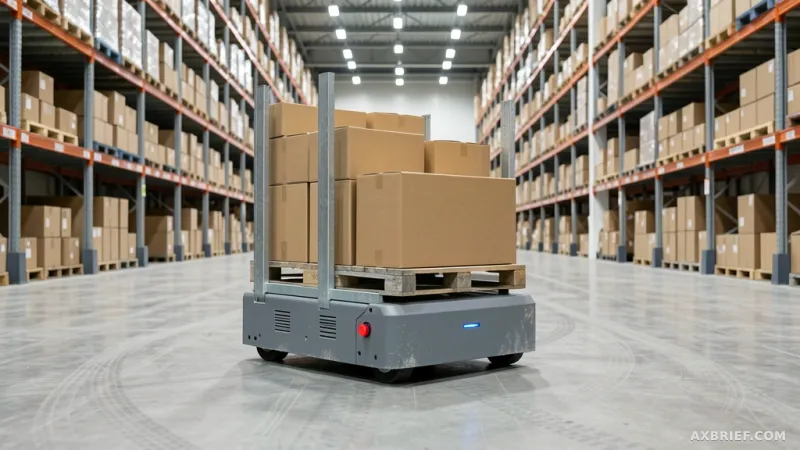
This shift is the prerequisite for the dark warehouse—a facility that operates in total darkness because it requires neither human eyes nor human presence. The vision is to extend this automation across the entire lifecycle of a product, from receiving and storage to picking, sorting, and final shipment, all managed under a single integrated operating system. To manage this complexity, TXR Robotics is implementing digital twin technology. By creating a virtual mirror of the physical warehouse, the system can monitor equipment health and perform preventive maintenance, identifying signs of failure before they cause a costly line stoppage.
The transition from a human-centric warehouse to a Physical AI-driven hub depends entirely on the reliability of these 3D vision systems in the field. The 4.1256 billion KRW investment is a bet that random piece picking can move from a controlled demo to a high-volume industrial reality. The ultimate proof of concept will not be found in a white paper, but in the real-world data generated at the Nonghyup and Eugene Logistics hubs.