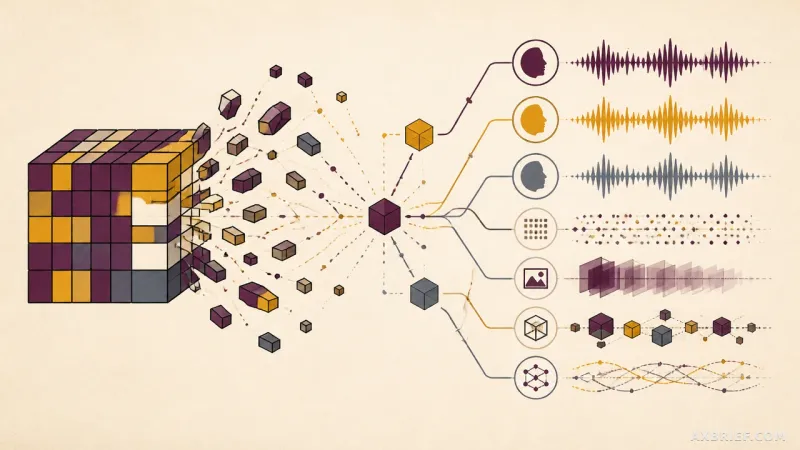
The developer community is currently trapped in the demo paradox. In a controlled environment, a new AI agent can seem like magic, seamlessly booking a flight or updating a CRM with a single prompt. But the moment these systems hit production, the magic evaporates. The agent loses the thread of the conversation, calls the wrong tool, or enters an infinite loop of hallucinations. This is not a failure of the underlying large language model's intelligence, but a failure of the scaffolding surrounding it. The industry has spent too much time obsessing over the brain and not enough time building the nervous system.
The Engineering Blueprint for Production Readiness
Recent data reveals a sobering reality: approximately 88% of AI agents fail to make it into actual production environments. The primary cause is a fundamental misunderstanding of what makes an agent functional. While many teams focus on upgrading to the latest model version, the actual viability of a deployment depends on five core engineering pillars: tool usage, memory architecture, and the reasoning loop. There is a sharp distinction between a chatbot, which provides information, and an agent, which performs agency. Agency requires the ability to check availability, compare prices, execute bookings, and send emails on behalf of a user.
Success in this domain is not about the model's parameter count but about the structural integrity of the memory-tool-reasoning loop. Even the most capable model will become unstable if the design for when to inject information or how to reflect tool outputs back into memory is flawed. When the vague marketing term agentic AI is not decomposed into these specific engineering requirements, systems that work in a demo collapse under the weight of real-world traffic.
To address the chaos of tool integration, Anthropic introduced the Model Context Protocol (MCP) in November 2024. Before MCP, connecting 10 applications to 100 different tools required roughly 1,000 individual integration scripts. MCP solves this by standardizing the bridge between model reasoning and the external world using a JSON-RPC pattern. The adoption has been explosive, with MCP SDK monthly downloads surging from 100,000 in the first month to 97 million by March 2026.
In December 2025, Anthropic donated MCP to the Agentic AI Foundation under the Linux Foundation. This consortium includes OpenAI and Block as co-founders, with support from AWS, Google, Microsoft, Cloudflare, and Bloomberg. Developers can now leverage the official MCP registry and the PulseMCP community directory to find and integrate pre-built servers. However, this standardization comes with a trade-off. MCP introduces more token overhead than direct API calls. For high-throughput pipelines, CLI-based direct calls remain the superior choice, while MCP is the optimal path for environments requiring complex OAuth handling or strict multi-tenant data boundaries.
Beyond the Context Window: The Memory Shift
Because LLM calls are inherently stateless, an agent requires an independent memory layer to function across multiple sessions. The early approach to this problem was brute force: stuffing the entire conversation history into the context window. This is no longer viable. Modern agent architecture treats memory as a separate component that extracts facts of value during a conversation and stores them in a vector database alongside user, session, and agent tags.
When a new session begins, the system does not simply dump the history back in. Instead, it uses a hybrid of semantic similarity, keyword matching, and entity matching to extract only the most relevant slices of information. This shift marks the end of traditional prompt engineering and the rise of context engineering. The goal is no longer to expand the physical size of the context window, but to refine the retrieval strategy. The ability to select the precise slice of information that drives a specific decision is now the primary bottleneck for agent performance.
Choosing the right memory tool depends entirely on the nature of the service. For developers needing simple personalization—such as remembering a user's preferred tone or basic preferences—Mem0 is the most efficient option for rapid integration. However, for services that require temporal reasoning, where the system must track the validity of data over time, Zep is the necessary choice. Zep is built on Graphiti, a temporal knowledge graph that assigns start and end windows to every stored fact.
This temporal capability allows Zep to answer complex time-series queries, such as how a customer's behavior changed after a specific price update. While standard similarity-based retrieval only finds the most similar or most recent item, Zep understands the chronological context and injects only the facts that are currently valid. Consequently, the decision matrix is clear: use Mem0 for personalization and Zep for data evolution and validity tracking.
The final divide between a talking AI and a working AI is the reasoning loop. A chatbot operates on a linear path: input leads to a single response, and the process ends. An agent operates on a recursive loop of decision, execution, observation, and re-decision. The agent decides on an action, executes it via a tool, observes the result, and uses that feedback to determine the next step, repeating this cycle dozens of times without human intervention.
Production stability is not a product of model size, but of the structural alignment between the memory layer and this reasoning loop. When information retrieved from memory triggers a tool call, and the result of that call is accurately written back into memory, the agent becomes reliable. Replacing a model might provide a temporary boost in performance, but only the refinement of this organic loop can overcome the 88% failure rate and move AI agents from the demo stage to the real world.