
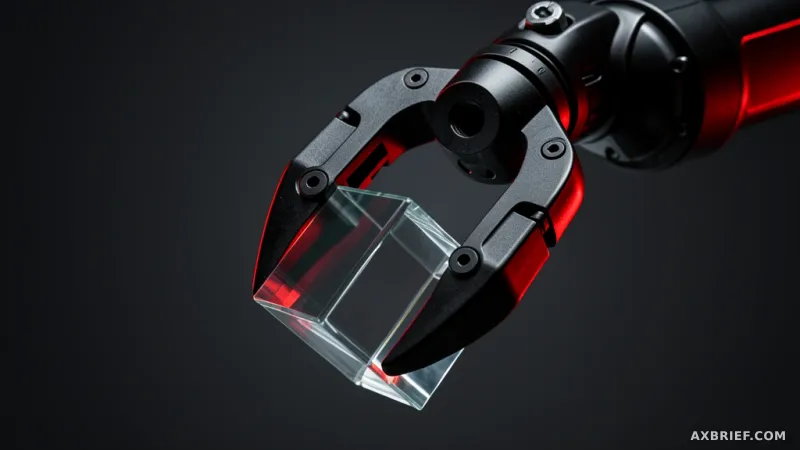
For years, the promise of the industrial edge has been hampered by a frustrating paradox. Engineers deploy powerful sensors and robotic arms, only to find that the intelligence governing them resides in a distant cloud server. This creates a latency gap—a few hundred milliseconds of silence where a robot must wait for a server to tell it that a human has stepped into its path or a part has shifted on the assembly line. In high-precision manufacturing, this gap is not just a technical inconvenience; it is a failure point. The industry has been searching for a way to move the brain closer to the muscle without sacrificing the complexity of the reasoning.
The Architecture of the New Edge
From June 2 to 5, Aetina Corporation will attempt to bridge this gap at COMPUTEX 2026, held at the Taipei Nangang Exhibition Center. Occupying booth K0106 in Hall 1, the company is unveiling a comprehensive NVIDIA-based infrastructure designed to move beyond simple data processing. The centerpiece of this reveal is a hierarchical hardware portfolio categorized into four distinct tiers: SuperEdge, MegaEdge, DeviceEdge, and CoreEdge. This structure is not merely a product list but a strategic map of the physical environment. By offering a spectrum of compute power and energy efficiency, Aetina allows enterprises to deploy intelligence at every single point of contact, from the heavy-duty orchestration at the top (SuperEdge) down to the smallest embedded sensors at the bottom (CoreEdge).
The technical core of this deployment relies on the efficient distribution of lightweight Vision Language Models (VLMs). Traditionally, VLMs—which allow AI to understand both visual imagery and natural language—required massive GPU clusters. Aetina has optimized these models to run on edge hardware, enabling real-time inference that does not require a round-trip to the cloud. This allows the system to process visual data and linguistic context simultaneously, providing the foundation for what the company calls Physical AI. By integrating these models with NVIDIA's acceleration stack, Aetina is transforming the edge from a passive data relay into an active compute node.
Detailed specifications and product availability for these systems are hosted on the official Aetina website, where the company outlines its transition from a hardware vendor to an infrastructure accelerator.
From Static Inference to Agentic Intelligence
To understand why this shift matters, one must look at the fundamental difference between single inference and agentic workflows. For the last decade, edge AI has operated on a model of single inference: a camera sees a bolt, the model classifies it as defective, and the system triggers a stop. This is a linear, reactive process. The AI is a tool, not an agent. It cannot reason about why the bolt is defective or decide to adjust the machine settings to prevent the next one from failing. It simply outputs a label based on a pattern.
Aetina is introducing a paradigm shift toward Contextual Intelligence. By layering Agentic AI over their hardware, they are creating systems that can set their own goals and design their own execution paths. In an agentic workflow, the AI does not just recognize an object; it understands the context of the entire factory floor. If a VLM detects a blockage on a conveyor belt, an agentic system doesn't just send an alert. It analyzes the surrounding environment, determines the most efficient way to clear the blockage, selects the necessary robotic tools, and executes the sequence of actions autonomously.
This creates a closed-loop system of perception, judgment, and execution. The Vision AI provides the eyes, the Agentic AI provides the reasoning, and the Physical AI provides the movement. When these three elements are integrated into a single application at the edge, the latency gap disappears. The intelligence is no longer a remote service; it is a local property of the machine. This transition effectively upgrades the AI from a specialized tool to an autonomous operator capable of managing complex, multi-step tasks without human intervention or cloud connectivity.
Redefining the Industrial Automation Market
This evolution has immediate implications for the robotics and enterprise automation sectors. In a traditional smart factory, the reliance on central servers creates a single point of failure and a ceiling for scalability. As more robots are added, the network becomes a bottleneck. By decentralizing the decision-making process through the SuperEdge to CoreEdge pipeline, Aetina is removing the cloud from the critical path of operation. This allows for a level of real-time control that was previously impossible, enabling robots to react to environmental changes in microseconds rather than milliseconds.
Furthermore, this strategy changes the business model of AI adoption. Most companies currently purchase AI as a set of discrete models or software licenses. Aetina is instead proposing a solution-based approach where hardware and software are inextricably linked. By providing the full stack—from the silicon acceleration to the agentic workflow—they lower the barrier to entry for companies that lack the internal expertise to optimize large models for small devices. The result is a shift in the competitive landscape: the win is no longer about who has the fastest chip, but who can provide the most seamless integration of perception and action.
As these interactive demos at COMPUTEX 2026 illustrate, the goal is a world where the machine does not wait for instructions. By embedding contextual intelligence directly into the physical fabric of the factory, the edge becomes the primary site of intelligence, turning industrial automation into a truly autonomous ecosystem.
The era of the reactive machine is ending, replaced by an era of autonomous agents that live and think where the work actually happens.



