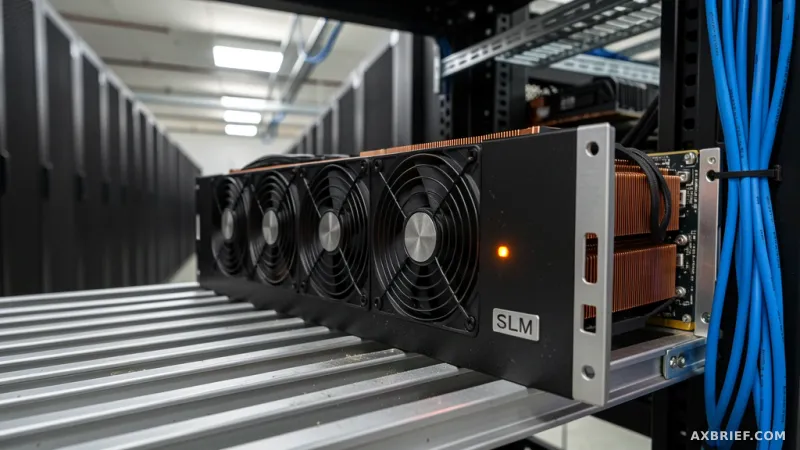
For years, the prevailing wisdom in AI development was that bigger is always better. Developers defaulted to massive cloud-based models, accepting the trade-offs of unpredictable latency, escalating token costs, and the inherent anxiety of sending proprietary data to a third-party server. This reliance on the cloud created a bottleneck where the cost of experimentation grew linearly with the complexity of the project. However, a quiet shift is happening in the developer community. The focus is moving away from the raw power of trillion-parameter giants toward the strategic deployment of Small Language Models (SLMs) running entirely on local hardware.
The Hardware Blueprint for Local SLM Deployment
Transitioning to a local environment requires a precise understanding of the relationship between model parameters and hardware constraints. In the current ecosystem, practical SLMs generally fall within the 1 billion (1B) to 13 billion (13B) parameter range. For developers working on standard office PCs with 8GB of RAM, models in the 1B to 3B range are the most viable option. These smaller models provide a baseline of intelligence while remaining lightweight enough to run without crashing the system.
For those seeking the optimal balance between reasoning capability and resource consumption, the 7B parameter model is the industry sweet spot. When utilizing 4-bit quantization, a 7B model typically requires approximately 8GB of VRAM or RAM, making it accessible to most modern consumer-grade GPUs. For more demanding reasoning tasks, 13B models are available, though they necessitate workstation-class hardware with high-end GPUs or significant RAM overhead. The current landscape of viable models includes Llama 3, Mistral, Gemma 2, Phi-3, and Qwen 2.5.
To make these models fit into consumer hardware, the industry relies on the GGUF format. GGUF is a binary format designed for local inference that employs quantization to compress model weights from high precision to 4-bit or 8-bit integers. While reducing precision can lead to a slight dip in output quality, the trade-off is essential for performance. In professional settings, Q4 or Q5 quantization is the recommended standard, as it maximizes efficiency while keeping the degradation of intelligence nearly imperceptible for most tasks.
Specialized workloads require specialized models. For instance, Code Llama and Qwen-Coder are designed specifically for programming tasks. Unlike cloud APIs, these local coding models can be granted direct access to the local file system, allowing them to understand the full context of a project's directory structure without the need to upload thousands of lines of code to an external server. The key to success here is not relying on generic benchmarks but running candidate models against actual project data to verify that the output meets the specific requirements of the codebase.
Orchestrating Local Inference with Ollama
Deploying these models used to require a grueling process of configuring CUDA versions, managing Python virtual environments, and wrestling with complex dependency libraries. Ollama has fundamentally changed this workflow by providing a unified interface for macOS, Linux, and Windows that handles everything from model downloading to GPU acceleration. The barrier to entry is now a single command in the terminal:
ollama run [model_name]This command handles the pulling of the model from the registry and its immediate execution. Once the model is running, Ollama serves it as a local REST API via port 11434. This architectural choice is critical because it allows developers to swap a cloud-based API endpoint for a local one with minimal changes to their existing application code. Because popular frameworks like LangChain and LlamaIndex provide native integration for Ollama, developers can insert local models into their existing pipelines using dedicated classes, virtually eliminating the need for custom wrapper code.
For those who need models not found in the official Ollama library, such as fine-tuned versions from Hugging Face, the GGUF format remains the bridge. By importing a GGUF file and registering it within an Ollama configuration, a developer can transform a niche, domain-specific open-source model into a fully functional API endpoint in minutes. This integrates the entire lifecycle—from model discovery on Hugging Face to production-ready serving—into a single toolchain.
The Strategic Shift from Variable to Fixed Costs
The real transformation occurs when you analyze the causal link between local deployment and architectural freedom. Cloud APIs operate on a variable cost model where every token processed adds to the monthly bill. This creates a psychological and financial barrier to iteration. In contrast, local SLMs shift the cost structure to a fixed hardware investment. Once the machine is purchased, the cost of inference is effectively zero. This allows for unlimited testing, exhaustive prompt engineering, and repetitive batch processing without the fear of a surprise invoice.
Beyond the finances, the elimination of network round-trips solves the latency problem. In interactive applications, the milliseconds spent traveling to a cloud server and back are noticeable. Local inference provides an immediate response, which is a prerequisite for building fluid user experiences. More importantly, this low latency enables the creation of complex agentic workflows. In an agent-based system, a single user request might trigger ten sequential LLM calls to decompose a task, verify a result, and refine an answer. On a cloud API, the cumulative network lag would make the system feel sluggish; on a local SLM, these cycles happen almost instantaneously.
Control over the model's behavior is further refined through the Modelfile, a configuration blueprint similar to a Dockerfile. Through the Modelfile, developers can tune the context window—typically ranging from 4K to 32K tokens. While a larger window allows the model to remember more information, it aggressively consumes VRAM. Tuning this value allows developers to prevent out-of-memory errors while maximizing the model's situational awareness.
Sampling parameters like temperature also allow for precise control over the output. For deterministic tasks such as code generation or JSON extraction, a low temperature between 0.1 and 0.3 is used to ensure consistency. For creative brainstorming, a higher temperature between 0.7 and 1.0 is applied to encourage diversity in responses. When combined with a well-defined system prompt that assigns a specific professional persona or enforces a strict output format, a small local model can often outperform a larger cloud model that hasn't been properly constrained.
Implementing Local RAG and Coding Assistants
The most potent application of this setup is the local Retrieval Augmented Generation (RAG) pipeline. By combining a local SLM with a vector database containing internal PDFs or company documentation, organizations can build a knowledge base that never touches the internet. The retrieval component finds the relevant context, and the local SLM synthesizes the answer. This architecture removes the risk of data leaks and eliminates the hallucinations common in general-purpose models by forcing the AI to rely solely on the provided local documents.
This same logic applies to local coding assistants. By integrating a code-specific SLM into an editor plugin or CLI tool, the AI can reference the local file system in real-time. It can read configuration files and analyze function call relationships across the entire project without the source code ever leaving the developer's machine. This ensures that the AI adheres to the project's unique coding conventions while maintaining absolute security.
Ultimately, the choice of model comes down to the available hardware: 1B models for 8GB RAM office PCs, 7B models for the ideal balance on consumer hardware, and 13B models for high-performance workstations. By moving the intelligence to the edge, developers are no longer just consuming an API—they are owning the entire cognitive stack.