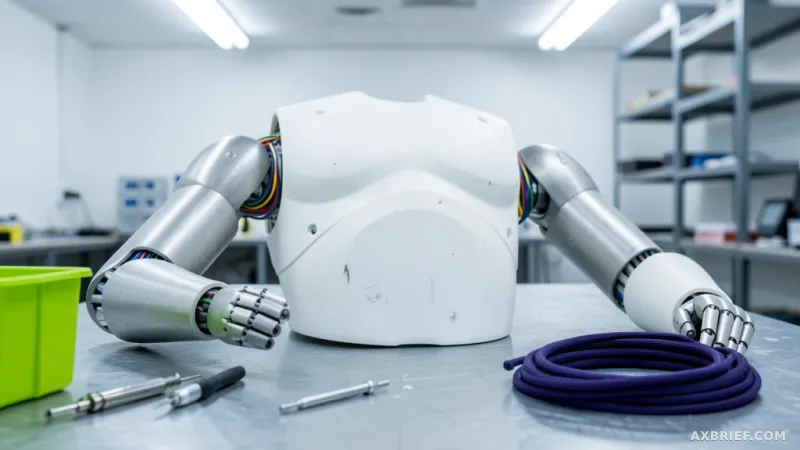
The current state of humanoid robotics development often feels less like cutting-edge science and more like a grueling exercise in systems integration. For most developers, the path from a conceptual model to a functioning physical agent is blocked by a fragmented landscape of incompatible tools. One team might use a specific simulator for training, a completely different framework for data collection, and a third, proprietary stack for deployment. This fragmentation creates a hidden tax on innovation, where a significant portion of a researcher's time is spent writing glue code to make disparate systems communicate rather than optimizing the actual intelligence of the robot. This friction has effectively kept high-performance Physical AI trapped within the walls of well-funded corporate labs, leaving smaller teams and independent researchers struggling to bridge the gap between simulation and reality.
The Architecture of the LeRobot Integration
To dismantle these barriers, NVIDIA and Hugging Face have announced a strategic integration of NVIDIA's core robotics stack into LeRobot, an open-source library designed specifically for the training, execution, and sharing of robot datasets, models, and policies. This is not a mere partnership of convenience but a deep technical alignment. NVIDIA is officially bringing two of its most critical assets into the LeRobot ecosystem: the Isaac GR00T 1.7 model and the Isaac Teleop framework.
Isaac GR00T 1.7 is a Vision-Language-Action (VLA) model designed for humanoid robots. Unlike traditional models that handle perception and action as separate modules, a VLA model integrates these functions. It processes visual inputs and natural language instructions simultaneously to output direct physical actions. By integrating this into LeRobot, developers can now access a high-performance foundation model that understands both the semantic meaning of a command and the spatial reality of its environment within a single, unified library.
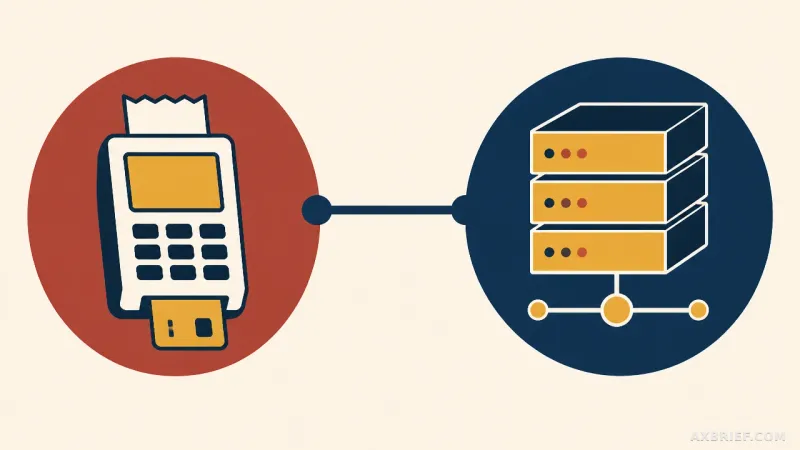
Complementing the model is the Isaac Teleop framework. Data is the primary currency of Physical AI, but collecting high-quality, human-demonstrated movement data is notoriously difficult. Isaac Teleop allows operators to remotely control robots with high precision, capturing the nuances of human motion and storing that data in a standardized format. When combined with the LeRobot infrastructure, this creates a seamless loop where data is collected via Teleop, processed through LeRobot's sharing tools, and used to fine-tune the GR00T 1.7 model. This technical synergy is further bolstered by the ability to link these workflows with simulation environments like Isaac Lab-Arena, allowing developers to stress-test their models in a virtual space before risking expensive hardware in the real world.
From Fragmented Tools to a World Model Ecosystem
The true significance of this integration lies in the shift from providing individual tools to establishing a standardized industrial pipeline. For years, the robotics community has suffered from a lack of a common language. By centering these tools around LeRobot, NVIDIA and Hugging Face are effectively proposing a standard operating procedure for Physical AI. The transition is a move from a fragmented workflow—where data collection, training, and deployment were isolated events—to an end-to-end pipeline. A developer can now collect data, standardize it, train a foundation model, fine-tune it for a specific task, and deploy it, all without leaving the LeRobot ecosystem.
However, the most provocative aspect of this roadmap is the upcoming introduction of NVIDIA Cosmos 3. While GR00T 1.7 focuses on the immediate translation of vision and language into action, Cosmos 3 is a frontier World Model. A world model does not just react to inputs; it learns the underlying laws of physics and the causal relationships of the environment. It allows a robot to predict what will happen if it pushes an object or how a surface might react to pressure. By bringing Cosmos 3 into LeRobot, the partnership is moving beyond simple task execution and toward true environmental understanding.
This expansion creates a massive gravitational pull for the global developer community. NVIDIA brings a dedicated base of 3 million robotics developers, while Hugging Face contributes an ecosystem of 16 million AI builders. By merging these two worlds, the integration creates a combined community of 19 million developers. This scale is critical because Physical AI requires a volume of diverse, real-world data that no single company can collect in isolation. An open-source workflow allows these 19 million developers to share policies and datasets, accelerating the transition of humanoid robots from laboratory curiosities to general-purpose tools.
Developers can begin implementing this integrated workflow immediately by installing the library via the following command:
pip install lerobotDetailed implementation guides and the integrated workflow can be found in the LeRobot official documentation or by exploring the LeRobot Hugging Face page.
The unification of NVIDIA's compute power and Hugging Face's community distribution marks the end of the era of fragmented robotics development.