
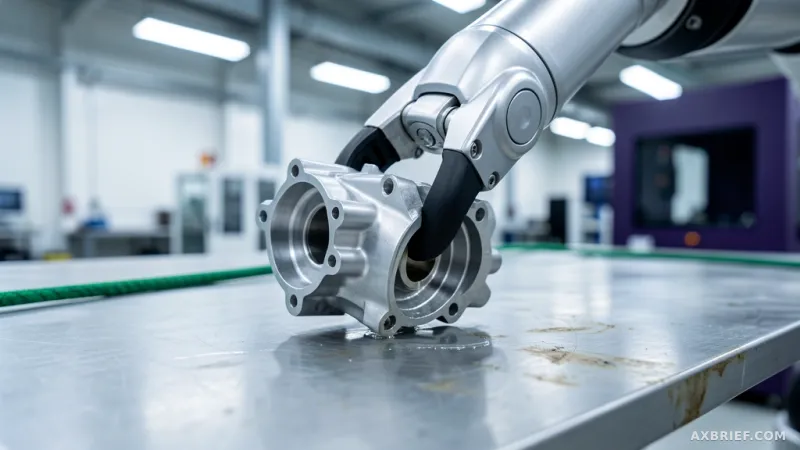
Investors who once poured capital into robotics based on polished demonstration videos are facing a harsh reality check as the gap between lab performance and field deployment widens. As of July 10, 2026, the stock market data for the robotics sector reveals a decisive shift in how value is assigned to physical AI companies. The era of valuing firms based on curated, high-production-value clips is ending, replaced by a rigorous focus on actual, repeatable performance in unpredictable industrial environments.
The Valuation Gap Between Demos and Deployment
Market analysis from July 10, 2026, shows a clear divergence in stock performance based on how companies handle the transition from prototype to production. Firms that see their stock prices surge following a flashy demo video often experience sharp corrections when subsequent field deployment reports reveal performance degradation. Conversely, companies that prioritize and prove operational stability in real-world settings are seeing their valuations stabilize or climb. The market has effectively moved past the hype cycle, now treating technical potential as a secondary metric compared to proven, scalable commercial deployment.
Why Controlled Environments Mask Technical Debt
Much like a household robot vacuum that navigates pristine floors with ease only to stall on a single stray cable, physical AI faces extreme challenges when moved from the lab to the field. Demonstration videos are typically captured in highly controlled environments where lighting, floor friction, and object placement are optimized to minimize failure. In these settings, robots are often programmed to follow rigid paths or recognize objects from specific, pre-calculated angles.
However, real-world deployment introduces a chaotic array of variables that these systems are rarely prepared for. Sensors must contend with environmental noise, signal interference, and dynamic obstacles that appear without warning. The failure to replicate lab performance in the field is fundamentally a failure to manage these uncontrolled environmental variables. For industry professionals, the true measure of a robot's maturity is not a single successful execution, but its performance across thousands of cycles. The critical metrics for commercial viability are now the frequency of errors during repetitive tasks and the time required for the system to autonomously recover to a functional state. Only those robots that demonstrate consistent, self-correcting operational stability are finding a permanent place in industrial workflows.



