The standard metric for Automatic Speech Recognition (ASR) performance—the Word Error Rate (WER)—is increasingly failing to capture the reality of diverse user environments. While a model might boast a low average error rate, it often masks a significant performance collapse when faced with specific accents, hardware constraints, or demographic variables. The release of the Monsoon dataset aims to dismantle this reliance on aggregate metrics by providing a granular, multi-dimensional evaluation framework for Indian English (en-IN) and Hindi (hi-IN).
The Anatomy of the Monsoon Dataset
The Monsoon dataset comprises audio data from 4,888 unique speakers, structured to prevent the common pitfall of model overfitting. To ensure rigorous evaluation, the data is split into public and private segments, with no overlapping speakers between them. This independence is critical for benchmarking. The dataset is built on 12 distinct metadata fields, allowing researchers to move beyond total error rates and perform deep-dive analyses into how specific conditions—such as age, gender, or device type—impact transcription accuracy.
To mitigate hardware bias, the collection process spanned 428 districts for Indian English and 295 for Hindi, across 30 states and union territories. Audio was captured using 315 to 582 different device models, ensuring that no single hardware configuration accounts for more than 2.1% of the total segments. Every recording underwent gating checks and language identification verification to ensure the data quality remains high before reaching the training or evaluation pipeline.
Designing for Linguistic and Environmental Variance
Unlike English, where standard normalizers can often map spelling variations to a single form, Hindi presents unique challenges due to its linguistic structure. The Monsoon dataset addresses this by adopting a lattice-based evaluation structure rather than a rigid normalization tool. By providing a list of all acceptable spellings for each segment, the benchmark accounts for legitimate linguistic variations that traditional systems might incorrectly flag as errors.
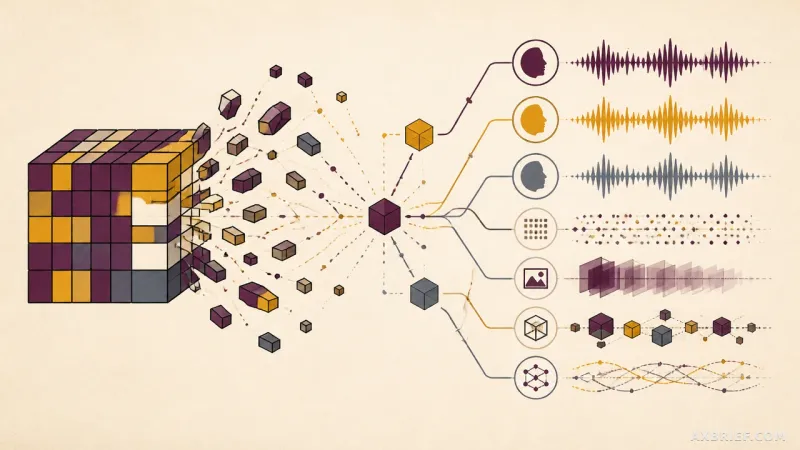
This design is built around nine core axes of failure: geography, age, gender, vocabulary, device, acoustic environment, speech type, speaking rate, and transcription variation. Data was collected via a peer-to-peer interface through Voice Arena, capturing real-world conditions including low-end hardware and unstable network environments. By including these "messy" real-world inputs, the dataset forces models to prove their utility in the hands of everyday users, not just in controlled laboratory settings.
Moving Beyond the Average WER Trap
The most striking insight from the Monsoon research is the disparity between aggregate and localized performance. A model might report an impressive 4% average WER, yet show a 44% error rate when analyzed against specific demographic or regional subgroups. This 11-fold performance gap highlights that current benchmarks often hide systemic failures that disproportionately affect marginalized or non-urban users.
To combat this, the dataset limits the contribution of any single speaker to between 2.8% and 6.8% of the total data, with over half of the participants contributing only a single utterance. This prevents the model from memorizing the vocal characteristics of a few prolific speakers. By forcing the model to generalize across thousands of unique voices and hundreds of hardware profiles, the Monsoon dataset provides a more honest assessment of real-world readiness.
For developers, the path forward involves shifting focus from total accuracy to the performance of the worst-case group. By disaggregating results across the nine defined variables, teams can identify exactly where their models break down and prioritize improvements for the most vulnerable segments of their user base.