The Monday morning ritual for many engineering managers begins with a frantic audit of API usage logs or, worse, a security alert indicating that a long-lived secret was accidentally committed to a public GitHub repository. As development teams scale, the friction of managing individual API keys becomes a significant operational tax. Admins find themselves trapped in a cycle of manually issuing credentials, tracking usage across disparate spreadsheets, and chasing down developers to rotate keys every few months. This fragmented approach to AI access creates a dangerous gap between the speed of AI adoption and the requirements of enterprise security.
The Architecture of Centralized AI Control
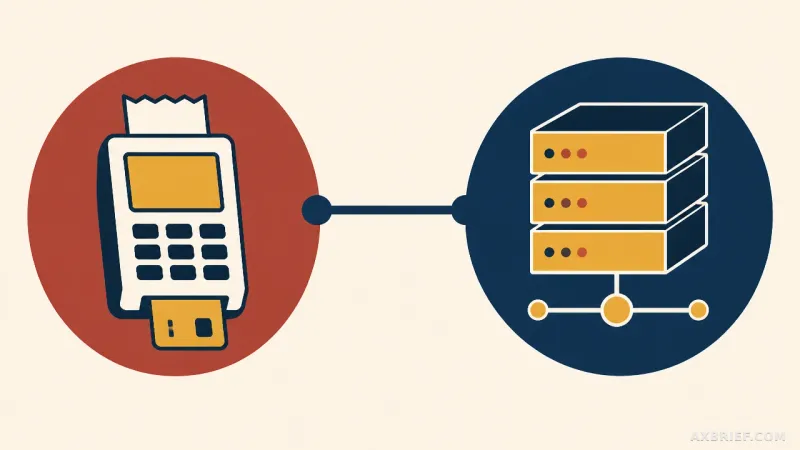
To bridge this gap, Anthropic has introduced the Claude apps gateway for AWS, a self-hosted control plane designed to move AI governance from the individual device to the infrastructure level. This gateway serves as a centralized management layer that intercepts and governs all requests to Claude, allowing organizations to dictate access rights, monitor costs, and enforce operational policies from a single point of truth. The solution is specifically engineered to support both Claude Code, the terminal-based coding agent, and Claude Desktop, ensuring that the entire developer workflow is covered under one security umbrella.
From an infrastructure perspective, the gateway is deployed as a stateless container, making it highly scalable and resilient. It can be hosted on Amazon ECS, Amazon EKS, or Amazon EC2, allowing companies to integrate it directly into their existing AWS VPCs. To handle the necessary state for short-term session management and rate-limiting counters, the gateway utilizes a PostgreSQL backend, typically deployed via Amazon RDS. This separation of the compute layer (the stateless container) and the data layer (RDS) ensures that as traffic grows, the organization can scale the gateway horizontally without losing track of user sessions or usage quotas.
Authentication is handled through a modern, identity-centric approach. Rather than distributing static keys, the gateway leverages OpenID Connect (OIDC) to integrate with a company's existing Single Sign-On (SSO) provider. When a developer needs to access the AI tools, they no longer hunt for a `.env` file or a secret key. Instead, they initiate the process directly from their terminal:
claude /loginThis command triggers a browser-based OIDC flow, authenticating the user against the corporate Identity Provider (IdP). Once verified, the gateway issues short-lived tokens to the client. By default, these sessions expire after one hour, drastically reducing the window of opportunity for an attacker if a device is compromised. The use of OIDC refresh tokens allows the system to maintain a seamless user experience, renewing access in the background without requiring the developer to re-authenticate every hour, while still ensuring that the central IdP remains the ultimate authority on who is allowed in the system.
Shifting from Static Secrets to Identity-Based Governance
The fundamental shift here is the transition from a credential-based model to an identity-based model. In the traditional workflow, an API key is a bearer token; whoever possesses the key possesses the power of the account. If a developer leaves the company or a laptop is stolen, the key must be manually revoked and redistributed to everyone else using that shared credential. The Claude apps gateway for AWS eliminates this risk entirely. Because the gateway relies on the corporate IdP, access is revoked the moment a user is deactivated in the central directory. There is no need to rotate keys or scrub local configuration files; the session simply fails to refresh, and access is terminated instantly.
This control extends beyond simple access to granular policy enforcement via a central configuration file known as `gateway.yaml`. This file acts as the brain of the gateway, defining exactly which models a user can access and which tools they are permitted to invoke. For instance, an administrator can restrict a junior team to a more cost-effective model while granting senior architects access to the most powerful versions. More importantly, the gateway can enforce restrictions on sensitive capabilities, such as file-writing permissions or web-access tools, ensuring that the AI agent does not perform unauthorized actions on the local system or the corporate network.
Organizations also face a critical choice regarding where their data actually lives. The gateway provides two distinct paths: Amazon Bedrock and Claude Platform on AWS. Choosing Amazon Bedrock ensures that all data remains strictly within the AWS security boundary, providing the highest level of data residency and control—a non-negotiable requirement for highly regulated industries like finance or healthcare. Alternatively, opting for Claude Platform on AWS allows teams to leverage the native Anthropic experience and the latest feature optimizations while still benefiting from the gateway's centralized authentication and billing. In both scenarios, the developer's experience remains identical; only the underlying data path and processing entity change.
Security is further hardened by the way the gateway communicates with the upstream model providers. Instead of using static credentials stored in the container, the gateway employs IAM Task Roles. This means the gateway itself is granted permission to call the AI models through AWS's native identity and access management system. By removing static secrets from the entire chain—from the developer's laptop to the gateway and finally to the model provider—the attack surface is reduced to almost zero. All communication is encrypted via TLS certificates managed by AWS Certificate Manager, ensuring that data in transit is protected from interception.
Beyond security, the gateway solves the perennial problem of AI budget unpredictability. By linking every API request to a specific verified identity, the system provides precise usage tracking. Administrators can set hard cost caps (caps) for individual users or teams. If a developer accidentally triggers an infinite loop in a coding agent or attempts a massive data processing task that would blow the monthly budget in an hour, the gateway intercepts the request and enforces the limit. This transforms AI spending from a volatile variable into a predictable operational expense.
The implementation of this control plane represents a maturation of the AI development lifecycle. We are moving away from the experimental phase, where a few developers used a shared key in a sandbox, and into the enterprise phase, where AI is a core part of the production pipeline. By decoupling the developer's access from the underlying API credentials, the Claude apps gateway for AWS allows companies to empower their engineers with the best tools available without sacrificing the governance and security standards that protect the organization.
This transition marks the end of the manual API key era and the beginning of the AI control plane, where governance is invisible to the developer but absolute for the administrator.