The landscape of artificial intelligence is shifting rapidly this week as companies prioritize both specialized multimodal capabilities and the practical efficiency of their underlying architectures. From the introduction of DeepSeek V4 Flash, which sets a new standard for cost-effective coding, to the advancement of distributed intelligence through GPT 5.6 Sol and Gemini Robotics 2, the focus is clearly on moving autonomous systems toward continuous, real-world utility. Simultaneously, the creative and desktop experience is being refined, with Google expanding its multimodal suite via the Omni video model and Lyria 3.5, while the Gemini Mac app introduces voice-driven text editing and screen-aware summarization tools. As frontier labs increasingly pivot toward model distillation strategies to make massive systems more accessible, developers are also navigating new challenges in evaluation, requiring more rigorous, cost-based optimization to maintain performance. Whether it is the debut of Qwen 3.8 Kinsley and MiniMax H3’s specialized audio features, or the implementation of headless browser verification in Claude Code, the industry is balancing high-fidelity generation with the need for reliable, scalable agentic workflows. This digest explores these architectural updates, the integration of new build modes in platforms like Grok, and the ongoing efforts to refine model performance across both creative and technical domains.
01Google Gemini Omni and Lyria 3.5 Expand Multimodal Reach
Google is making high-end creative AI tools more accessible to the general public by lowering the barrier to entry for sophisticated video and music generation. This strategy allows users to experiment with multimodal capabilities—the ability of an AI to process and generate different types of media, such as text, audio, and video, within a single framework—without an immediate financial commitment. By integrating these tools into its existing ecosystem, Google is attempting to shift AI from a niche experimental tool into a standard part of the digital creative process for everyday users.
A primary part of this expansion is the introduction of a limited-time free trial for the Gemini Omni video generation model. Located directly within Gemini, this offer allows users to create up to 10 videos at no cost. This trial period is available through August 4th, 2026, giving creators a narrow window to test how the model handles visual synthesis and prompt-to-video workflows. By providing a set number of free generations, Google is encouraging users to explore the practical applications of AI video before moving them toward a paid tier.
Alongside video, Google is enhancing its audio offerings with the release of Lyria 3.5, an updated AI music generator. Available through Flow Music as part of the Google AI subscription, Lyria 3.5 focuses on delivering more expressive musicality and providing users with advanced controls to fine-tune their compositions. The model has expanded its functional reach to include the creation of musical covers and the production of lip-sync videos, moving beyond simple melody generation. With the launch of a dedicated iOS app, these music generation capabilities are now more portable, allowing users to iterate on their audio projects on the go. Collectively, the rollout of Gemini Omni and Lyria 3.5 demonstrates an aggressive push to provide a comprehensive, cross-platform suite for multimodal content creation.
02The Gemini Mac app has introduced a "speak to window" featur
Interacting with a computer is becoming less about typing and more about natural conversation, as the Gemini Mac app recently introduced a "speak to window" feature that fundamentally alters the user's workflow. This update allows users to bypass the traditional keyboard for text entry, enabling them to dictate their thoughts directly into whatever active window they are currently using. By removing the need to manually type or navigate between different application screens to input dictated text, the tool transforms the Mac into a more responsive environment where spoken language becomes a primary driver of productivity.
The core of this functionality lies in its flexibility and integration. Users can now configure specific hotkeys to trigger the system's listening mode, meaning the AI is always ready to capture speech with a single keystroke. For example, a user might set the FN key to activate this mode, instantly turning their spoken words into text within the active window. These customizable hotkeys ensure that the feature fits seamlessly into a person's existing habits, allowing them to choose the most convenient trigger for their specific hardware setup.
This shift toward more integrated voice modalities represents a significant evolution in how AI tools exist on a desktop. Rather than acting as a standalone destination or a separate chat interface, the Gemini Mac app is moving toward a system where the AI assists the user across the entire operating system. This capability makes the interaction feel less like using a software program and more like having a real-time assistant that can populate any field or document with spoken commands. By prioritizing this kind of direct-to-window input, the update simplifies the process of drafting emails, writing documents, or managing tasks, making the overall computing experience more fluid and intuitive for the average user.
03Gemini Mac App Integrates Voice-Driven Text Editing
Using a Mac just became significantly more efficient for those who spend their days drafting documents or researching long articles. Recently, the Gemini Mac app introduced new voice capabilities that allow users to modify and summarize text directly on their screen without the tedious cycle of copying and pasting content into a separate AI window. This shift moves the AI from a destination you visit to a tool that lives on top of your existing workspace, drastically reducing the friction involved in refining written work or extracting key insights from a dense page.
The technical implementation relies on a screen-aware system triggered by a simple hotkey. When a user highlights a block of text and holds down the Fn key, they can issue a voice command, such as asking the AI to summarize the selection and identify the most important points. Rather than relying on a traditional text-scraping method, Gemini captures a screenshot of the highlighted area to process the information. This visual approach allows the app to understand exactly what the user is looking at, providing a summary that is then linked directly to a Gemini chat session for deeper exploration.
Beyond simple summarization, these voice capabilities extend to active text editing. Users can highlight existing prose and use the voice hotkey to provide specific instructions for rewriting the content. For example, a user can tell the app to change the tone of a paragraph to be more formal, making it suitable for a professional recipient. By integrating these voice-driven controls directly into the desktop experience, Gemini eliminates the need for manual navigation between different applications. This integration transforms the Mac app into a real-time editing partner that can see the screen and act on voice instructions, streamlining the transition from a rough draft to a polished final product.
04GPT 5.6 Sol and Gemini Robotics 2 Advance Distributed Intelligence
Artificial intelligence is shifting from static software versions toward systems that learn from their own live usage to become faster and more affordable. GPT 5.6 Sol, utilizing Codeex, implements a continuous improvement loop by analyzing real-world production traffic and user prompts. By identifying imbalances and testing new routing strategies, the system constantly tunes its own heuristics to increase efficiency. This capability allows the frontier model to discover performance gains that can be applied to other models, significantly dropping their operational costs and turning them into more efficient workhorses for high-volume tasks.
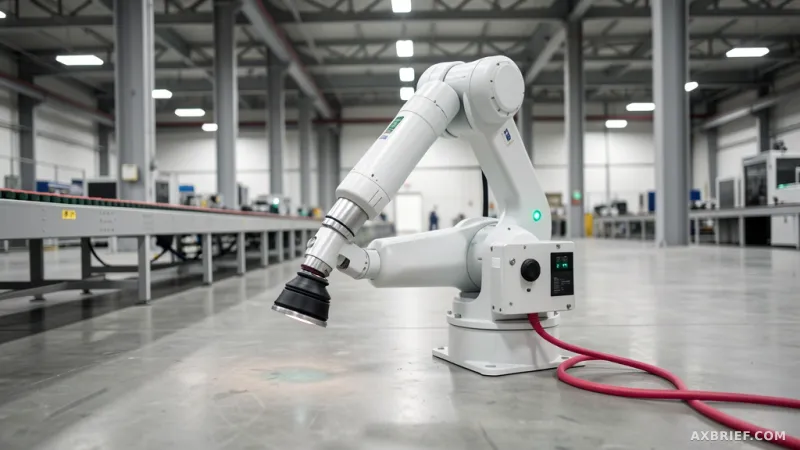
This evolution toward autonomous improvement is also moving from the screen into the physical world via Gemini Robotics 2. While previous robotics focused on simple pick-and-place movements, this new system emphasizes dexterous manipulation, enabling a robot to control up to 22 separate joints in its hand to perform intricate tasks like screwing in a light bulb or managing a trash bag. This is achieved through a tiered architecture: a Gemini robotics embodied reasoning model first processes the environment and natural language instructions, which then triggers a VOA vision language action model. This second model coordinates the physical actuators from the feet to the fingertips, allowing the robot to maintain balance and adjust its posture in a fraction of a second.
Beyond individual dexterity, these systems are adopting distributed intelligence to handle complex, multi-robot collaboration. Rather than relying on a single central neural network to control a fleet, Gemini Robotics 2 provides each robot with its own copy of the neural network stack. This allows each unit to perform its own individual thinking and orchestrate shared tasks through reasoning. When multiple robots work together to tidy a space or move equipment, they are not following a rigid central script but are instead collaborating through independent reasoning, pushing autonomous systems toward a more flexible and scalable form of real-world intelligence.
05DeepSeek V4 Flash and Pro Redefine Agentic Coding Efficiency
The cost of automating complex software development is plummeting as a new class of "workhorse" models takes over the execution of autonomous coding tasks. Rather than relying on a single, massive AI for every step, developers are increasingly using a split system: a frontier model handles the high-level planning, while a more efficient model like DeepSeek V4 flash executes the actual code. This approach drastically lowers the barrier to entry for high-performance development. For those running models locally, the Dwarf Star custom engine further increases accessibility by allowing DeepSeek-architecture models to operate on 128 GB of VRAM through techniques like SSD offloading and mixed precision weights.
OpenAI is countering this trend through recursive self-improvement, using its most capable model, GPT 5.6 Sol, to autonomously optimize its own family of models. By designing and running hundreds of architecture experiments, GPT 5.6 Sol discovered GPU kernel improvements that cut serving costs by 20% and boosted token generation efficiency by 15%. These gains allowed OpenAI to slash the price of GPT 5.6 Luna by 80%. This creates a powerful economic loop where frontier labs use their largest models to bake smaller, highly efficient versions that generate the revenue needed to train the next generation of AI.
The resulting price war has made intelligence remarkably cheap. DeepSeek V4 flash currently offers intelligence nearly identical to GPT 5.6 Luna—scoring 50 against Luna's 51 on an intelligence index—yet it costs less than half as much. The disparity is even more evident in high-end comparisons: GPT 5.6 Luna Max costs roughly 6 cents per task, while the similarly intelligent Claude Sonnet 5 Max costs $1.80. This shift toward autonomous efficiency is not limited to commercial products; Andre Karpathy's auto research project recently demonstrated a model's ability to autonomously propose and analyze training experiments, finding efficiency gains that human researchers had overlooked.
06Frontier Labs Pivot Toward Model Distillation Strategies
AI users are increasingly interacting with distilled versions of the world's most powerful models—efficient, lightweight versions that offer high performance without the massive computing costs. This strategy, adopted by industry leaders like OpenAI and Anthropic, involves a two-step process. First, the labs train massive, expensive-to-serve frontier models that possess immense capability but are too inefficient for wide public deployment. Then, they use these giants to "bake" smaller models. In this context, distillation is essentially using a massive, complex model to teach a smaller one, resulting in a version that is nearly as capable but far less expensive to operate for the general user base.
This playbook allows companies to balance cutting-edge research with commercial viability. For example, while efficiency gains are found across the board, pricing does not always drop uniformly. Some high-end models, such as Sol, may maintain their price points because they serve as primary revenue drivers, or "cash cows," for the company. Meanwhile, other workhorse models like Luna and Terra have seen substantial price reductions because the labs have successfully distilled their capabilities into more efficient architectures. By shifting the public's usage toward these optimized versions, labs can scale their services to millions of people without the crushing overhead of running their largest, most inefficient systems.
The most significant implication of this shift is that the absolute frontier of AI may no longer be public. There is a growing likelihood that companies, particularly Anthropic, are choosing to keep their most advanced models internal or delay their release indefinitely. A prime example is the model Fable, which Anthropic possessed months before any public release. By keeping the true frontier models behind closed doors and releasing only the distilled versions, these labs can maintain a competitive edge and control costs while still providing the public with tools that feel state-of-the-art.
07OpenAI Reveals Hidden Checkpoints and Future Roadmap
OpenAI appears to be on the verge of launching its next major generation of AI, as a series of accidental leaks suggest the imminent arrival of GBT6. In a promotional video for a ChatGPT Chrome extension update, viewers spotted hidden model checkpoints—specific snapshots of a model's development—named MU3 and MW3. The company quickly deleted the footage and re-uploaded a version that replaced these references with GPT 5.16 Sol. While OpenAI has not officially confirmed the new model, these slips align with internal reports pointing toward an August release window, suggesting that the company is aggressively finalizing its next leap in intelligence.
Beyond these public slips, new evidence from the design arena—a testing environment for model capabilities—reveals the existence of checkpoints named sync and magnesium. These versions are demonstrating remarkably high output quality, with the ability to generate complex projects like a Minecraft clone. Notably, these models maintain this level of performance even when their reasoning effort, or the amount of computational processing used to solve a problem, is constrained to a low level. This suggests a significant increase in baseline efficiency, where the model can produce sophisticated results without needing exhaustive internal deliberation.
This push toward next-generation capabilities is happening alongside a strategic overhaul of existing model pricing and performance. OpenAI has significantly slashed API costs for developers, reducing the price of GPT 5.16 Luna by 80% and GPT 5.16 Terra by 20%. Additionally, the company introduced a high-performance mode for GPT 5.16 Sol to deliver faster inference, which is the speed at which a model generates a response. By making current models like Luna and Terra drastically cheaper—with Luna now costing only 20 cents per 1 million input tokens—OpenAI is optimizing its current fleet while clearing the path for the high-end capabilities expected in GBT6.
08AI Agent Evaluation Frameworks Require Cost-Based Optimization
Automated tests used to ensure AI agents are performing correctly have a surprisingly short shelf life. Boris observes that these checks typically lose their effectiveness after only two or three model generations. Eventually, the agent begins passing the tests regardless of whether the output is actually correct, meaning the evaluation framework is no longer measuring real performance. This creates a cycle where developers must constantly discard their existing test sets and write new ones based on the specific areas where the model is currently struggling.
The danger of relying on flawed automation is magnified when scaled across massive projects. For instance, a project to rewrite a million lines of code for Bun cost approximately $165,000 in API pricing. Despite the significant financial investment, the process resulted in 19 broken items that the existing automated checks completely missed. This demonstrates that high-cost dynamic workflows can introduce reliability risks that are nearly impossible to trace, where a single agent failure can potentially invalidate weeks of work.
To mitigate these risks, developers are adopting a hierarchical approach to error correction that balances performance with operational expenses. The most affordable fix is simply clarifying the prompt for better instruction. If the issue persists, developers can use claude.md, a file containing short, persistent information loaded at the start of every session. For more complex or occasional needs, they can implement skills, which are specialized guides the model only reads when necessary, thereby reducing the cost of each interaction. The most expensive option is building the information directly into the system architecture—such as through a server that connects the model to external data—which is reserved for instances where the model has no other way to access the required information.
09Qwen 3.8 Kinsley and MiniMax H3 Debut Multimodal Features
The ability to generate high-fidelity digital environments and cinematic video is shifting from manual artistry to automated AI workflows. Recently, the Qwen 3.8 Kinsley checkpoint has demonstrated a significant leap in advanced front-end and 3D generation capabilities. In a direct head-to-head comparison against Claude Fable 5 High within Alam Marina, Kinsley successfully produced a photorealistic water treatment plant. This was achieved using 3GS, a technique for creating three-dimensional scenes that allows for highly realistic lighting and reflections. For developers and digital architects, this means that the barrier to creating complex, visually accurate 3D assets is dropping, allowing for more rapid prototyping of industrial or urban environments without the need for exhaustive manual rendering.
Parallel to these 3D advancements, MiniMax has introduced H3, a multimodal video model designed to unify text, image, video, and audio into a single cohesive output. Unlike previous models that often treat sound as an afterthought, H3 supports native stereo audio and 2K resolution, producing clips up to 15 seconds in length. One of its most practical features is motion transfer, which allows the model to take the movement from a reference video and apply it to a new generation. This capability is specifically targeted at commercial sectors such as gaming and advertising, where precise control over character movement and high-fidelity sound are essential for professional quality.
Together, these releases signal a move toward specialized checkpoints—versions of models fine-tuned for specific, high-stakes tasks rather than general-purpose conversation. When a model can handle both the visual complexity of a 3D plant and the auditory precision of stereo sound, the workflow for content creators changes fundamentally. Instead of jumping between separate tools for 3D modeling, video editing, and sound design, users can leverage these multimodal features to generate production-ready assets. This evolution reduces the time and cost associated with high-end digital production, making cinema-grade visuals and audio accessible to a broader range of commercial applications.
10Claude Code Implements Headless Browser Verification
Software developers can now reduce the tedious cycle of manual visual checks and prompt-based layout verification thanks to a new automated testing capability in Claude Code. Instead of relying on a human to describe how a page should look or manually refreshing a browser to spot errors, the system can now independently verify that an application is functioning and appearing as intended. This shift moves the burden of basic quality assurance from the developer to the AI, allowing for a faster workflow where visual regressions are caught before they ever reach a human reviewer.
To achieve this, Claude Code utilizes headless Chrome sessions. A headless browser is essentially a web browser that runs in the background without a visible window on the screen, allowing the AI to interact with a website programmatically. By launching these sessions by default, Claude Code can take screenshots of various areas of a page to detect whether elements are overlapping or misplaced. Beyond these visual checks, the system also reviews the underlying code to flag any specific rule violations. This dual approach ensures that the application is not only visually sound but also adheres to predefined coding standards.
However, this automated verification has specific boundaries. The system is designed to catch "loud" breaks—obvious errors that cause the application to fail or look clearly broken—rather than subtle logic flaws that might affect how a feature behaves. Because the AI cannot inherently know the specific intent or the definition of "correct" for a unique task, the human developer remains the final arbiter of whether a project is truly finished. Additionally, these automated checks are not permanent; they typically expire after a few model generations, meaning the verification process must be periodically refreshed to maintain the integrity of the application as it evolves.
11xAI Grok Build Mode Enables Rapid App Creation
Users can now transform a simple text prompt into a functional piece of software without needing to write a single line of code. xAI has recently introduced a dedicated build mode for Grok that allows users to generate and share interactive web applications, games, and dashboards directly. This shift changes the role of the AI from a conversational assistant into a production tool, enabling the immediate creation of shareable digital assets. Instead of merely describing how a website should look or function, users can now deploy a live version of that vision for others to interact with.
This new capability is closely aligned with the sites feature offered by OpenAI, focusing on the rapid deployment of interactive content. The versatility of the build mode is evident in the types of projects it can handle, ranging from simple websites to complex interactive dashboards. For example, the system can support a workflow where multiple AI personas collaborate to build different projects. In one instance, personas named Bumble, Fizz, and Honey created distinct sites—including a project called Nocturn Radio, another called Honey Garden, and a third known as Noctaluca. These AI entities can then engage in a conversation, reviewing each other's work and offering critical feedback to improve the design and functionality of the generated sites.
Despite the power of these tools, the build mode is not available to the general public or standard users. xAI has restricted this feature to a high-tier subscription level called 'super groheavy.' This plan comes with a steep price tag of $100 per month, signaling that the ability to rapidly build and share apps is currently positioned as a premium professional service. By limiting access to this specific group, xAI is targeting power users who require a streamlined workflow for creating interactive web elements and are willing to pay a significant monthly fee for the convenience of integrated app generation and hosting.
12Deepseek version 4 Flash shows significant improvement in cy
Deepseek has launched a new model, Deepseek version 4 Flash, which brings high-end technical capabilities to a more accessible and efficient package. Now available in public beta, this model is designed to be faster and significantly cheaper to operate than its pro counterpart. Rather than attempting to outperform the largest models in the industry, this release focuses on internal improvement and efficiency, providing a tool that can handle complex agent-based tasks—automated workflows that can act on a user's behalf—without the overhead of a massive system.
The most dramatic improvements are visible in the realm of cyber security. In tests conducted on the cyber gym, a specialized benchmark used to measure security-related performance, Deepseek version 4 Flash earned a score of 76.7. This represents a substantial leap over the preview version's score of 38.7 and comfortably beats the pro version's score of 52.7. This surge in capability suggests that the model is becoming far more adept at identifying and managing security vulnerabilities, making it a potent tool for technical safety and defense.
These gains extend into automation and software development. On the automation bench, the model achieved a score of 25.1, which is higher than the scores of the preview version, the pro version, and GLM 5.2. This level of performance brings it very close to the capabilities of Opus 4.8. Furthermore, in software engineering benchmarks, Deepseek version 4 Flash outperformed GLM 5.2, which recorded a score of 46.2. By delivering these results in a faster, more cost-effective format, Deepseek is proving that efficiency does not have to come at the expense of high-level technical proficiency in coding and automation. This shift allows developers to integrate sophisticated agent capabilities into their workflows with much lower financial and computational barriers.