The modern creative professional spends a disproportionate amount of their day performing digital housekeeping. Whether it is renaming five hundred raw clips in Premiere Pro, meticulously organizing layers in a complex Photoshop file, or updating brand colors across a fifty page InDesign document, the actual act of creation is often buried under a mountain of administrative friction. For years, the industry has viewed AI as a way to generate the final asset—a shortcut to a finished image or a polished clip—but the tedious process of managing the project itself remained a manual burden.
The Architecture of Automated Production
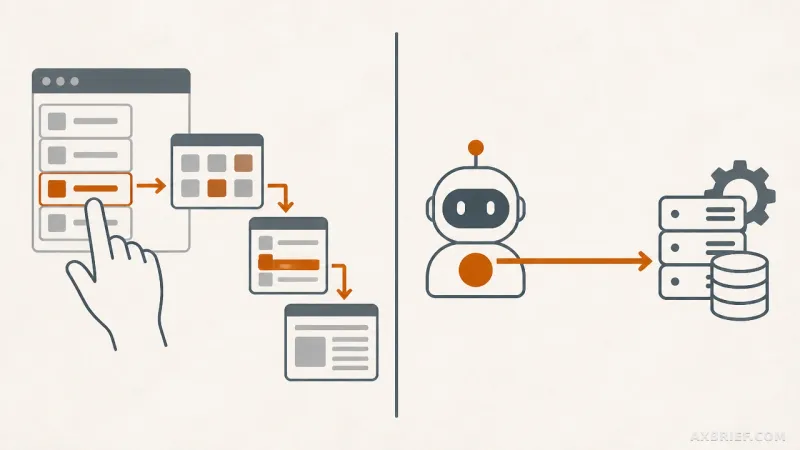
Adobe is fundamentally changing this dynamic with the introduction of Creative Agents. Unlike previous generative AI tools that focused on output, these agents are designed to control the software API directly using natural language commands. This allows the AI to act as an operator within the application, executing complex production sequences that previously required hundreds of manual clicks.
In Premiere Pro, the Creative Agent handles the heavy lifting of project initialization. It can analyze source media to automatically categorize files into bins, perform bulk renaming of clips, and identify specific interview questions to assemble a rough working starting point for the editor. In Illustrator, the agents manage multi-step design tasks that require precise mathematical calculations, while Photoshop and InDesign agents focus on high-volume maintenance tasks such as background removal and global brand updates.
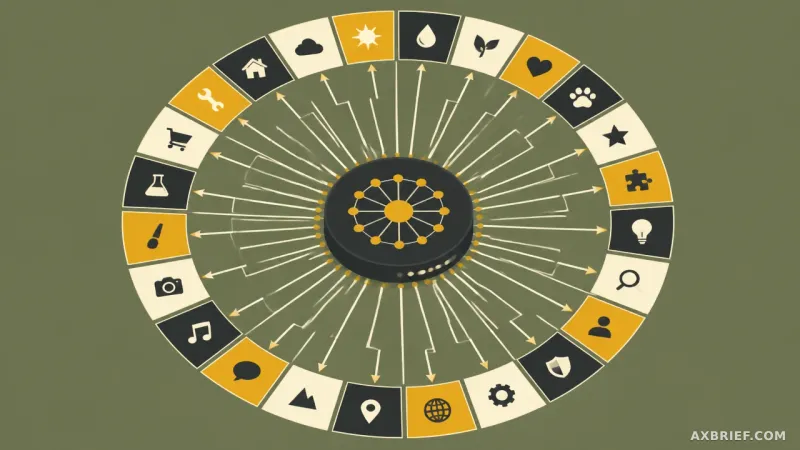
To ensure these agents are accessible where creators already communicate, Adobe is integrating them with a wide array of external ecosystems. The agents will first integrate with OpenAI's ChatGPT, Anthropic's Claude, and Microsoft 365 Copilot. The roadmap extends further to include Google Gemini and Slack, effectively turning corporate chat interfaces into remote control panels for the Creative Cloud suite.
From Flat Output to Orchestration Layers
The critical distinction here is the move from generation to orchestration. First-generation generative AI operated on a flat plane: a user provided a prompt, and the AI returned a static piece of media. The Creative Agents operate via an orchestration layer that interprets natural language and translates it into specific API calls. The AI is no longer just drawing a picture; it is operating the software. This ensures that the final aesthetic decisions remain in the hands of the human designer, while the mechanical execution is offloaded to the agent.
This shift is supported by two new architectural components within the private beta of Firefly AI Studio: Elements and Projects. Elements serves as a visual variable library where characters, locations, and objects are stored for reuse. This solves the perennial AI problem of consistency, allowing a campaign to scale across different assets without the visual identity drifting. Projects acts as a contextual memory layer, storing asset history and session records so the AI understands the evolution of a work-in-progress rather than treating every prompt as a blank slate.
However, this power comes with a closed-loop constraint. Because these agents rely on proprietary APIs developed by Adobe to manipulate project files, they function exclusively within the Adobe SaaS ecosystem. Access to these capabilities requires an active Creative Cloud commercial license. For enterprise IT architects, this introduces a new layer of configuration. Organizations must now design secure interfaces between their internal communication tools and the Adobe cloud processing environment to ensure that API-driven project manipulation aligns with corporate security policies. The primary metric for adoption will shift from the novelty of AI art to a hard productivity calculation: the cost of the license versus the actual hours of manual labor saved.
As the industry moves toward this agentic model, the value of an AI tool is no longer measured by the quality of a single generated image, but by the efficiency with which it can control the entire production pipeline.