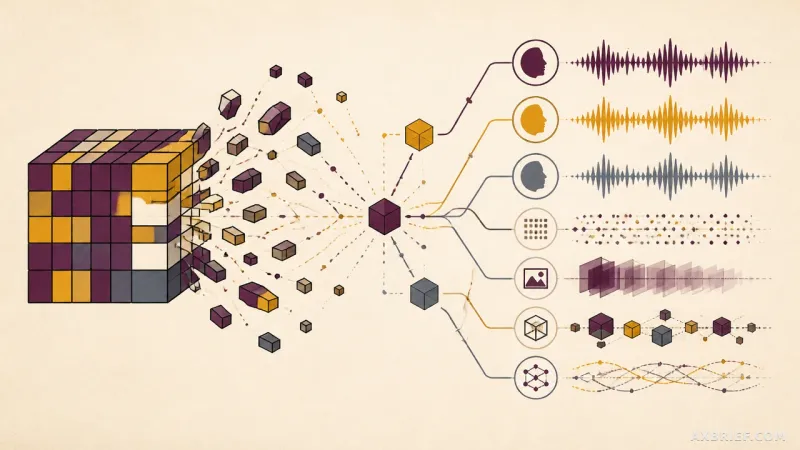
The single greatest bottleneck in artificial intelligence development is, paradoxically, the human creator. No matter how brilliant a researcher may be, they remain bound by the physical limits of formulating hypotheses, writing code, running experiments, and analyzing results. When each validation cycle takes days or even weeks, the velocity of machine intelligence becomes capped by human labor constraints.
Astra and the Push Toward Automated AI Research
OpenAI is targeting this exact human time bottleneck to achieve artificial general intelligence. Rather than building conversational chat interfaces, the organization is engineering systems designed to automate the scientific research process itself. Jakob Pachocki recently confirmed that an internal AI research intern model named Astra has successfully passed key internal benchmarks, signaling a major shift toward autonomous discovery.
python
Conceptual representation of autonomous research loop
class AstraResearchAgent:
def __init__(self, objective):
self.objective = objective
def formulate_hypothesis(self):
return "Proposed optimization for transformer attention mechanism"
def execute_experiment(self, hypothesis):
Automated code generation and execution
return "Benchmark metrics improved by 4.2%"
Traditional large language models operate within the confines of text generation windows, but Astra is engineered for active deployment in experimental environments. Its core capability lies in a full-cycle workflow spanning idea implementation, execution, and reporting. The model autonomously writes experimental code, executes computations against datasets, and compiles performance reports without constant human intervention.
The Recursive Loop of AI Optimizing AI
Passing research intern benchmarks marks the initiation of a recursive loop where artificial intelligence begins to improve artificial intelligence. As Astra and similar systems take over experimental pipelines, they unlock the capacity to design subsequent model generations, discover more efficient training algorithms, and refine their own architectures.
This compounding feedback loop fundamentally alters the growth curve of machine intelligence. When an automated system can evaluate hypotheses and iterate upon its own codebase at machine speed, the timeline to advanced generalized capabilities compresses dramatically. The transition turns AI from a static tool into an active agent capable of independent scientific iteration.
Sam Altman and the Internal AGI Horizon
Sam Altman has indicated that OpenAI expects to have an internal system it would characterize as artificial general intelligence by the end of the year. Framing this milestone as an internal system rather than a commercial product highlights a deliberate strategy of containment and capability consolidation. By keeping foundational AGI architectures internal, OpenAI maintains control over safety guardrails while leveraging recursive research automation.
This internal-first approach ensures that the most powerful iterative loops operate within a secure environment. As research automation scales, the gap between commercial APIs and cutting-edge internal agents widens, redefining how foundational labs approach capability milestones and safety validation.
Surviving the Shift to Autonomous Research Agents
The emergence of Astra challenges the traditional playbook of API fine-tuning and prompt engineering. Organizations relying solely on wrapping existing endpoints will find their competitive advantage eroding as autonomous agents begin discovering architectures and optimizations faster than human engineering teams can deploy them.
Survival in this next phase requires treating AI systems not merely as APIs to query, but as autonomous research partners capable of driving the development pipeline forward.
Autonomous AI agents like Astra are transforming the fundamental economics of research and development across the tech industry.