For years, the process of creating custom merchandise has been a friction-filled journey of translation. A person starts with a vivid image in their mind, but to make it physical, they must either spend weeks mastering complex design software or enter a tedious cycle of emails and revisions with a freelance designer. This gap between a creative spark and a tangible product has historically acted as a gatekeeper, ensuring that only those with technical skill or a budget for outsourcing could bring their ideas to life. This week, that barrier effectively vanished as Amazon integrated generative AI directly into its retail ecosystem.
The Integrated Design Pipeline
Amazon has introduced a new AI-driven custom product design feature within Alexa for Shopping, transforming the AI assistant from a search tool into a creative partner. The entry point is seamless, requiring users to either click the Alexa icon at the bottom of the Amazon shopping app or simply type customize into the search bar and select the corresponding dropdown option. Once the interface is active, the user provides a text prompt describing the desired look, theme, or specific characteristics of a product. Alexa interprets these abstract descriptions and generates a visual design in real-time on the screen.
Because first-draft AI generations are rarely perfect, Amazon built an iterative refinement loop into the experience. If the initial result misses the mark, users can select from a list of suggested actions provided by the system or enter specific text-based corrections to tweak the details. This allows for a conversational design process where the user guides the AI toward a final version. Once the design is finalized, the app allows users to save the work or share it directly with friends and family. Recipients of these shared designs can view the artwork and add the customized item to their own shopping carts immediately, creating a social loop of design and consumption.
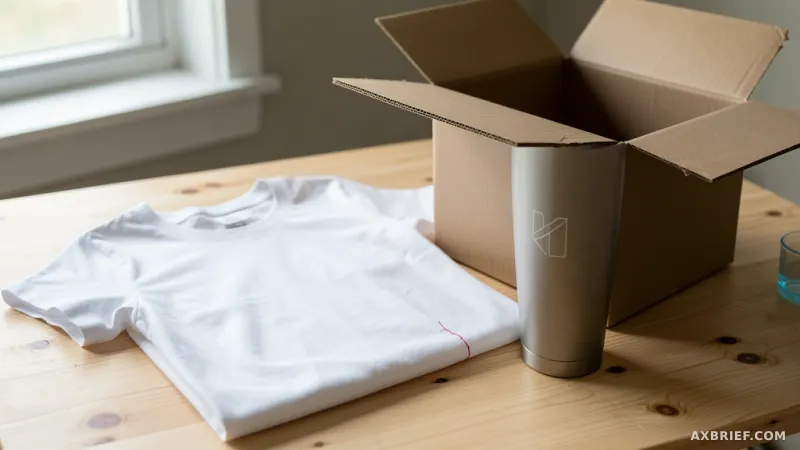
The scope of available products is extensive, covering a wide array of apparel and accessories. The AI design support extends to T-shirts, hoodies, and tumblers, as well as more specific garment styles including V-necks, long-sleeve shirts, polo shirts, quarter zips, jerseys, sweatshirts, tank tops, and raglans. Beyond clothing, the system supports the creation of custom water bottles. The entire backend is powered by Merch on Demand, Amazon's print-on-demand service, which handles the manufacturing and logistics. Once an order is placed, the product is shipped via Prime, completing the journey from a text prompt to a doorstep delivery within a single integrated pipeline.
Currently, this feature is available exclusively to users in the United States. Amazon has opted for a low-friction pricing model where the AI design tools themselves are free to use. Customers do not pay for the generation or modification of their designs; they only pay the final retail price of the physical product they choose to order.
The Death of the Design Barrier
This shift represents more than just a new feature in a shopping app; it is a fundamental pivot in how custom goods are produced. For a long time, the custom merchandise market was dominated by platforms like Redbubble, Bonfire, Spring, and Fourthwall. These services thrived by catering to professional creators or organizations that already possessed the design assets necessary to launch a product. In that model, the platform provided the infrastructure, but the user provided the expertise. The value proposition was built on the ability of a creator to design something that others wanted to buy.
Amazon is flipping this script by moving the point of creation from the professional creator to the general consumer. By removing the need for design proficiency, Amazon is expanding the total addressable market for custom goods to include every single person who can write a sentence. When the ability to create a professional-looking T-shirt or tumbler is reduced to a prompt, the competitive advantage of specialized design platforms begins to erode. The design process is no longer a separate professional stage that precedes shopping; it is now just another filter in the shopping experience.
This transition shifts the critical variable of production from technical skill to conceptual clarity. In the previous era, the limiting factor was whether you knew how to use a pen tool or manage layers in a design file. Now, the limiting factor is simply how specifically you can describe your idea to an AI. By collapsing the design, production, and delivery phases into one app, Amazon has effectively commoditized the role of the graphic designer for the mass market.
Customization is no longer a luxury service for those who can afford a designer or the time to learn the tools. It is now a standard shopping option available to anyone with a Prime account and an idea.