
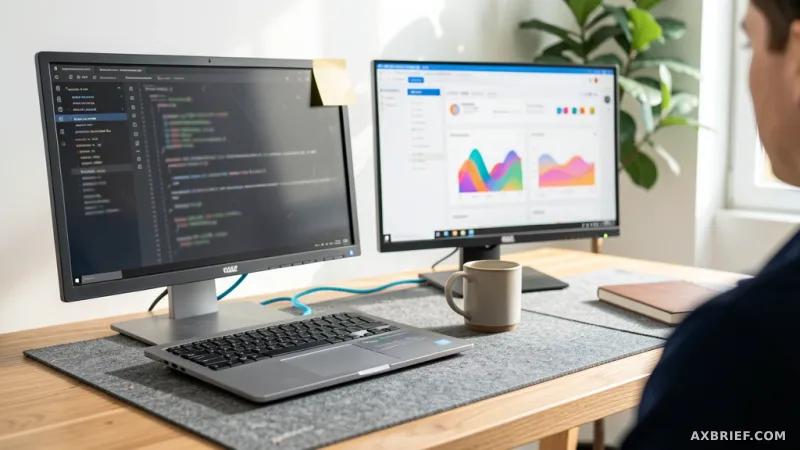
The modern developer's workflow is often fractured by a persistent communication gap. When a software engineer completes a complex task in the terminal, the process of sharing that progress with a non-technical product manager or a stakeholder usually involves a tedious cycle of screenshots, screen recordings, and manually written status reports. This friction transforms a moment of technical triumph into a chore of documentation, where the nuance of a live system is lost in a static image. This week, the industry saw a shift in how this gap is bridged, moving away from static reporting toward real-time, interactive visibility.
The Mechanics of Real-Time Terminal Visualization
Anthropic has addressed this friction by introducing Claude Code Artifacts, a feature specifically designed for users on Claude Team and Enterprise plans. The core utility of this update is its ability to transform a terminal-based work session into an interactive, custom HTML webpage in real time. Rather than forcing a collaborator to parse through lines of raw code or logs, the developer can now generate a live URL that renders the AI's output as a functional dashboard or an app design.
Technically, these Artifacts operate as standalone HTML pages with a maximum size limit of 16 MiB. The system acts as a real-time interpreter between the command-line interface and the browser. As the AI continues to iterate on a task within the terminal session, the corresponding webpage updates automatically. Charts, text, and UI elements refresh within the same URL, ensuring that anyone viewing the link sees the most current state of the project without needing to manually reload the page. To ensure traceability, every update is captured as a new version in the history, allowing teams to track the evolution of a feature or revert to a previous state for review across desktop and mobile devices.
Security is a primary pillar of this implementation, particularly for the enterprise sector. Anthropic has implemented a strict Content Security Policy (CSP) that blocks all external network requests. This ensures that the Artifacts remain stateless canvases; they do not exchange data with a backend server, effectively functioning as high-fidelity digital whiteboards rather than hosted applications. By restricting external connectivity, Anthropic minimizes the attack surface, making it a safe environment for sharing internal system diagrams or prototype dashboards without exposing the corporate network to external vulnerabilities.
The Strategic Divide Between Visualization and Production
When placed alongside the current AI landscape, the distinction between Claude Code Artifacts and competing offerings like OpenAI Sites becomes clear. The two tools are pursuing fundamentally different philosophies regarding the role of AI in web development. While Claude Code Artifacts focuses on the communication of progress, OpenAI Sites is designed for the deployment of production-ready infrastructure.
OpenAI Sites outputs code as Cloudflare Worker-compatible ES modules, allowing applications to run instantly on a global edge network. It integrates directly with the D1 relational database for structured data storage and R2 object storage for file uploads. This architecture is intended to replace internal SaaS tools by providing a full-stack Platform-as-a-Service (PaaS) experience. In contrast, Anthropic's approach is that of a stateless canvas. It does not offer permanent data storage or backend integration; it simply renders a visual representation of the AI's current state within a single, portable file.
This creates a clear decision matrix for development teams. If the goal is to instantly visualize a system diagram or share a reporting dashboard for internal review without the overhead of server configuration, Claude Code Artifacts is the optimal choice. However, if the objective is to build a sustainable, data-driven web application that requires a persistent backend, the production-oriented environment of OpenAI Sites is the necessary alternative. The tension here is between the speed of visualization and the robustness of deployment.
Beyond the technical specifications, there is a deeper strategic implication regarding the ecosystem. Despite the perceived openness of these tools, both Anthropic and OpenAI have avoided open-source licenses such as MIT or Apache 2.0. This means that the rendering engines and integration nodes that power these experiences are proprietary. Users cannot fork the code to modify it independently or host the underlying system on their own private servers. Every interaction occurs within an infrastructure managed entirely by the provider.
This creates a sophisticated form of vendor lock-in. As enterprises integrate these real-time visualization and deployment pipelines into their daily operations, the cost of migrating away from the platform increases. The convenience of not having to build a server is traded for a lack of ownership over the rendering logic. The more a team relies on these AI-generated artifacts to communicate and deploy, the more deeply they are embedded in a closed ecosystem where the provider controls the environment, the versioning, and the access.
This shift marks the end of the era where developers had to manually document their terminal wins through screenshots. By turning the terminal into a live web presence, the barrier between execution and demonstration has vanished, establishing a new standard for collaborative AI development.



