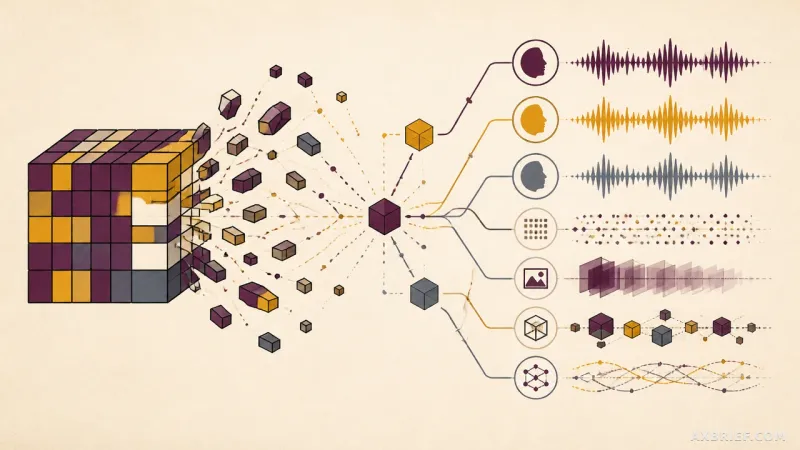
Modern content creation pipelines often feel like an exercise in fractured labor. Marketers and product strategists routinely ask AI models like Claude for campaign ideas, manually copy those text blocks into standalone image generators, and then export those assets into separate video editing suites. Every transition across this scattered toolchain introduces fatigue and forces practitioners to re-enter prompts tailored to each proprietary interface. Critical details from the original brainstorming phase frequently evaporate or distort during these handoffs, creating a hidden productivity tax that undermines the core promise of modern automation.
Breaking Context Disconnects With MCP
To eliminate this friction, the Model Context Protocol (MCP) establishes a standardized specification that allows artificial intelligence models to safely discover and control external tools. Instead of relying on brittle, custom API integrations for every single service, MCP acts as a universal communication layer that gives language models direct access to external functional capabilities. Rather than remaining isolated inside a text-only sandbox, an AI equipped with MCP connectors can coordinate tasks across distinct software environments without manual intervention. This architectural shift transforms models from passive conversational interfaces into active operational platforms capable of executing complex workflows end-to-end.
Unifying Planning and Video Production
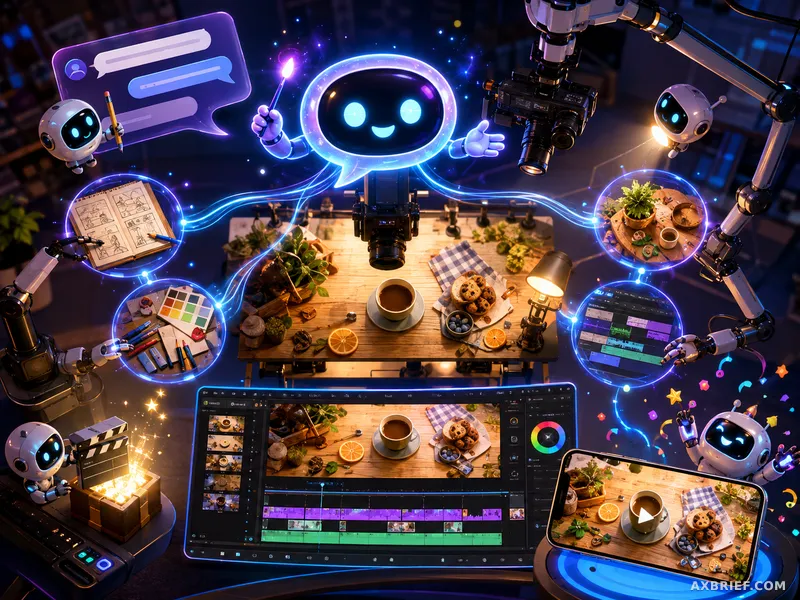
The integration between Claude and Topview demonstrates this protocol in action by collapsing the entire media production pipeline into a single conversation thread. When a user develops marketing concepts within Claude, the underlying context, tone, and strategic intent persist automatically as instructions pass directly to Topview's video generation engine. Human intervention is no longer required to ferry data between windows, re-format prompts, or manually align visual assets with creative briefs. By placing the entire sequence under one protocol, the time required to turn a raw text concept into a polished video asset shrinks from hours of software juggling to a single continuous interaction.
Redefining the Solo Marketing Stack
This unified workflow fundamentally restructures traditional marketing production economics. Historically, executing high-converting video campaigns demanded coordinated handoffs between copywriters, graphic designers, and video editors, each operating within their own specialized software stack. With MCP-enabled orchestration, a single marketer can act as the sole director of an automated production pipeline. As the barrier to entry for generating high-definition marketing collateral drops toward zero, competitive advantage shifts away from manual tool proficiency and toward pure ideation speed and tactical execution.
The Rise of the AI Orchestrator
The convergence of Claude and specialized video generation tools signals a broader departure from the era of the isolated chatbot. Artificial intelligence is rapidly maturing into an orchestration layer that coordinates disparate software utilities to accomplish tangible business outcomes. The defining metric for AI capability is no longer restricted to parameter size or standalone benchmark scores, but rather an ecosystem's capacity to connect standardized tools seamlessly. As protocols like MCP gain wider adoption, the chat window is expanding into a comprehensive command center for automated execution.