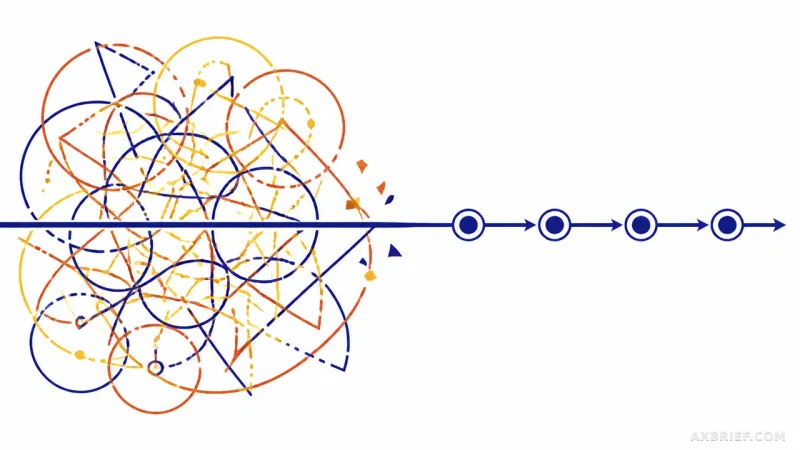
The modern AI engineer is currently trapped in a frustrating paradox. While the logic of an autonomous agent can be deployed in minutes using a high-level framework, the data feeding that agent often takes weeks of infrastructure engineering to optimize. To make an agent react to real-time world events, developers have historically been forced to build and maintain fragile ETL pipelines that extract data from a transactional database, transform it into an analytical format, and load it into a serving layer. This process introduces a latency tax that turns a real-time agent into a delayed observer, creating a bottleneck where the intelligence of the model is throttled by the slowness of the data pipeline.
The Architecture of Immediate Intelligence
At the recent Data + AI Summit, Databricks addressed this bottleneck by unveiling LTAP (Lake Transactional/Analytical Processing) and Lakehouse//RT. These technologies are designed to collapse the distance between where data is created and where an AI agent consumes it. The core objective is the total removal of the ETL pipeline, allowing agents to perform analytical reasoning on transactional data without the need for intermediate replication.
Lakehouse//RT is the high-performance serving component of this vision. It is engineered to handle extreme concurrency, supporting up to 12,000 queries per second (QPS) while maintaining a latency of less than 100ms. For smaller datasets, this response time drops as low as 10ms. When compared to traditional dedicated serving stacks, this represents a performance increase of up to 16 times. This speed is achieved by utilizing the Reyden computing engine, which is specifically optimized for high-concurrency, low-latency serving. Unlike previous architectures that required moving data out of the lakehouse into a separate cache or NoSQL database to achieve such speeds, Reyden queries Delta and Iceberg tables directly.
Complementing this is LTAP, which redefines how transactional data enters the lakehouse. LTAP allows Postgres-native transactional data to be stored in Delta and Iceberg formats from the moment of writing. By integrating transactions and analytics at the storage layer, Databricks eliminates the need for the separate operational and analytical systems that have dominated enterprise IT for decades. All of these operations are wrapped within the Unity Catalog, ensuring that governance, security, and permissions are applied consistently across both transactional and analytical workloads without requiring a separate authorization layer.
Beyond the Limits of HTAP
To understand why this shift matters, one must look at the failure of the traditional HTAP (Hybrid Transactional/Analytical Processing) approach. For years, the industry attempted to build single database engines that could handle both high-speed writes (OLTP) and complex analytical queries (OLAP). These attempts often resulted in a compromise where the engine was mediocre at both, or the system became prohibitively expensive to scale. Databricks has pivoted away from the engine-level integration of HTAP toward a storage-level integration called the Lakebase architecture.
Lakebase introduces a critical caching layer between the Postgres computing instances and the underlying object storage. This is a necessary intervention because object storage, while scalable, is fundamentally too slow to support the sub-millisecond requirements of online transactional processing. The technical breakthrough here lies in how Lakebase utilizes the idle CPU cycles of the caching layer. As row-based transactional data passes through this layer toward the object storage, the system converts it into column-based analytical data on the fly.
This conversion is the pivot point of the entire system. By transforming row data into column data before it hits the disk, the data is compressed by more than 10 times. This drastically reduces network costs and overcomes the inherent latency of object storage. The result is a system that maintains a single copy of the data in the storage layer but allows different engines to interact with it based on the task. Postgres handles the transactional writes, while Spark and the Lakehouse engine handle the analytical reads. The user gets the performance of a specialized database with the simplicity of a single data source.
This architectural decision solves the data replication problem that has plagued AI agent development. When an agent queries a Lakehouse//RT table, it is not looking at a stale copy of the data that was synced ten minutes ago via an ETL job. It is looking at the actual transactional record, processed through a high-speed caching layer and served by an engine designed for millisecond response times. The tension between data consistency and system performance is resolved by moving the integration point from the software engine to the storage format itself.
The removal of the pipeline is not merely a convenience for the developer; it is a fundamental requirement for the next generation of AI. When the infrastructure no longer requires a separate serving layer or a complex synchronization schedule, the AI agent can finally operate at the speed of the data it consumes.