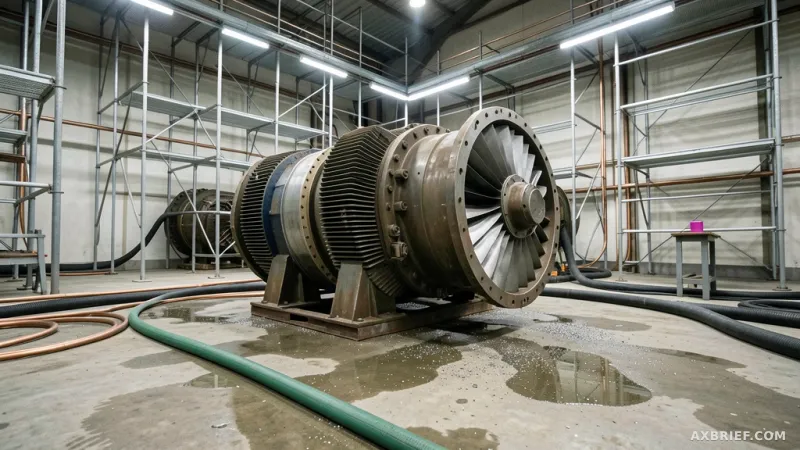
The rapid expansion of AI infrastructure is colliding with local environmental regulations, creating a high-stakes standoff in Memphis. As data centers for xAI’s Colossus and Colossus 2 clusters demand unprecedented amounts of electricity, the company has turned to mobile gas turbines to bypass the limitations of the existing power grid. This strategy has sparked a legal battle, with environmental groups challenging the legality of these power sources, only to find the federal government intervening on behalf of the AI developer.
The Legal Dispute Over Mobile Power
At the heart of the controversy is the classification of 57 gas turbines deployed by xAI. The company maintains that because these units are mounted on trailers, they qualify as mobile equipment, granting them a one-year exemption from Mississippi’s air quality regulations. Conversely, the NAACP and the Southern Environmental Law Center argue that the turbines function as stationary power plants regardless of their mounting, and thus should be subject to federal environmental oversight.
Local concerns are centered on the measurable impact of these turbines on air quality. Data provided by the NAACP indicates an increase in three primary pollutants following the activation of the data centers: PM2.5, formaldehyde, and nitrogen oxides (NOx). Formaldehyde is a known carcinogen, and PM2.5 exposure is linked to a range of severe health conditions, including strokes and Alzheimer’s disease. Despite these health concerns, the Department of Justice (DOJ) has prioritized the continuity of AI operations over local environmental mitigation.
AI Infrastructure as a Strategic Asset
In a memorandum opposing the environmental groups' lawsuit, the DOJ framed the issue through the lens of national, economic, and energy security. The filing explicitly identifies Grok as one of four core AI models supporting Department of Defense military operations. The government highlighted that these models are currently utilized for mission-critical operations, including recent tactical strikes against targets in Iran. By elevating AI compute to a national security asset, the DOJ has effectively signaled that power supply disruptions are no longer just a corporate operational risk, but a threat to American security.
This shift in perspective provides a significant regulatory shield for AI companies pursuing aggressive energy strategies. The financial commitment to this approach is substantial; SpaceX, the parent organization of xAI, disclosed in IPO-related filings that it intends to spend 2.8 billion dollars on gas turbines over the next three years. Of that total, at least 2 billion dollars is specifically earmarked for mobile gas turbine units. This investment confirms a strategic pivot toward rapid, on-site power generation to circumvent the slow pace of traditional grid expansion.
The Future of Energy-Constrained AI
This case illustrates that the competition for AI dominance is increasingly defined by the ability to secure energy. For infrastructure planners and policymakers, the xAI situation highlights a growing tension between environmental compliance and the urgent need for compute capacity. The precedent being set suggests that when AI infrastructure is deemed a strategic asset, traditional industrial regulations may be subject to significant waivers or delays.
As the industry faces a choice between waiting for grid upgrades or assuming the regulatory risk of on-site power generation, the xAI case provides a clear roadmap. The federal government’s intervention confirms that in the current geopolitical climate, the demand for AI compute can override local regulatory hurdles under the banner of national security.