Every AI developer knows the specific anxiety of the monthly API invoice. It is a recurring moment of tension where the promise of generative intelligence meets the harsh reality of token costs and latency bottlenecks. For the past two years, the industry has been locked in a frantic arms race to acquire the hardware necessary to build the next great model, treating the Nvidia H100 as the only viable currency of progress. But as the focus shifts from creating models to actually running them at scale, a new financial and technical friction has emerged: the unsustainable cost of inference.
The Financial Engineering of the Neo-Cloud
General Compute is attempting to break this cycle by redefining how AI infrastructure is financed and deployed. The startup recently secured a 400 million dollar loan from the investment firm Upper90, a move that signals a departure from traditional venture capital funding. What makes this transaction extraordinary is not the sum, but the collateral. Rather than relying on equity or general corporate assets, General Compute used inference-specific chips as the primary security for the loan.
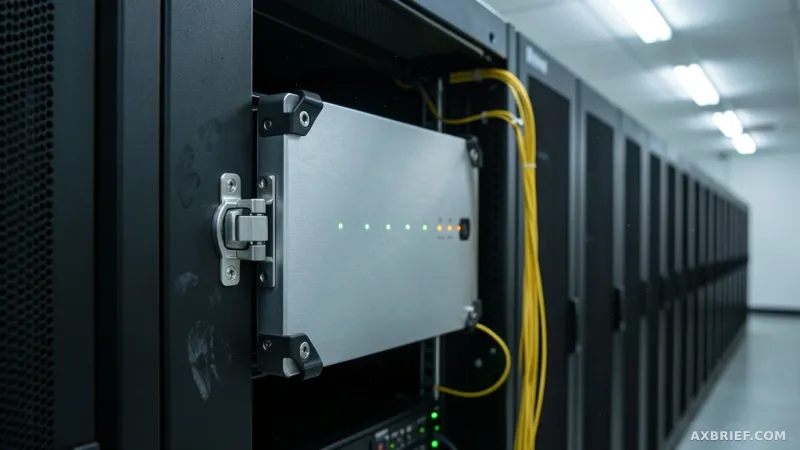
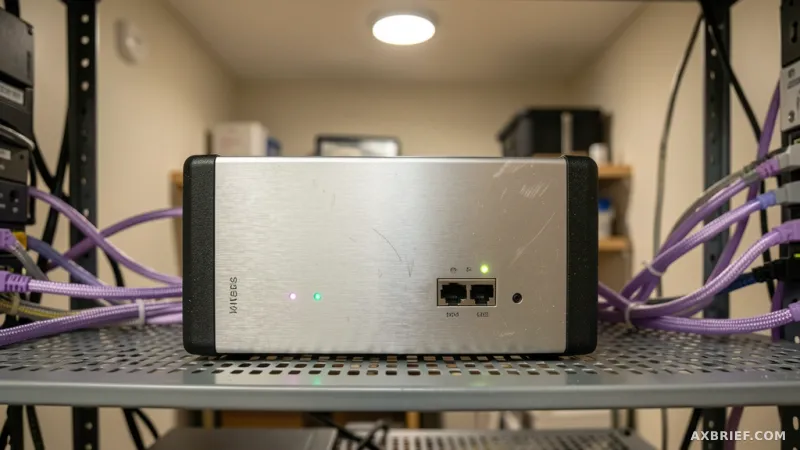
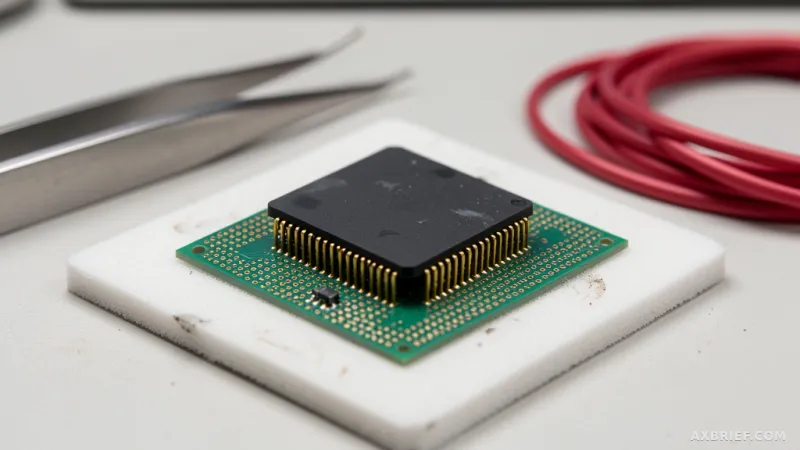
While previous waves of AI financing focused on the massive clusters required for initial model training, this deal recognizes the distinct economic value of hardware designed solely for execution. General Compute is utilizing this capital to build what it calls a Neo-cloud, a specialized, small-scale AI cloud tailored for specific operational purposes. The backbone of this infrastructure is the SN50 chip from SambaNova, a hardware manufacturer backed by Intel.
The technical specifications of the SN50 provide the logic for this financial bet. Unlike the power-hungry GPUs that dominate the current landscape, the SN50 is engineered for extreme efficiency during the inference phase. One of its most critical advantages is its thermal profile. The chip is designed to operate without the expensive, complex liquid-cooling systems that typically plague high-end AI data centers. By relying on air cooling, General Compute can deploy its infrastructure across a wider variety of existing data centers without requiring massive facility retrofits. Furthermore, the company claims that the SN50 can deliver inference speeds 16 times faster than traditional GPU-based cloud environments.
The Pivot from Training to Execution
This shift in collateral reflects a deeper realization within the capital markets. Upper90 is not a newcomer to this space; the firm previously provided the funding for Crusoe to acquire GPUs back in 2021. Having witnessed the first great GPU gold rush, Upper90 now views the GPU market as having reached a point of saturation, where demand may have been overestimated or the hardware over-purchased by early adopters. The investment firm is now pivoting toward the next wave of the AI cycle: the transition from training to inference.
For the end user, the distinction between training and inference is the difference between a one-time construction cost and a permanent utility bill. Training is the process of teaching a model, while inference is the act of the model providing an answer. As the world moves toward deploying open-source models that can rival proprietary giants, the priority is no longer just about who has the most compute for training, but who can run those models with the lowest Total Cost of Ownership (TCO).
General Compute's partnership with SambaNova is part of a broader trend of diversification away from the Nvidia ecosystem. Other players, such as TensorWave, are pursuing similar paths through partnerships with AMD to find alternatives to the current monopoly. The goal is to lower the barrier to entry for AI services by reducing the cost per token and increasing throughput. When capital begins to flow toward non-Nvidia hardware, it indicates that the market is no longer satisfied with a single-vendor solution. The financial industry is now betting that the real value in the AI stack will migrate from the companies that build the models to the companies that can serve them most efficiently.
This movement suggests that the era of blind GPU accumulation is ending. The focus is shifting toward a diversified hardware landscape where different chips are used for different stages of the AI lifecycle. The success of this strategy depends entirely on whether the SambaNova SN50 can prove its cost-efficiency in real-world production environments. If General Compute can successfully lower operational overhead while maintaining high speeds, it will provide a blueprint for a more sustainable AI economy.
The victory in the next phase of AI infrastructure will not be claimed by the entity with the most powerful chip, but by the one that delivers the fastest result at the lowest possible price.