The atmosphere at the Google I/O venue in Mountain View is one of choreographed spectacle. On stage, animations of Tensor chips dance across screens while live demonstrations show augmented reality airships being synthesized over a crowd and beamed instantly to a smartwatch. It is a masterclass in visual storytelling, designed to signal a future where hardware and software merge seamlessly. Yet, as the presentation unfolds, the polished imagery begins to clash with a confusing array of nomenclature. The audience is introduced to Information Agents, Spark, and Halo—a series of fragmented identities that promise a revolution in productivity but offer little in the way of an intuitive roadmap.
The $100 Entry Point and the Agent Lineup
At the center of this new ecosystem sits the Gemini Ultra plan, which carries a steep monthly subscription fee of 100 dollars. This pricing marks a decisive pivot from Google's historical reliance on free, mass-market tools. By establishing a high-cost tier, Google is intentionally targeting a concentrated group of power users—the AI-pilled—to serve as a testing ground for its most ambitious agentic capabilities. The strategy is clear: refine the performance limits of these agents through a high-paying cohort before attempting a broader rollout. However, this creates an immediate functional divide between those who can afford the productivity accelerator and the general user base left with basic tools.
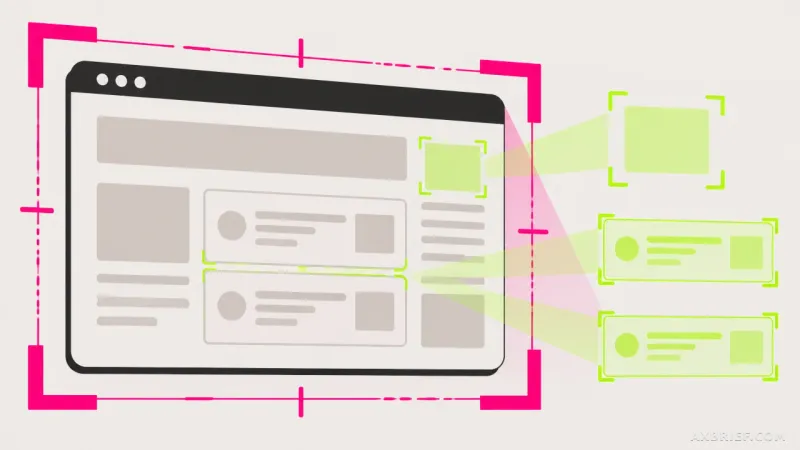
The first pillar of this strategy is the Information Agents, which represent a total AI-driven redesign of the legacy Google Alerts service. Unlike the old system of simple email notifications, these agents operate continuously in the background, tracking specific themes, market trends, product price fluctuations, and urgent weather alerts in real time. Complementing this is the Daily Brief, a personalized digest integrated into the Gemini app. By analyzing a user's Gmail inbox, Calendar, and task lists, the Daily Brief synthesizes a core summary of the day's priorities, with a sequential rollout currently targeting subscribers in the United States.
For deeper integration into the digital workspace, Google introduced Spark. This personal agent lives within Gmail, Google Docs, and the broader Workspace environment. Spark is designed to handle the cognitive load of daily management, from extracting key themes from a mountain of newsletters to tracking household inventory and automating replenishment. Google showcased Spark's potential by demonstrating its ability to coordinate a complex neighborhood block party, managing the logistical friction that typically requires dozens of manual emails. To ensure these agent-driven notifications do not become noise, Google developed Android Halo, a dedicated branding and management layer within the Android OS specifically for tracking agent activity.
Deployment of these tools follows a tiered schedule based on complexity. Information Agents arrive this summer for Google Pro and Ultra subscribers. Spark is slated for a near-term release exclusively for Ultra users, while Android Halo is expected to reach the wider Android community by the end of the year. The Daily Brief is being deployed sequentially to Ultra, Pro, and Plus subscribers in the US. While Google maintains that these features will eventually reach free users, the immediate priority is observing how high-end users push the models to their limits to inform future iterations.
Feature Expansion Versus Problem Solving
During a demonstration of Agentic Chrome, a version of the browser with enhanced agent capabilities, a user configures a car's options and trim levels using only voice commands. On the surface, it is an impressive display of multimodal fluidity. However, this demo reveals a growing tension in Google's product philosophy. Where Google once built tools to solve specific, everyday frictions, the current approach feels more like a showcase of model performance and platform extensibility. The focus has shifted from solving a user's pain point to demonstrating what the underlying technology is capable of achieving.
This trajectory is a reversal of the strategy that made Google Search and Gmail global standards. Those products succeeded by lowering the barrier to entry and unifying the user experience into a single, accessible point of contact. In contrast, the current agent strategy fragments the user base by locking features behind expensive tiers and splitting functionality across multiple brand names. The result is a paradoxical user experience where technical progress leads to increased cognitive load. Users are not just learning a new tool; they are learning a new vocabulary of brands and access points.
This fragmentation stands in stark contrast to the lean approach of AI startups like Poke, Poppy, RPLY, and Wingman. These companies are building messaging-based agents that interact with users through the most familiar interface possible: the text message. By avoiding the need to establish new brand identities or complex entry paths, these startups lower the psychological hurdle for the user. They treat the agent as a service embedded in an existing workflow rather than a destination the user must consciously navigate to.
From a developer's perspective, Google's approach is a victory for API extensibility and model control. But for the end user, it is a transition from an organic search experience to a collection of added features. When the interface is designed around the model's capabilities rather than the user's intent, the product risks hitting a bottleneck. The fundamental problem the tool is meant to solve remains clear, but the path to the solution is now obscured by a layer of corporate branding and subscription walls.
For AI practitioners, the $100 Gemini Ultra barrier is a signal that AI is being positioned as a luxury productivity accelerator rather than a universal utility. This divide accelerates the fragmentation of the user experience and creates a significant churn risk if the perceived value does not immediately outweigh the cost. The real metric for AI success is not the volume of content generated or the speed of the response, but the reduction of actual screen time. If an agent can truly handle research, monitoring, and organization, the user should be able to leave the computer entirely.
However, the industry is currently battling a surge of AI slop—low-quality, indiscriminately generated content that is fueling consumer fatigue. When AI is used merely to create more noise, it becomes a burden. The path to mass adoption lies in defining the agent not as a generative tool, but as an efficiency tool that minimizes the time a human spends processing information. This requires a shift in KPIs from output volume to task completion time.
Ultimately, the complexity of the current interface is the primary inhibitor of growth. Forcing users to distinguish between Spark and Halo is an unnecessary tax on their attention. The future of the AI interface will likely converge toward a single, unified entry point where the user does not need to know which agent is performing the task. The most effective strategy is not to build a portfolio of agent brands, but to embed the agent so deeply into existing messaging and work flows that the brand becomes invisible.