
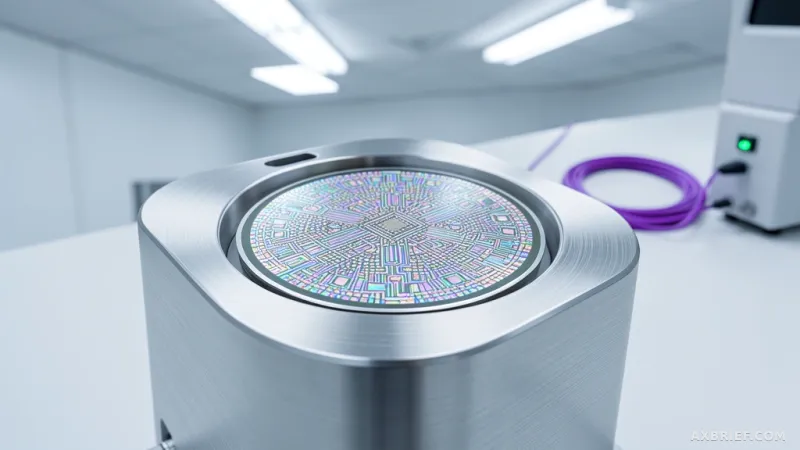
The hum of a modern data center is more than just the sound of processing power; it is the sound of a desperate struggle against thermodynamics. As AI workloads scale, the semiconductor industry is hitting a physical wall where the primary constraint is no longer just transistor density, but the ability to move heat away from the silicon. Engineers have spent decades iterating on thermal interface materials and heat sinks, but the pace of discovery has remained agonizingly slow, tethered to the manual rhythms of human researchers and the linear nature of laboratory experimentation.
The $9 Million Bet on AI Agent Swarms
Discovered Materials is attempting to break this linear progression by treating material science as a scalable software problem. The company recently secured $9 million in seed funding to accelerate the discovery of next-generation semiconductor materials specifically designed to solve the thermal efficiency crisis. This funding round saw participation from Lightspeed India Partners and Peak XV Partners, along with high-profile angel investors including Paul Graham. The startup, an alumnus of the Y Combinator accelerator, is positioning itself at the intersection of generative AI and condensed matter physics.
To standardize how the industry measures progress in this niche, Discovered Materials has released the Material Discovery Bench. This evaluation tool provides a set of hundreds of new material examples and benchmarks designed to track how effectively modern AI models can identify and predict useful materials. By creating an objective yardstick, the company aims to move the field away from anecdotal success stories and toward a rigorous, data-driven framework for AI-led discovery.
From Twenty Hypotheses to Thousands
For the traditional material scientist, the workflow is a grueling cycle of hypothesis, synthesis, and testing. A researcher might formulate and test 20 hypotheses in a single day, with each iteration requiring manual labor and significant time. Discovered Materials has collapsed this timeline by deploying a swarm of AI agents operating within a custom-built execution harness. This system does not rely on a single prompt but rather a coordinated pipeline of specialized AI roles.
The process begins with models from Anthropic, which act as the lead generators. These models scan vast chemical spaces to propose promising candidate materials. Once a lead is generated, it is passed to a proprietary foundation physics model. Unlike a general-purpose LLM, this model is trained specifically on the laws of physics to simulate the properties of the candidate material and verify its viability. This software pipeline has shifted the volume of hypothesis testing from a handful of attempts per day to thousands, effectively automating the early-stage filtering process that previously took months of human effort.
While competitors like MatNex, SandboxAQ, and CuspAI are also pursuing AI-driven material discovery, Discovered Materials has adopted a narrow and deep strategy. Rather than attempting to solve all material science problems, they are focusing exclusively on semiconductor thermal management. By narrowing the scope to the specific thermal and electrical requirements of high-performance chips, they have already identified several materials that match the characteristics of those used by major chip manufacturers, shortening the path to commercial application.
Despite the speed of digital discovery, the final hurdle remains stubbornly physical. The transition from a simulated candidate to a tangible product requires a wet lab, where chemicals are mixed and materials are baked in furnaces. This stage of synthesis cannot be accelerated by an AI agent; the physical time required for a chemical reaction to occur is a constant. Furthermore, a material is only commercially viable if it satisfies a triad of constraints: superior heat dissipation, electrical conductivity that does not interfere with chip logic, and the ability to be mass-produced in a fabrication plant.
The real challenge is no longer finding a candidate that looks good on a screen, but filtering those thousands of AI-generated leads down to the one that can actually be manufactured at scale without losing its properties. The success of Discovered Materials will not be measured by the number of hypotheses it generates, but by how many of those digital dreams survive the reality of the wet lab.



