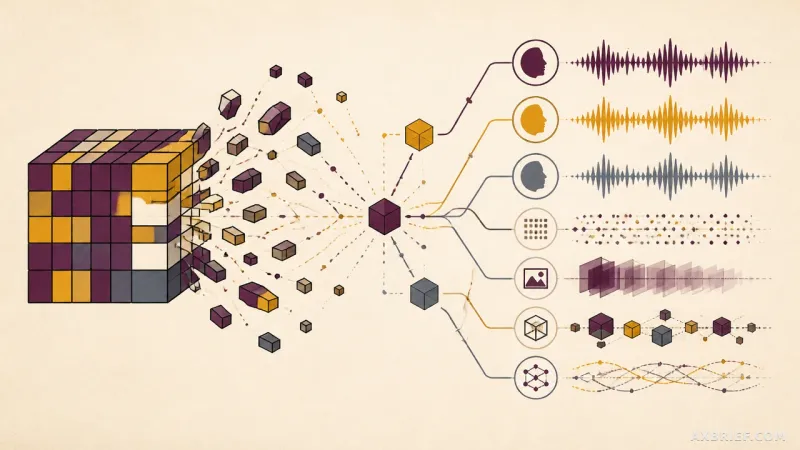
The gap between a polished AI demo and a production-ready enterprise tool is often a chasm of undocumented business logic. Most organizations spend months attempting to align a generic large language model with the messy reality of their internal operations, only to find that the AI lacks the nuance required for high-stakes decision-making. This friction has led to a critical shift in how B2B AI companies deploy their technology, moving away from traditional remote implementation toward a model that embeds technical talent directly into the client's operational environment.
The Architecture of Tacit Knowledge
Forward-deployed engineering, or FDE, has emerged as the primary operational model for enterprise AI vendors seeking to bridge this gap. Unlike traditional professional services that focus on installation and configuration, FDE is designed to encode the tacit knowledge of a business into a digital intelligence layer. This process involves deploying engineers to a client site for several weeks to observe workflows, interview subject matter experts, and identify the unwritten rules that govern how a business actually functions.
This necessity becomes clear when examining a real-world deployment within a major telecommunications provider. In the early stages of implementation, the AI model used a standardized definition of a high-intent customer to trigger retention offers. However, this definition failed to align with the actual results achieved by the human retention team. Upon closer inspection, the human operators were not following a manual; they were using a complex, undocumented set of criteria including specific regional demographics, tenure milestones, and the historical success rates of previous offers.
By embedding engineers alongside these operators, the vendor was able to extract this implicit logic and encode it directly into the AI's decision-making framework. The result was a transition from a model that merely produced a probability score to a system capable of triggering reliable, execution-ready actions. Once this logic was codified, the time required to deploy similar use cases for new customer acquisition or retention dropped from several months to a matter of days, as the vendor now possessed a reusable blueprint for the industry's operational logic.
The Divide Between Custom Labor and Product Intelligence
While many AI vendors point to the size of their FDE teams as a sign of growth, this metric can be deceptive. The true value of an FDE strategy is not found in the number of engineers deployed, but in whether those engineers are performing manual labor or driving product evolution. This distinction is best understood as the difference between the mud model and the sandbox model.
Vendors trapped in the mud model treat every client as a unique snowflake. They build custom features manually for each account without a shared underlying engine. In this scenario, the FDE is essentially a high-priced consultant. When the engineer leaves the site, they leave behind a fragile web of one-off code that is nearly impossible to maintain or scale. The vendor is not building a product; they are running a services business disguised as a software company.
Conversely, the sandbox model utilizes FDE as a sensory organ for the product team. The engineer enters a challenging environment with a general-purpose engine and searches for the specific components or features the engine lacks. When a new business rule or exception is discovered in the field, it is not just solved for that one client. Instead, it is converted into a reusable artifact, passed through security and evaluation reviews, and integrated back into the core product.
This approach transforms the deployment process into a system of intelligence. The goal is to create a clear hierarchy of intelligence: product intelligence that applies to all customers, configurable logic that is reusable within specific accounts, and one-time service tasks that are isolated from the core code. The competitive advantage shifts from who has the most engineers to who has the fastest learning loop between the field and the product roadmap.
For buyers and practitioners, the ability to distinguish between these two models requires looking past the resumes of the engineers and focusing on the handoff process. The critical question is how quickly an insight discovered at a client site becomes a tested feature available to the rest of the customer base. To quantify this, five specific metrics serve as a litmus test for a vendor's product maturity.
First, the number of engineers required per live workflow should trend downward as the product matures. Second, the total engineering time per deployment must decrease for clients within the same vertical. Third, the time-to-value—the duration from the initial idea to execution—should shorten over time. Fourth, the reuse rate of implementation work must increase, meaning the vendor relies more on existing modules than on writing new code. Finally, the productization lag, which measures the time from a field discovery to a general product release, must be minimized.
When a vendor uses abstract terms like learning or playbooks, they are often masking a mud model. A truly scalable FDE operation can provide the exact delta values showing how engineering hours have decreased and how custom integrations have been minimized across a specific industry.
The future of enterprise AI belongs to the vendors who treat every deployment not as a project to be completed, but as a data point to be productized.