The lunar surface is transitioning from a site of historic footprints to a live testing ground for the next generation of edge computing. For decades, space exploration relied on radiation-hardened processors that were reliable but computationally stagnant, often trailing behind consumer electronics by a decade. This week, the paradigm shifts as the industry moves toward deploying high-performance AI silicon in the most hostile environment known to man. The goal is no longer just to survive the vacuum of space, but to think and react within it.
The Architecture of Lunar Autonomy
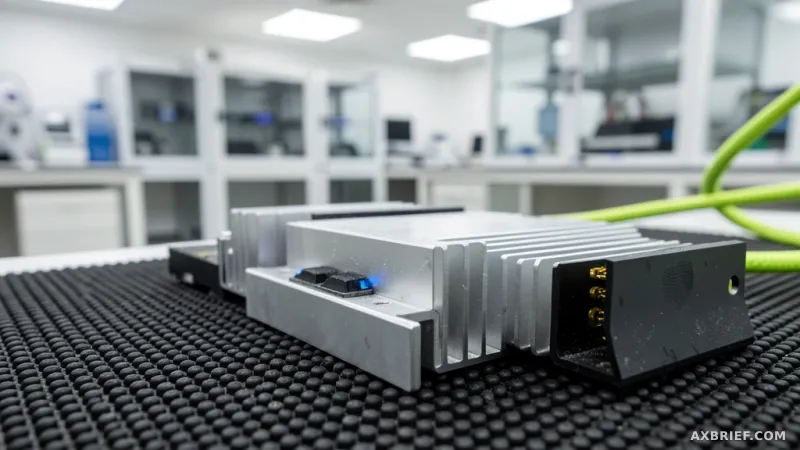
Lunar Outpost, a leader in space infrastructure robotics, has announced that the lidar system control for its next-generation moon rovers will be powered by the NVIDIA Jetson platform. This integration is a milestone for the industry, as it positions the Jetson as likely the first GPU to ever operate on the lunar surface. The deployment is not limited to the ground; NVIDIA is simultaneously partnering with Firefly Aerospace to implement Jetson-based image processing systems on lunar orbital satellites. These satellites will serve a dual purpose: assisting scientists in high-resolution lunar mapping and tracking the movement and status of robotic assets operating on the surface below.
The logistics for this deployment are already in motion. The rovers are scheduled to launch via a Falcon 9 rocket, hitching a ride on a lander developed by Intuitive Machines. The mission targets are specifically chosen for their scientific complexity, including the interiors of deep craters and the Reiner Gamma region, an area famous for its magnetic anomalies. These missions are slated for launch by the end of this year, marking a rapid acceleration from conceptual design to orbital deployment.
From Deterministic Logic to Physical AI
This hardware shift reflects a deeper evolution in how robots interact with the physical world, a transition Lunar Outpost describes as the move toward Physical AI. For years, autonomous navigation in space relied on deterministic control stacks. In a deterministic system, every action is the result of a predefined set of rules: if the sensor detects an obstacle at X distance, the rover turns Y degrees. While safe, this approach is rigid and often fails when encountering the unpredictable terrain of a lunar crater.
Justin Cyrus, CEO of Lunar Outpost, notes that the industry has evolved beyond this binary logic. The current strategy involves running deterministic models and Physical AI in parallel. By doing so, the system can use traditional logic for safety-critical stability while leveraging Physical AI to solve complex spatial problems that were previously impossible for a robot to navigate autonomously. This hybrid approach allows the rover to verify AI-driven decisions against a known safety baseline before executing a move.
The choice of the Jetson platform over NVIDIA's massive data center chips, such as the Blackwell or Vera Rubin architectures, is a matter of survival and efficiency. In the lunar environment, power is the most precious resource. The Jetson provides the necessary local processing power to handle sensor fusion and real-time inference without the massive energy draw of a server-grade GPU. By processing lidar data locally on the edge, the rover can react to a cliff or a boulder in milliseconds, rather than waiting for a signal to travel to Earth and back.
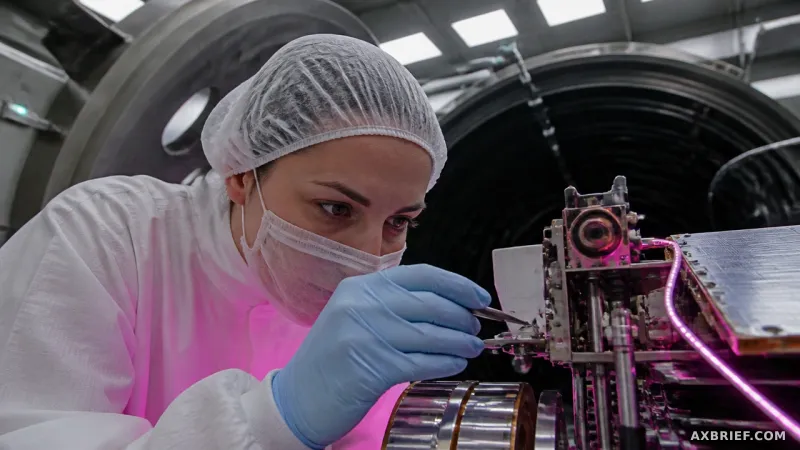
However, the transition to Physical AI introduces a new set of engineering tensions. Unlike low-earth orbit satellites, which benefit from some planetary protection, a rover on the moon is directly exposed to cosmic radiation and extreme thermal swings. The true test of this architecture will be the lunar night, where temperatures plummet and power becomes critically scarce. The success of the Jetson deployment depends on whether these edge AI chips can maintain inference capabilities while operating under strict power constraints and enduring the brutal radiation of the lunar surface.
This mission serves as a precursor to a larger vision of permanent lunar habitation. Lunar Outpost is utilizing this deployment to validate a scalable robotic workforce that can prepare the moon for human arrival. The ultimate goal is the launch of Pegasus, a massive rover designed to transport astronauts, which is planned for delivery via a Blue Origin rocket. While the timeline for Blue Origin's launch vehicles remains fluid, Lunar Outpost is aligning its development with NASA's 2028 target for a manned lunar return.
The viability of a lunar colony now depends on whether edge AI can survive the lunar night.