The dream of creating a sprawling digital world has long been gated by a steep technical wall. For years, aspiring creators have stared at blank scripts in Lua or C#, feeling the friction between a vivid imagination and the grueling reality of syntax errors and API documentation. This week, that barrier shifted. The act of game development is moving away from the desktop workstation and into the palm of the hand, transforming the mobile device from a consumption tool into a primary engine of creation.
The Architecture of Instant Creation
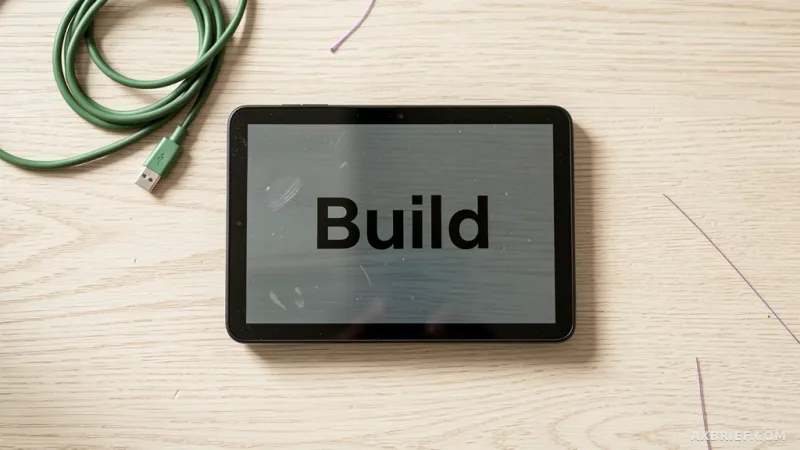
Roblox has officially unveiled Build, an AI-powered game creation tool designed to turn simple text descriptions into functional game environments directly within the mobile app. The system allows users with zero programming experience to describe a game concept in plain language, which the AI then interprets to generate the foundational structure, mechanics, and visual assets. This is not a mere prototype but a scalable deployment starting with an open alpha test in New Zealand on July 28. To ensure a controlled rollout, the feature is available to age-verified users aged 9 and older within the region. Roblox has implemented a tiered permission system where users aged 16 and above can publish their creations to a global audience, while younger creators are limited to local sharing to maintain safety standards.
The economic model for Build follows a hybrid approach, offering a free basic version alongside paid options, allowing creators to scale their tools based on their budget and ambition. Under the hood, Build does not rely on a single monolithic AI. Instead, it employs a sophisticated orchestration of open-source blueprints and proprietary AI models developed internally by Roblox. This ensemble approach allows the tool to simultaneously handle diverse tasks: defining the physical laws and interaction mechanics of the game, generating 3D character models and environmental assets, and composing the visual style and auditory backdrop. The result is a cohesive 3D scene generated from a single prompt, removing the need for manual asset sourcing or complex scene assembly.
The Battle Against AI Slop
When the cost of production drops to nearly zero, the primary risk is no longer a lack of content, but a deluge of it. The industry is currently grappling with the rise of AI slop—low-effort, repetitive, and hollow content that floods platforms and degrades the user experience. This tension is palpable within the professional community. According to a survey conducted by the Game Developer Conference, 52% of game industry professionals believe that generative AI is having a negative impact on the industry. The fear is that the democratization of tools will lead to a sea of mediocrity where genuine creativity is drowned out by algorithmic repetition.
Roblox is attempting to solve this quality crisis not through censorship or manual curation, but through a cold, data-driven meritocracy. Rather than ranking games by the number of times they were generated or the popularity of the creator, Roblox is implementing a discovery system based on player retention. The algorithm prioritizes games that keep players engaged over time, effectively using the community as a real-time quality filter. If a game is a shallow, AI-generated shell with no actual gameplay value, players will leave quickly, and the system will naturally push it off the home page. In this ecosystem, the AI provides the means of production, but the players provide the validation of quality.
This shift is coinciding with a broader roadmap to move the creator from a builder to a director. Within the coming months, Roblox plans to release AI agents designed to help creators analyze their games and identify bugs by simulating playtests. Furthermore, the company is accelerating the development of foundation models specifically for 3D assets. The goal is a new scene-generation model that allows for the total construction, modification, and immediate testing of a 3D environment through a single text prompt. As the technical execution of 3D modeling and coding becomes a commodity, the competitive advantage shifts from those who know how to build to those who know what is worth building.
The era of the technical gatekeeper is ending, replaced by an era where the only remaining limit is the quality of the initial idea.