The global conversation around artificial intelligence has long been dominated by the GPU. For the past two years, the industry has treated the graphics processing unit as the sole arbiter of AI performance, viewing the rest of the hardware stack as mere support. However, a quiet shift is occurring in the data centers of the world's largest tech firms. Developers and architects are discovering that the real bottleneck is not the speed of calculation, but the speed of data movement. As models grow in complexity, the industry is hitting a memory wall where the processor spends more time waiting for data than actually computing it. This physical limitation has transformed memory from a commodity into the most critical strategic asset in the AI race.
The Mechanics of the US Market Entry
To capitalize on this structural shift, SK Hynix is moving to list on the US market via American Depositary Receipts (ADRs). This move is designed to provide US-based investors with streamlined access to the company's equity without the complexities of trading on the Korean exchange. The company plans to sell approximately 17.8 million shares through this offering. To ensure the shares are accessible and liquid, each ADR is structured to represent one-tenth of a common share. The timeline for this transition is aggressive, with final pricing set for Thursday and official trading expected to commence on Friday.
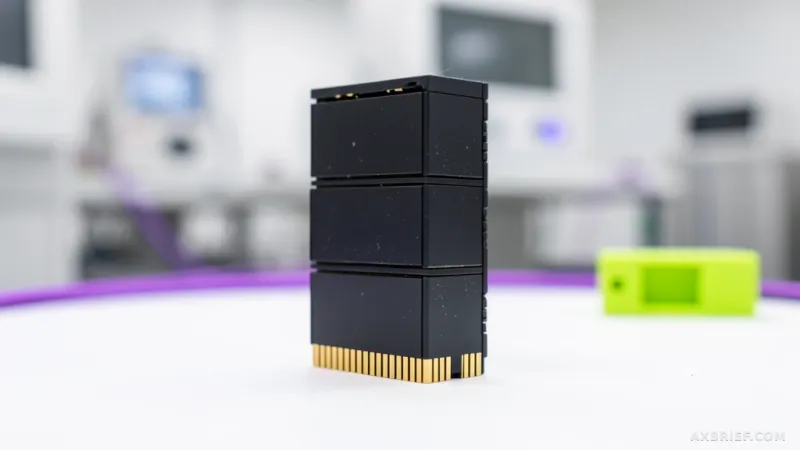
This financial maneuver comes at a time of extreme volatility and demand in the semiconductor supply chain. Hyperscalers such as Amazon, Microsoft, Google, and Oracle are currently racing to build AI factories—massive, integrated data centers designed to train and deploy next-generation models. These facilities require High Bandwidth Memory (HBM), which stacks multiple DRAM layers to create a high-speed data highway. The demand for HBM, coupled with a simultaneous surge in standard DRAM and NAND flash requirements, has led to a systemic shortage. Industry insiders have begun referring to this crisis as RAMageddon, a state where the lack of available memory threatens to stall the deployment of new AI capabilities across the board.
The Paradox of the AI Hardware Cycle
On the surface, the financial metrics suggest an era of unprecedented growth. The semiconductor industry, traditionally known for slow, cyclical movements, has been catapulted into a vertical climb. SK Hynix reported that its first-quarter revenue surged by approximately 200 percent compared to the same period last year. This operational success is mirrored in the equity markets, where the company's stock price has climbed roughly 260 percent since the start of the year. The enthusiasm is even more pronounced among its US peers; Micron has seen its stock price skyrocket by approximately 700 percent over the last year, pushing its total market valuation beyond 1 trillion dollars.
However, this euphoria masks a significant structural risk inherent to semiconductor manufacturing. To meet the projected demand, SK Hynix and Samsung have committed more than 550 billion dollars toward the construction of new manufacturing facilities. This is not a simple upgrade of existing lines but a massive expansion of the physical production footprint. The tension lies in the lead time. A semiconductor fab takes years to design, build, and calibrate. There is a looming danger that by the time these 550 billion dollars in investments result in operational capacity, the technical requirements for AI memory may have shifted. If the industry moves toward a new standard or if the intensity of memory requirements plateaus, the market could swing violently from a shortage to a massive oversupply. This would trigger a price collapse, turning the current capital expenditure into a liability.
SK Hynix is attempting to raise up to 28 billion dollars through its US listing to widen the data highways of HBM and DRAM. The success of this venture depends entirely on whether the gap between memory supply and AI demand remains wide enough to justify this level of expansion. The intersection of this capital injection and the completion of new fabs will define the next inflection point of the hardware cycle.