The atmosphere surrounding the Nasdaq this week feels less like a standard listing and more like a geopolitical event. For years, SpaceX operated as the crown jewel of private aerospace, a secretive powerhouse fueled by venture capital and the singular vision of Elon Musk. Now, the veil is lifting as the company transitions into the public eye, triggering a scramble among institutional and retail investors to secure a piece of the most ambitious hardware play of the century. This is not merely a liquidity event for early employees; it is a massive capital injection designed to fund a leap from orbital logistics to foundational AI infrastructure.
The Scale of the Space Exploration Technologies Corp. Listing
The numbers associated with this offering are almost difficult to conceptualize. SpaceX has successfully raised 75 billion dollars, a sum that shatters every previous record for a single corporate public offering. To achieve this, the company issued 555.6 million shares at a fixed price of 135 dollars per share. Trading is set to commence this Friday on the Nasdaq, where the company will operate under its formal name, Space Exploration Technologies Corp., and be identified by the ticker symbol `SPCX`.
To understand the magnitude of this event, one must look at the previous gold standard of IPOs. In 2019, the Saudi Arabian state-owned oil giant Saudi Aramco set a benchmark by raising 24.9 billion dollars. SpaceX has not just surpassed that figure; it has nearly tripled it. This shift is symbolic, marking a transition in global capital preference from traditional energy monopolies to frontier technology firms. The market is no longer betting on the reserves of the earth, but on the accessibility of the stars.
Furthermore, the company has built in a mechanism to capitalize on overwhelming demand. If investor appetite continues to surge, SpaceX holds an option to supply an additional 83.3 million shares to the market. This move could potentially bring in another 11 billion dollars, pushing the total capital raised into a territory that few companies in history have ever touched. This flexibility suggests that the company is not just looking for a specific target, but is prepared to absorb as much liquidity as the market is willing to provide.
From Rocketry to Silicon Infrastructure
While the 135 dollar IPO price provides a baseline, the shadow market is already signaling a different reality. On Hyperliquid, a decentralized betting platform where traders speculate on asset prices without owning the underlying shares, SpaceX is currently being valued at 167 dollars per share. This discrepancy suggests that the market is anticipating a significant IPO pop, with traders betting on a price jump of approximately 20 percent the moment the opening bell rings. The gap between the official offering and the speculative price reveals a tension: the company is priced for growth, but the market believes it is undervalued even at record-breaking levels.
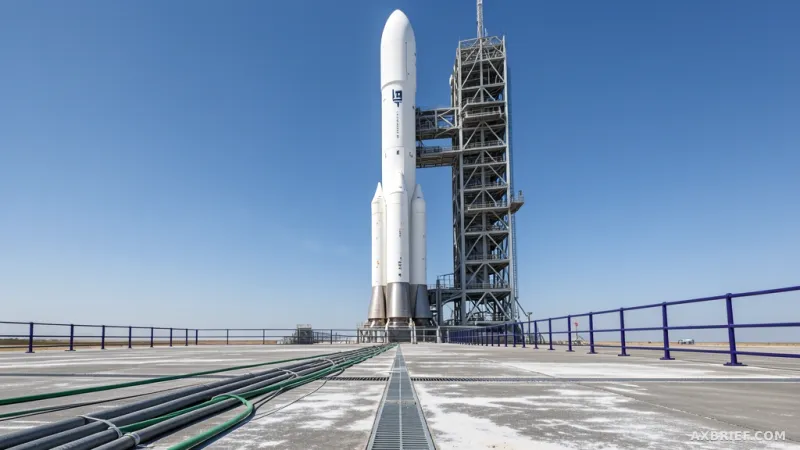
This optimism is not based on the novelty of space travel, but on a strategic pivot toward vertical integration. SpaceX is currently pursuing two massive engineering goals that extend far beyond launching satellites. First is the continued perfection of the world's largest reusable rocket system, which aims to drive the cost of orbit to near-zero. Second, and perhaps more critically for the AI era, is the construction of new chip fabs within the United States.
By building its own semiconductor fabrication plants, SpaceX is attempting to solve the same bottleneck currently plaguing the AI industry: the reliance on external silicon providers. The logic is clear: if you control the rocket, the satellite network, and the chips that power the onboard intelligence, you control the entire stack of the future space economy. The 75 billion dollar war chest is the fuel for this transition. The company is no longer just a transportation service to the International Space Station; it is evolving into a hardware-centric AI infrastructure firm that views the vacuum of space as the ultimate data center.
The success of this valuation now rests on the speed of execution. The 167 dollar expectation on Hyperliquid is a bet on SpaceX's ability to deliver these chip fabs and reusable systems on schedule. If the company can internalize its supply chain and lower the cost of deployment, the current record-breaking valuation may eventually look conservative.
This IPO is the ultimate acceleration pedal for Elon Musk's vision of a multi-planetary species, funded by a market that now views space as the next great frontier for AI and silicon.