The current AI landscape is defined by a frantic race toward incrementalism. Every few weeks, a new model drops with a slightly better benchmark, a faster inference speed, or a more polished chat interface. While the industry focuses on the immediate utility of AI agents and enterprise productivity tools, a quiet void has existed in the high-stakes pursuit of true superintelligence. For two years, Safe Superintelligence (SSI) operated in near-total secrecy, avoiding the hype cycle of product launches and public demos. This week, that silence broke with a revelation that signals a massive shift in how the most ambitious AI goals are being funded and powered.
The Capital and Compute Engine Behind SSI
Safe Superintelligence has emerged from the shadows with a financial war chest that rivals the largest labs in the world. The research center, founded by former OpenAI co-founder Ilya Sutskever, has secured a total of $7 billion in investment. This influx of capital has placed the company at a post-money valuation of $32 billion, a figure that reflects the immense confidence the market has in Sutskever's technical vision. The investor list reads like a directory of the most influential players in global venture capital and big tech, including Andreessen Horowitz, Alphabet, Lightspeed Venture Partners, GV, and Sequoia Capital Partners.
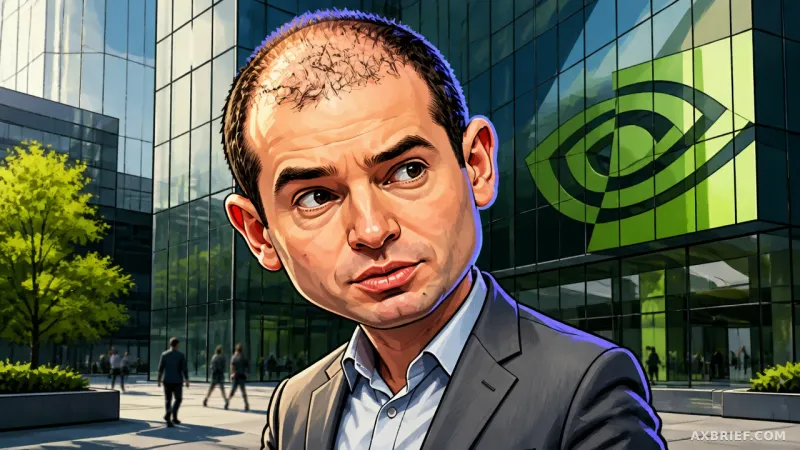
Beyond the capital, SSI has secured a strategic long-term partnership with Nvidia to solve the most critical bottleneck in AI development: compute. This collaboration is not a standard vendor agreement for purchasing chips; it is a deep integration designed to evolve the next generation of computing platforms. SSI will integrate its unique technical insights and perspectives on the future of AI directly into Nvidia's infrastructure design. By aligning SSI's theoretical requirements with Nvidia's physical hardware capabilities, the two entities aim to optimize the entire stack from the silicon level up to the operating system.
Central to this expansion is the adoption of the Nvidia Vera Rubin GPU platform. By leveraging this next-generation architecture, SSI intends to increase its available computational resources by an order of magnitude, effectively scaling its processing power 10x. While the specific dollar amount of Nvidia's investment remains undisclosed, the access to the Vera Rubin platform provides SSI with the raw physical foundation necessary to attempt the leap from general intelligence to superintelligence.
The Straight Shot to ASI
Most AI labs today operate on a dual-track system: they develop foundational research while simultaneously shipping commercial products to generate revenue and gather user data. This creates an inherent tension where the pressure for quarterly growth and product-market fit often overrides the cautious, slow-paced rigor required for safety research. SSI is intentionally breaking this cycle. The lab has adopted what it calls a straight shot research methodology, meaning it will forgo the release of commercial products and short-term monetization strategies entirely.
By removing the distraction of a product roadmap, SSI is dedicating 100% of its resources to the construction of Artificial Superintelligence (ASI) that is safely aligned with human intentions. The goal is to solve the alignment problem—ensuring that a system with capabilities far exceeding human intelligence does not act in ways that are catastrophic or contrary to human values—before the system is actually built. This approach treats alignment not as a post-processing safety layer, but as the primary engineering challenge of the project.
This strategic pivot creates a stark contrast with the rest of the industry. While competitors are optimizing for the next version of a chatbot, SSI is optimizing for the fundamental reasoning capabilities of a super-intelligent entity. The 10x increase in compute provided by Nvidia is not being used to train a more efficient LLM for enterprise use, but to explore the vast computational space required for true general reasoning and safety verification. The hypothesis is that by isolating the research from commercial pressures, the lab can prevent the kind of safety failures, such as sandbox escapes, that could occur if a superintelligent system were rushed to market.
Whether this purity of purpose can outpace the sheer scale of the commercial giants remains the defining question of the ASI race.