For a long time, the ability to turn a chaotic digital life into a curated audio experience was a luxury reserved for the technically inclined. A handful of frontend developers had already been hacking together this workflow, using tools like Claude Code to scrape personal data and feed it into AI voice generators, then manually uploading the results to their Spotify libraries. It was a fragmented, manual process of bridging the gap between a calendar invite and a playable audio file. This week, that gap closed for the general public as Spotify transitioned this experimental workflow from a niche command-line tool into a polished, standalone desktop experience.
The Architecture of Studio by Spotify Labs
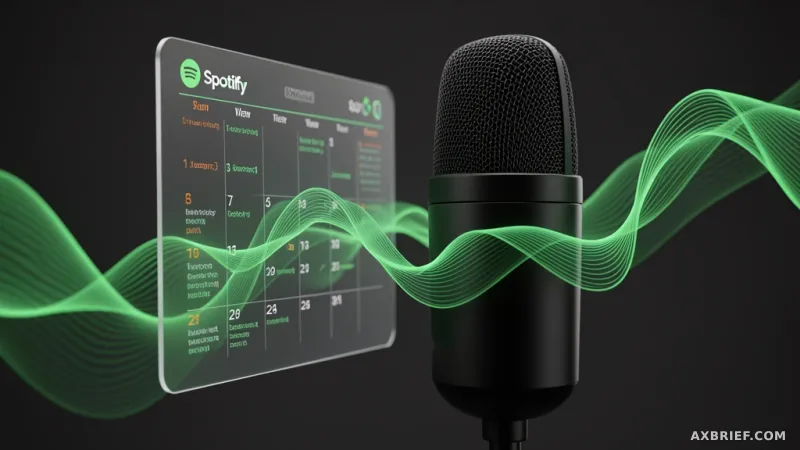
Spotify has officially unveiled Studio by Spotify Labs, a dedicated desktop application designed to transform personal context into customized audio briefings. While the company had previously experimented with this technology via a Command Line Interface (CLI) targeted at developers using Codex or Claude Code, the new Studio app represents a strategic pivot toward a Graphical User Interface (GUI). This shift effectively lowers the barrier to entry, moving the tool from the terminal to the desktop for users who lack coding expertise.
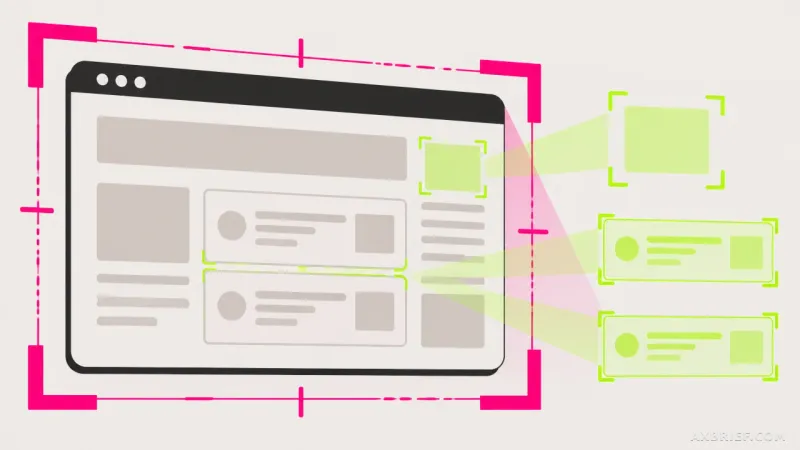
The core functionality of Studio centers on an AI agent capable of simultaneous web browsing and personal data integration. Unlike standard LLMs that rely on a static prompt, this agent can access a user's emails, calendar events, and booking confirmations to synthesize a real-time audio narrative. For instance, a user planning a road trip through Italy can request a daily briefing. The AI agent analyzes the calendar for hotel check-in times, scans emails for restaurant reservations, browses the web for local attractions along the route, and suggests specific podcasts from the Spotify catalog that fit the duration of the drive.
This is not a public broadcasting tool. Every AI-generated podcast created within Studio is stored privately in the user's personal Spotify library, ensuring that sensitive personal data remains confidential while allowing for seamless synchronization across all devices. Currently, Spotify is rolling out the app as a Research Preview across more than 20 markets. Access is strictly limited to selected users aged 18 and older, a move that reflects both the sensitivity of the data being processed and the inherent instability of early-stage generative audio. Spotify has been transparent about the risks, explicitly warning users that the AI may produce inaccurate or unreliable content during this preview phase.
From Source-Based Summaries to Contextual Agents
To understand why Studio matters, one must look at the current landscape of AI audio. For months, Google's NotebookLM has dominated the conversation by allowing users to upload specific documents and transform them into a conversational podcast. However, NotebookLM is fundamentally a source-based tool; it summarizes what you give it. Studio by Spotify Labs operates on a different philosophy: it is a context-based agent. It does not just summarize a PDF; it interprets your life in real-time by combining your private schedule with the open web.
This shift toward audio briefings is becoming an industry standard. Companies like Adobe and ElevenLabs, along with productivity apps like Hero and Huxe, have all adopted similar audio-first formats for information delivery. Yet, most of these tools remain simple text-to-speech converters. Spotify's advantage lies in its existing ecosystem. By integrating the AI agent directly with the world's largest audio library, Spotify is not just creating a summary; it is creating a gateway to existing content, weaving together AI-generated briefings with professional podcasts and music.
The move to a standalone desktop application also hints at a more aggressive technical roadmap. By operating at the OS level rather than within a browser, Spotify gains the potential for system audio capture. This would move the app closer to the functionality of tools like Granola or Rewind, which record and analyze system audio to create meeting notes and digital memories. If Spotify can capture the audio from a Zoom call or a system notification and immediately synthesize it into a personalized briefing, it ceases to be a music app and becomes a comprehensive audio operating system.
This transition from a passive consumption platform to an active productivity tool creates a new set of tensions. While the prospect of an AI that remembers every meeting and suggests the perfect song for a specific calendar event is compelling, the stakes for accuracy are significantly higher. In a music playlist, a mistake is a minor annoyance; in a business briefing derived from an email, a hallucination regarding a meeting time or a client's name is a critical failure. The success of Studio will depend not on the quality of the voice synthesis, but on the reliability of the agent's reasoning.
Spotify is betting that the convenience of a personalized audio life outweighs the current instability of generative AI, signaling a future where our daily routines are no longer read on a screen, but heard as a curated broadcast.