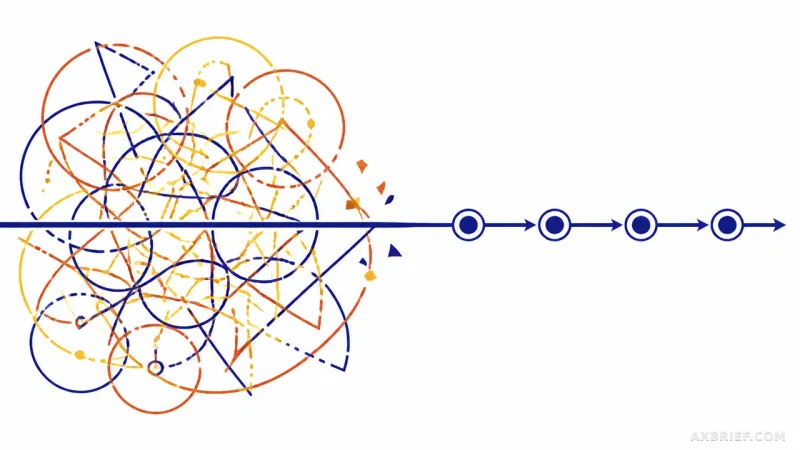
For years, the AI community has operated under a comfortable assumption: if you feed a model enough data, it will eventually figure out the world. This worked flawlessly for Large Language Models because the internet provided a nearly infinite library of human thought. But for researchers attempting to build Physical AI, the library is empty. There is no equivalent to Common Crawl for the act of folding a t-shirt or the precise wrist flick required to place an AirPod into its charging case. While the software side of robotics has advanced rapidly, the industry has hit a wall known as the data bottleneck, where the lack of high-quality, real-world interaction data prevents robots from moving beyond scripted lab environments into the unpredictable chaos of the real world.
The Infrastructure of Physical Intelligence
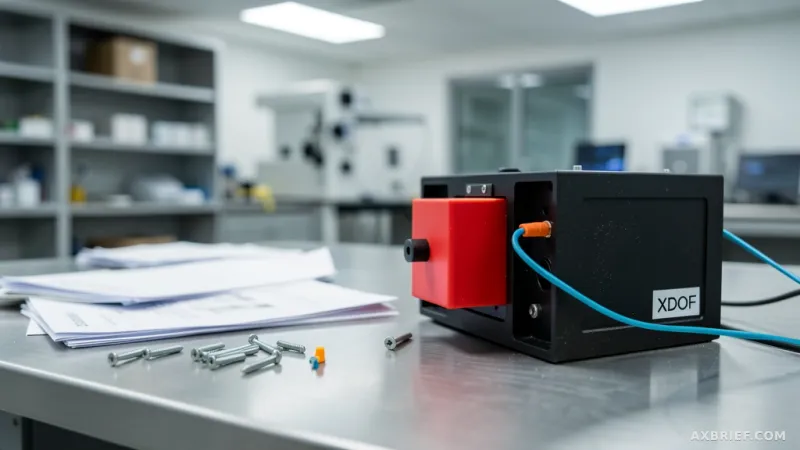
XDOF enters this gap not as a robotics company, but as a data pipeline powerhouse. Officially launching in October 2024, the startup has already secured $70 million in funding from a heavyweight roster of investors including Thrive Capital, Spark Capital, a16z, Lux, and WndrCo. With a team of approximately 60 employees, XDOF is already operating at scale, partnering with over 20 customers, including several unnamed frontier AI labs that are racing to integrate embodied intelligence into their next-generation models.
The centerpiece of their launch is the ABC dataset, developed in collaboration with the UC Berkeley AI Research lab. This dataset represents one of the most ambitious attempts to date to standardize and scale robot learning data. The ABC dataset comprises 130,000 robot manipulation trajectories, 300 hours of simulation data, and 100 hours of dedicated evaluation data. By providing this volume of high-fidelity information, XDOF has enabled robots to master complex, non-rigid object manipulation tasks that previously baffled most systems, such as folding t-shirts, flattening cardboard boxes, and the high-precision task of inserting AirPods into their cases.
To sustain this volume of data, XDOF employs a tiered architecture they call the data pyramid. This structure recognizes that not all data is created equal. At the apex of the pyramid is teleoperation data collected directly from the robots intended for final deployment. This is the highest-value data because it maps perfectly to the target hardware's kinematics. The middle tier utilizes low-cost teleoperation systems like GELLO, which allows human operators to guide robot arms through tasks, rapidly generating a diverse set of manipulation examples without the need for expensive, custom-built rigs for every single robot. The base of the pyramid consists of egocentric data, captured from the perspective of humans performing daily tasks. XDOF is developing proprietary wearable sensors to capture this data, focusing heavily on the hardware-level selection of cameras to ensure that hand-tracking algorithms can maintain the precision necessary for high-quality data annotation.
The Logistics of the Data Feedback Loop
The true insight behind XDOF's approach is the realization that Physical AI is fundamentally a logistics problem, not just a coding problem. In the world of LLMs, scaling data means increasing server capacity and scraping more websites. In the world of Physical AI, scaling data means managing physical real estate and hardware maintenance. The operational burden of generating 130,000 trajectories is staggering. It requires hundreds of thousands of square feet of warehouse space to house hundreds of robots operating simultaneously. It requires a workforce of trained operators who can perform tasks consistently and a rigorous calibration process to ensure that every robot's physical parameters are aligned across the fleet.
This operational reality creates a sharp divide between the AI labs designing the models and the infrastructure required to feed them. For a frontier AI lab, the cost of building a massive robot warehouse and managing a fleet of hardware is an unnecessary distraction from algorithmic research. XDOF transforms this operational burden into a service, allowing developers to treat physical data as an API rather than a construction project. This shift moves the needle from focusing on the chip or the model architecture to focusing on the speed of the data feedback loop.
The company's name, derived from Degrees of Freedom (DOF), highlights this philosophy. To increase the number of independent movements a robot can perform, you cannot simply add more parameters to a neural network. You must provide the model with high-precision trajectory data for every new degree of freedom it is expected to master. By industrializing the collection, cleaning, and annotation of this data, XDOF is creating a self-reinforcing feedback loop where robots are trained, tested, and refined through a continuous stream of real-world interaction.
Developers are now facing a critical strategic choice: whether to sink capital into building their own proprietary data factories or to leverage specialized pipelines to accelerate their training cycles. As the industry moves toward general-purpose robotics, the competitive advantage is shifting away from who has the best architecture and toward who has the most efficient pipeline for turning human movement into machine intelligence.
The race for embodied AGI is no longer being won in the cloud, but on the warehouse floor.