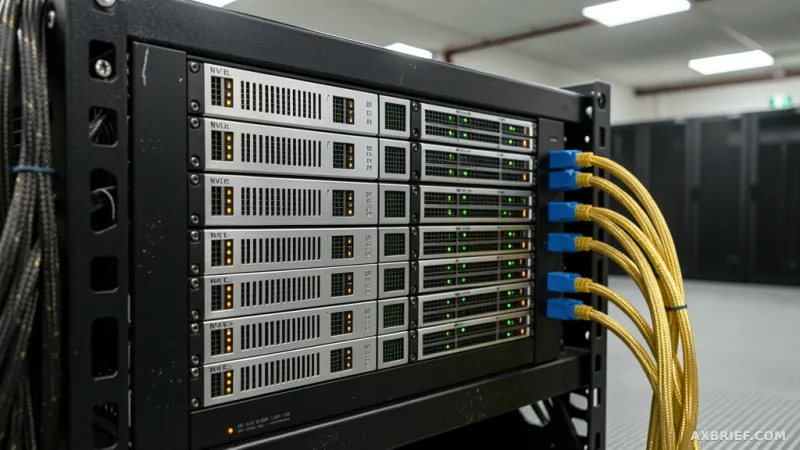
The current era of artificial intelligence is defined by a frantic arms race for compute. Data center operators and enterprise architects have spent the last few years obsessed with a single metric: the number of teraflops a GPU can push. The prevailing logic was simple: more compute equals more intelligence. However, as the industry pivots from the massive, centralized effort of model training to the fragmented, real-time demands of global inference, a new and more stubborn wall has appeared. The bottleneck is no longer how fast the processor can think, but how quickly the data can reach it.
The Architecture of a Million Workloads
According to Jim McGregor, founder and chief analyst at Tirias Research, the fundamental misunderstanding in current AI deployment is treating inference as a monolithic workload. In reality, AI inference is not a single task but a collection of millions, or even billions, of distinct and diverse workloads operating simultaneously. Each request—whether it is a simple query to a chatbot or a complex reasoning task for a scientific simulation—carries its own specific set of resource requirements. When these diverse demands hit a data center, they create a volatile load that cannot be managed by simply adding more raw processing power.
McGregor emphasizes that modern data centers must evolve to support continuous, distributed, real-time AI services. The legacy approach of treating AI as a singular, heavy-lift operation fails to reflect the operational complexity of a production environment. To bridge this gap, the industry is moving toward purpose-built architectures. These are systems designed from the ground up to handle the erratic and distributed nature of AI traffic, rather than trying to force modern LLMs into the rigid structures of traditional IT infrastructure. Without this shift, the transformative potential of AI—specifically in accelerating scientific discovery and deploying truly autonomous digital agents—remains capped by the very hardware meant to enable it.
The Pivot from Compute to Data Movement
This shift in focus fundamentally changes the definition of optimization. In the training phase, the goal was throughput: pushing as much data as possible through the model to converge on a set of weights. Inference, however, is a game of latency. The challenge has moved from the chip's internal calculation speed to the organic coordination between memory, storage, and networking. In this new paradigm, memory and storage are no longer peripheral components that support the GPU; they are the core of the system.
To achieve real-time responsiveness, architects are implementing data pipeline architectures that prioritize the rapid collection, refinement, transformation, and movement of data. By optimizing the physical path that data travels, systems can drastically reduce the latency that occurs during the inference process. Unlike training, which is a relatively predictable flow, inference requires constant data retrieval and aggressive caching to maintain speed. This puts immense pressure on the infrastructure, creating a tension that cannot be solved by increasing the number of GPUs. If the data cannot be fed to the processor fast enough, the most powerful chip in the world becomes an expensive heater, idling while it waits for the next token to arrive from memory.
This pressure is further amplified by the rise of agentic AI. Unlike standard AI, which responds to a prompt and stops, agentic AI operates autonomously to achieve a goal, often looping through multiple reasoning steps and calling external tools. This behavior introduces unpredictable spikes in data movement and demands a level of scalability and utilization that legacy systems cannot provide. When enterprises over-provision their infrastructure to handle these peak loads, they face skyrocketing operational costs. The result is a system that is prohibitively expensive during peaks and wastefully idle during troughs.
Consequently, the industry is abandoning the pursuit of a single peak performance number as the primary benchmark. The new checklist for AI infrastructure focuses on the balance between efficiency, cost, and scalability. The critical metrics have shifted from maximum TFLOPS to performance-per-watt and data movement latency per workload. This transition marks the end of the brute-force era of AI hardware and the beginning of an era defined by architectural precision.
Success in the next phase of AI deployment will be measured by how effectively a system minimizes the distance between the data and the compute.