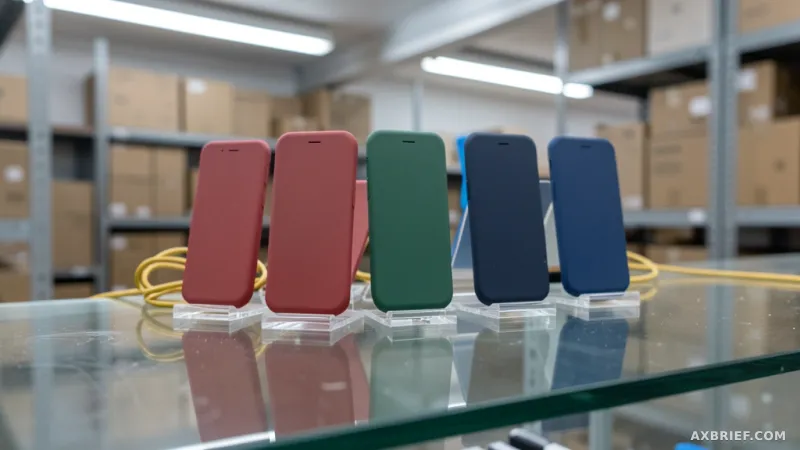
A shopper in a bustling electronics market in New Delhi reaches for a budget smartphone, only to find the price tag has climbed past the 15,000 rupee mark. This is not an isolated incident of inflation or a sudden brand premium. Across the world's second-largest smartphone market, a quiet but violent shift is occurring in the supply chain. The very technology enabling the generative AI revolution in the cloud is now making the entry-level handheld device an endangered species. While the tech world celebrates the arrival of smarter agents and faster LLMs, the physical cost of the hardware required to access them is beginning to push millions of potential users out of the market.
The HBM Pivot and the Supply Chain Squeeze
The catalyst for this shift is High Bandwidth Memory, or HBM. As Nvidia and other AI chip giants scramble to build massive data centers, the demand for HBM has reached a fever pitch. For memory titans like Samsung, SK Hynix, and Micron, the economic incentive is undeniable. HBM offers significantly higher profit margins per wafer compared to the standard LPDDR or NAND flash memory used in consumer electronics. Consequently, these manufacturers are aggressively pivoting their production capacities toward AI accelerators. This is not a simple expansion of capacity but a reallocation of resources. When a factory line is converted to produce HBM, the available supply of standard RAM and storage for smartphones and laptops naturally shrinks.
This supply-side contraction has immediate consequences for the end-user. Counterpoint Research reports that smartphone shipments in India fell by 10 percent year-over-year in the second quarter, spanning April to June. This represents the sharpest decline the market has seen in six years. The correlation is direct: as memory chip prices rise, the cost of goods sold for device manufacturers increases. In a price-sensitive market like India, where a few dollars can determine a purchase decision, these cost increases translate into higher retail prices, which in turn stifle demand. The AI boom is effectively cannibalizing the hardware budget of the average consumer.
The New Normal of Value-Based Growth
The crisis of affordability has created a stark divide among hardware brands. According to Counterpoint, Samsung was the only major player to maintain growth in the Indian market during the second quarter, posting a 2 percent increase in shipments. In contrast, Apple saw its shipments slide by 3 percent, hampered by supply constraints and inventory shortages. This divergence suggests that in an era of component scarcity, the ability to manage a stable supply chain and maintain diverse inventory becomes a more critical competitive advantage than brand prestige alone.
However, the industry is not treating this as a temporary glitch. IDC analysis suggests that the memory shortage and the resulting upward pressure on smartphone prices will persist until at least the end of 2027. We are witnessing the emergence of a new normal where elevated hardware costs are no longer a variable but a constant. This structural shift is further complicated by macroeconomic volatility. The weakening of the Indian Rupee has increased the cost of importing components, squeezing manufacturer margins and forcing them to pass those costs onto the consumer. The result is a double-hit of rising raw material costs and unfavorable exchange rates.
This economic pressure is most visible in the lowest price tiers. Shipments of devices priced under 15,000 rupees, roughly 150 dollars, plummeted by 45 percent year-over-year. Given that approximately 60 percent of the Indian market is concentrated in the segment below 20,000 rupees, the impact is systemic. The budget smartphone is becoming economically unviable to produce and too expensive to buy. This has forced a fundamental pivot in how manufacturers view growth. IDC notes that the market is shifting from volume-based growth, where success was measured by the number of units sold, to value-based growth, where revenue is maintained by increasing the average selling price per device.
This shift in business logic has a secondary effect on consumer behavior. The typical device replacement cycle, which previously averaged 3.5 years, is now stretching to 4 years. Users are holding onto their aging hardware longer because the jump in price for a new device no longer justifies the incremental upgrade in specs. The AI-driven demand for HBM has created a feedback loop: higher component costs lead to higher device prices, which lead to slower replacement cycles, ultimately slowing the penetration of the very hardware needed to run next-generation AI services on the edge.
The paradox of the current AI era is that the infrastructure fueling the intelligence explosion is simultaneously raising the barrier to entry for the devices that consume it.