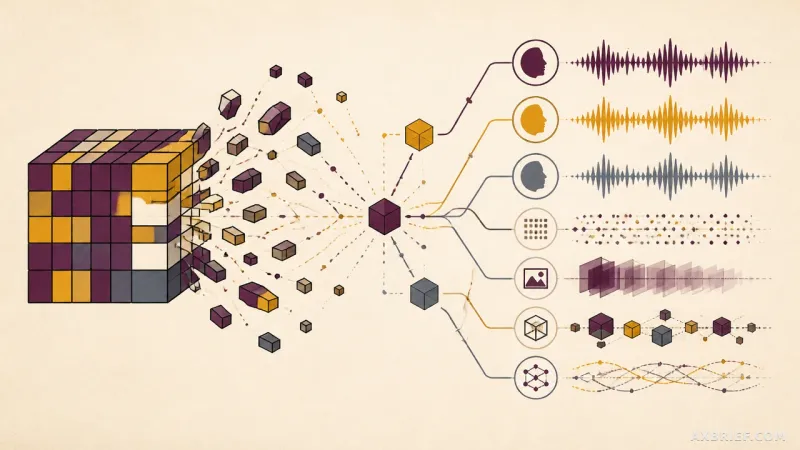
Newsrooms across the United States are currently operating under a cloud of existential anxiety. For years, the digital transition was framed as a challenge of monetization, but the rise of generative AI has shifted the conversation toward survival. Reporters now watch as large language models synthesize their investigative work into a few paragraphs of a chatbot response, diverting traffic away from the original source and stripping the content of its commercial value. This tension has reached a breaking point as the industry realizes that the tools designed to summarize the world are simultaneously eroding the institutions that document it.
The Legal Frontline of Data Acquisition
The legal landscape shifted further this week as The Seattle Times and Newsday officially filed lawsuits against OpenAI and Microsoft. The core of the dispute centers on the unauthorized ingestion of journalistic content to train generative AI models. These publishers argue that their high-quality, fact-checked reporting served as the essential raw material required for AI models to produce sophisticated, human-like responses. Without the vast archives of professional journalism, the models would lack the nuance and accuracy that make them commercially viable products. This is not an isolated incident but part of a broader systemic conflict regarding how AI companies acquire the data that fuels their growth.
This wave of litigation traces back to 2023, when The New York Times initiated a landmark copyright infringement suit against OpenAI and Microsoft. That case established the primary battleground for the industry, questioning the legal boundaries of fair use when an AI reads millions of articles to learn how to write. Since then, a domino effect has occurred, with various publishers joining the fray. They argue that the act of training a model on copyrighted text without a license is a direct violation of intellectual property rights. Microsoft, responding to the latest filings via GeekWire, expressed surprise at the lawsuits but indicated a willingness to engage in discussions to find a resolution, signaling a preference for settlement over a protracted legal battle.
The Paradox of the Corporate Patron
What makes the lawsuit from The Seattle Times particularly striking is the history of the relationship between the plaintiff and the defendants. For a significant period, Microsoft and OpenAI were not adversaries but patrons. The tech giants had provided funding for various journalism projects and supported fellowship programs aimed at nurturing the next generation of reporters. This financial support created a veneer of collaboration, where the AI companies appeared to be investing in the health of the local news ecosystem. However, the current litigation reveals a stark reality: corporate philanthropy is not a substitute for a licensing agreement.
The shift from partnership to litigation highlights a critical realization within the media industry. The funding provided for fellowships, while beneficial in the short term, does not grant a perpetual, free license to the entirety of a news organization's intellectual property. The Seattle Times has effectively decided that the long-term value of its copyright outweighs the short-term benefits of corporate grants. This creates a new risk profile for AI companies, proving that previous financial ties to content creators will not serve as a legal shield against copyright claims in the era of generative AI.
The Ouroboros of Generative Intelligence
Beyond the legal technicalities lies a deeper, more systemic threat that The Seattle Times and Newsday have brought to the forefront. They argue that generative AI is creating a parasitic cycle that could lead to the irreparable destruction of the journalism industry. In this scenario, AI acts as a greedy consumer rather than a creative producer. It consumes the hard-won data produced by human journalists, processes it, and then outputs a derivative version that competes with the original source for attention and revenue. By cannibalizing the financial viability of news organizations, AI is effectively destroying the very source of the high-quality data it needs to survive.
This is the Ouroboros paradox of AI: a snake eating its own tail. If the economic pressure from AI-generated summaries causes newsrooms to collapse, the flow of new, accurate, and original information into the world will dry up. AI models cannot thrive on a diet of their own synthetic outputs; they require the constant infusion of real-world reporting to remain relevant and truthful. By undermining the producers of original content, AI companies are inadvertently eroding the foundation of their own intelligence. The current lawsuits are not just about unpaid fees, but about a fundamental conflict between a business model based on consumption and an industry based on production.
The outcome of these cases will determine whether AI companies must transition from being opportunistic consumers of data to becoming legitimate partners in the journalistic ecosystem.