For decades, the average person has relied on weather forecasts that operate in broad strokes, often delivered in six-hour windows that leave too much to chance. A forecast might predict rain for the afternoon, but for a logistics manager or a farmer, the difference between rain at 1:00 PM and 4:00 PM is the difference between a successful operation and a total loss. The industry has long struggled with the trade-off between the computational cost of high-resolution modeling and the need for real-time updates. This week, the tension between precision and speed shifted as Google introduced a new benchmark for AI-driven meteorology.
The Architecture of Hyper-Local Forecasting
Google DeepMind and Google Research have officially unveiled WeatherNext 3, a deep learning model designed to refine the granularity and frequency of atmospheric predictions. The most striking metric from the release is a 60% improvement in precipitation prediction performance. While previous standards relied on six-hour intervals, WeatherNext 3 enables hourly predictions, allowing for a much tighter synchronization between the forecast and actual atmospheric shifts. This precision is supported by a resolution of 5km, a significant narrowing that allows the model to capture localized weather patterns that larger-scale models typically overlook.
To validate these claims, the team utilized Operational WeatherBench, a specialized evaluation tool developed by the startup Brightband to compare AI forecasting models. The results indicate that WeatherNext 3 outperforms several industry heavyweights. It recorded higher accuracy in core metrics—including temperature, wind speed, and humidity—than deep learning models from Microsoft and Nvidia, as well as those from the European Centre for Medium-Range Weather Forecasts (ECMWF). Notably, it also surpassed the traditional numerical weather prediction methods currently employed by the U.S. National Weather Service and the ECMWF.
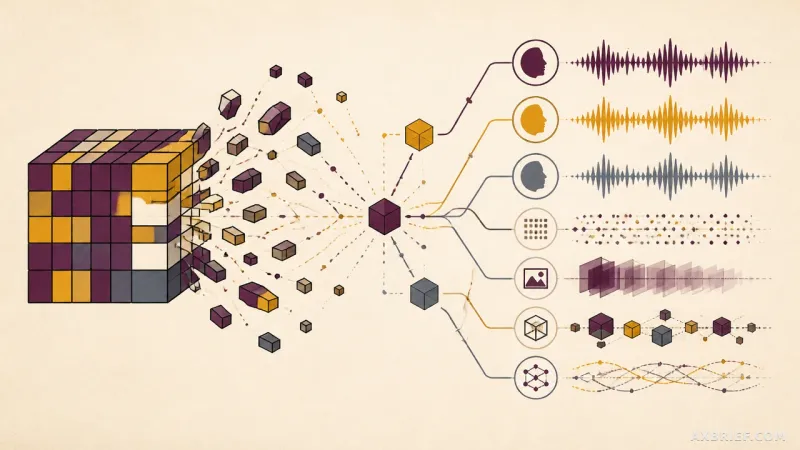
This performance leap is rooted in a fundamental change in data ingestion. WeatherNext 3 adopts a structure that accepts raw satellite data collected on an hourly basis as direct input. By bypassing several layers of traditional preprocessing and directly analyzing the raw stream, the model can execute predictions more frequently and with greater timeliness. To further sharpen its accuracy, the model was trained against data from specific weather observation stations. This focus on ground-truth data ensures that the model is not just predicting theoretical atmospheric states but is calibrated against actual observed values on the earth's surface.
From Grid Averages to Actionable Intelligence
The shift from WeatherNext 2 to WeatherNext 3 is not merely a matter of scaling. The model features a 2.4x increase in parameter count, but the real breakthrough lies in how those parameters are utilized. In previous iterations, AI weather models often output 3D grid average values—essentially providing a mathematical mean of a cubic area of air. While scientifically useful, these averages are often useless for disaster response. DeepMind researchers pivoted the target of the decoder head to prioritize utility over raw averaging. This tuning allows WeatherNext 3 to visualize specific phenomena, such as the precise path of a cyclone, rather than just reporting a general increase in pressure or moisture in a region.
This transition from data output to visual intelligence transforms the model from a research tool into a critical piece of infrastructure. Google is integrating WeatherNext 3 directly into its most widely used consumer and enterprise touchpoints. Users will see these predictions reflected in Google Search, Google Maps, and Gemini, while corporate clients can access the capabilities via the Google Cloud platform. This means the 5km resolution and hourly updates will move from a white paper into the daily decision-making process of billions of users.
Beyond consumer convenience, the implications extend to global economic stability. High-resolution forecasting for wind, rain, and cloud cover is a prerequisite for the stability of renewable energy projects, where a sudden shift in cloud cover can disrupt power grids. Furthermore, the low cost and high efficiency of AI-driven models provide a lifeline to underdeveloped regions that lack the budget for massive supercomputers or dense sensor networks. Bill Gates has previously highlighted AI weather forecasting as a pivotal technology for these areas, specifically noting its potential to protect crop yields in poverty-stricken regions where a single misplaced storm can trigger a food crisis.
By reducing the reliance on expensive hardware and shifting toward raw data processing, WeatherNext 3 establishes a new industry standard. The benchmark for success in AI meteorology is no longer just about general accuracy, but about the trinity of 5km resolution, one-hour update cycles, and the direct integration of raw satellite telemetry.
The era of the six-hour forecast is ending, replaced by a continuous, high-definition stream of atmospheric intelligence.