
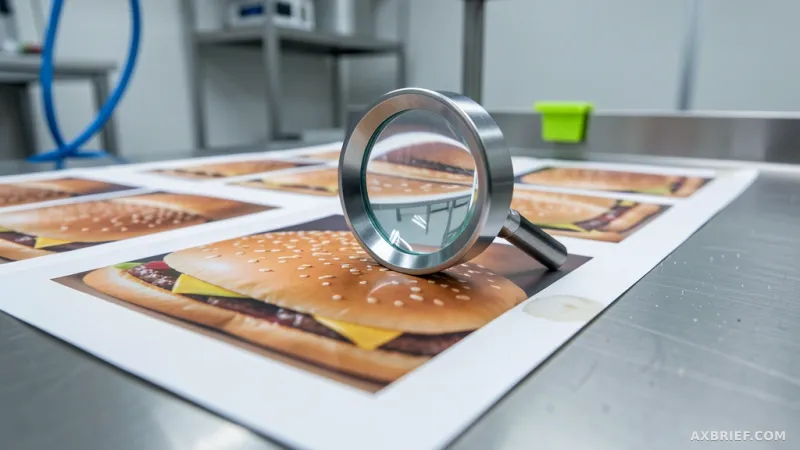
A diner scrolls through a digital menu on a tablet, pausing at a photo of a gourmet burger. The bun is a mathematically perfect sphere, the lettuce is a vibrant, neon green without a single wilted edge, and the cheese melts in a symmetrical cascade that defies gravity. It looks appetizing at a glance, but a second longer and something feels wrong. The image is too clean, too smooth, and devoid of the organic chaos that defines real food. This visual sterility is becoming the default setting for generative AI, turning the culinary world into a gallery of plastic-looking assets.
The Architecture of Artificial Perfection
This trend toward hyper-symmetry is not a coincidence or a result of poor prompting, but a systemic reflection of the datasets used to train modern image generators. Alex Lisle, CTO of Reality Defender, notes that this phenomenon stems from the specific corpora these models rely on. Much of the training data for food imagery is rooted in commercial photography from around 2015, an era of highly stylized, airbrushed menu photography designed to look idealized rather than authentic. When a model learns that a burger should look like a commercial asset rather than a meal on a plate, it optimizes for that aesthetic bias.
This optimization creates a psychological friction for the viewer. Researchers at the University of Duisburg-Essen have identified that AI-generated food often triggers the uncanny valley effect. In their findings, images that are nearly indistinguishable from reality but possess minute, unnatural discrepancies evoke stronger feelings of disgust and anxiety than images that are obviously fake. The brain recognizes the image as food, but the lack of organic imperfection signals a biological warning, leading to a visceral rejection of the visual.
The degradation of quality is further accelerated during the iterative editing process. An experiment conducted by X user Labtec demonstrated this collapse in real-time. By using ChatGPT to generate a menu and then performing 100 consecutive minor edits—changing a price here or a dish name there—the visual quality of the food plummeted. With each iteration, the textures of the food became increasingly rounded and smooth. By the end of the 100-step process, the organic textures of the ingredients had vanished, replaced by a homogenized, plastic-like sheen that bore little resemblance to actual food.
From Convergence to Model Collapse
To understand why images smooth out over time, one must look at how diffusion models and large language models (LLMs) process information. These systems are designed to identify patterns within massive datasets and predict the output that most closely aligns with the user's request. In the pursuit of a pleasing result, the models tend to optimize for non-offensive, high-probability patterns. This leads to homogenization, where the sharp edges, grit, and unique irregularities of reality are sanded down in favor of a statistical average.
This process manifests in two distinct stages: convergence and model collapse. Convergence occurs when a model becomes overly dependent on a dominant style within its training set. For instance, if a model is asked to generate a fast-food burger, it may lean heavily on the standardized visual language of global giants like McDonald's or Burger King. As these standardized images are generated and subsequently uploaded to the web, they are scraped back into future training sets. This creates a feedback loop that reinforces the sterile style, narrowing the model's creative range until all burgers look identical.
Model collapse is the terminal stage of this cycle. It is a form of digital inbreeding that happens when AI-generated content becomes a primary source of training data for the next generation of models. When a model trains on the output of its predecessor rather than on original, human-captured data, it begins to forget the actual distribution of the real world. The nuances of texture, the randomness of organic shapes, and the complexity of lighting are lost. The current trend of overly smooth, symmetrical food images is a primary symptom of this convergence, signaling that the models are drifting away from reality and toward a narrow, synthetic equilibrium.
For practitioners building image generation pipelines, this highlights a critical vulnerability in the iterative workflow. Every time a user performs inpainting or partial modifications, the entropy of the image decreases. The model replaces complex pixels with more probable, smoother versions, effectively eroding the texture of the asset. Relying on the most pleasing result suggested by the AI often means sacrificing brand identity for a generic, homogenized look that the rest of the market is also adopting.
Maintaining visual integrity requires a shift in strategy. Instead of endless iterative editing, which accelerates the slide toward model collapse, developers and designers should prioritize prompt redesign to generate fresh assets. Implementing strict filtering processes to prevent AI-generated data from re-entering the training loop is no longer optional; it is a necessity for preserving the diversity of digital imagery.



