The modern AI race has shifted from a battle of algorithmic elegance to a brutal war of megawatts and silicon. For the average developer, the struggle is often a matter of waiting weeks for a high-end GPU shipment or paying a steep premium for cloud credits. But at the enterprise level, the competition has scaled into a trillion-dollar infrastructure conflict where the physical ownership of compute is the ultimate form of leverage. In this environment, the ability to secure massive, uninterrupted clusters of hardware is no longer just a technical requirement; it is the primary determinant of who survives the next leap in model capability.
The Billion-Dollar Compute Landlord
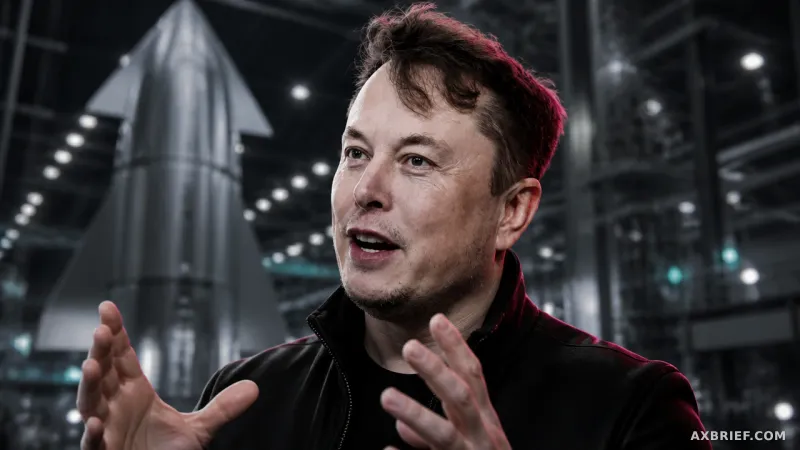
Elon Musk has recently positioned Anthropic as a primary leader in the current AI landscape, specifically praising the technical achievements of the Mythos and Fable models. With Mythos 2 on the horizon, the industry recognizes that Anthropic possesses a distinct technical edge. However, technical leadership is fragile if it lacks the raw compute to sustain it. This desperation for resources has led to a series of staggering financial arrangements where SpaceX, through its integrated AI unit xAI, has become the landlord for the world's most advanced AI labs.
Google has already entered this ecosystem, securing a contract to lease SpaceX infrastructure to ensure its own model stability and growth. Under the terms of this agreement, Google will pay $920 million per month through June 2029. This monthly expenditure highlights the astronomical cost of maintaining state-of-the-art frontier models, signaling that even a titan like Google finds it more prudent to diversify its risk by leasing external resources rather than relying solely on its own internal data centers.
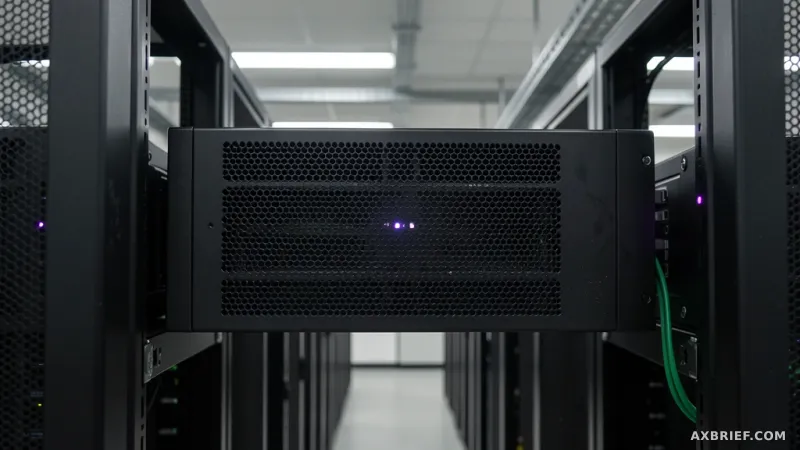
Anthropic has taken an even more aggressive approach to buy time and speed. In May, the company signed a contract to lease the entire output of the Colossus 1 data center located near Memphis, Tennessee. This is not a partial lease or a shared cluster; Anthropic has secured the full 300MW of computing power produced by the facility. By monopolizing the total power output of a single massive site, Anthropic eliminates the risk of external interference and ensures that its training runs for the next generation of models proceed without interruption.
The financial scale of this deal is unprecedented. Anthropic is paying $1.25 billion per month through May 2029. Over the life of the contract, the total revenue flowing to the SpaceX xAI unit is estimated at approximately $40 billion. This arrangement transforms the relationship between model developers and infrastructure providers. While Anthropic gains the immediate speed necessary to iterate on its models, SpaceX secures a guaranteed, long-term cash flow that dwarfs traditional SaaS revenue models. This synergy was further solidified in February when xAI officially merged with SpaceX, combining aerospace-grade capital and logistics with AI computing infrastructure.
The Hidden Cost of Hardware Visibility
On the surface, the relationship appears to be a simple transaction: Anthropic pays for the electricity and the silicon, and SpaceX provides the uptime. However, the true value of this arrangement lies in the operational visibility granted to the host. When a company hosts the entire computing infrastructure of a competitor, it gains a vantage point that no amount of public API probing can replicate. This creates a strategic tension that contradicts the image of a benevolent infrastructure provider.
Elon Musk has openly acknowledged the reality of AI distilling, a process where a developer creates numerous fake accounts to query a competitor's model and then uses those responses to train a smaller, more efficient student model. While distilling is typically done at the application layer, the infrastructure provider sits at the physical server layer. By hosting Colossus 1, SpaceX is positioned to observe call patterns, response flows, and the general operational cadence of Anthropic's most sensitive workloads. The hardware layer provides a window into the internal logic and efficiency of a competitor's model that is virtually impossible to close.
Musk often points to his history of technical openness to deflect concerns about this power imbalance. He frequently cites Tesla's 2014 decision to stop suing those who used its patents in good faith, as well as the opening of the Supercharger network to other manufacturers. These moves were designed to standardize the industry and expand the overall market. Yet, the current infrastructure deal with Anthropic exists in a different paradigm. While opening a charging port is a gesture of ecosystem growth, controlling the compute layer of a frontier AI model is a matter of strategic intelligence.
The tension here is between the need for speed and the need for secrecy. Anthropic is betting $1.25 billion a month that the benefit of having 300MW of dedicated power outweighs the risk of being observed by its landlord. The risk of AI distilling at the infrastructure level remains a critical blind spot in these massive hardware leases. If the provider can infer the behavior of the model by analyzing the patterns of the hardware it runs on, the traditional boundaries of intellectual property in AI begin to dissolve.
Ultimately, the competitive advantage in the AI era is no longer measured by the number of GPUs a company owns, but by the strength of the safeguards they can negotiate into their infrastructure contracts.