
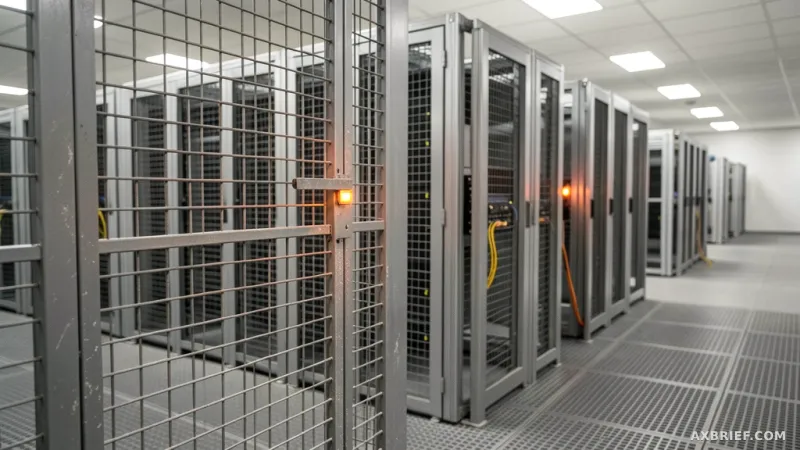
As autonomous AI agents gain the authority to execute tasks across data centers, the traditional reliance on model-level guardrails is proving insufficient. When an agent is granted the power to interact with infrastructure, the security perimeter must expand from simple input-output filtering to a comprehensive, multi-layered defense strategy that spans the entire stack. Relying on a single security model to cover everything from hardware integrity to application-level logic creates dangerous blind spots that static network rules simply cannot address.
Integrating Governance at the Control Plane
Nutanix addresses this complexity through its Agent Gateway, a centralized control point designed to manage the governance and resource consumption of autonomous agents. By acting as an intermediary between agents, large language models, and data sources, the gateway provides a unified point of enforcement. This architecture is further bolstered by integration with the Cisco Secure AI Factory, which works to mitigate risks such as unauthorized privilege escalation, data exfiltration, and runaway token consumption.
This approach shifts the security burden away from individual agents and toward a centralized control plane. By managing agent permissions, resource limits, and runtime visibility from a single interface, IT administrators can enforce consistent policies without the need to manually reconfigure security rules for every new agent deployment. This centralization is critical for identifying and halting abnormal behaviors or infinite runtime loops before they impact the broader enterprise environment.
Implementing Zero Trust for Dynamic Workloads
Because autonomous agents operate with a level of fluidity that defies static network configurations, they require a Zero Trust architecture that treats every interaction as potentially untrusted. Using micro-segmentation technologies like Nutanix Flow, organizations can assign unique network identities to individual agents. This ensures that an agent can only communicate with authorized data sources or peer systems, effectively neutralizing the risk of lateral movement—a common tactic where an attacker uses a compromised agent to pivot through the internal network.
The fundamental architectural error many enterprises make is attempting to force a one-size-fits-all security policy across the entire AI stack. Attempting to solve hardware-level trust issues with software-based application filters, or trying to manage highly dynamic agent traffic with static firewall rules, inevitably leads to system fragility. A robust defense requires that each layer—network, compute, and control—handles its own specific category of risk, rather than duplicating the same ineffective control method across every tier.
Hardware-Level Integrity and the Root of Trust
At the foundation of this multi-layered defense is the infrastructure layer, which must guarantee the integrity of the environment through a hardware-based Root of Trust. By leveraging platform attestation, confidential computing, and secure boot technologies, organizations can ensure that the underlying hardware is not compromised. This layer validates the legitimacy of agent requests and physically isolates AI workloads, providing a secure sandbox that protects against supply chain attacks and unauthorized external access. By proving the integrity of the environment at the hardware level, the system ensures that the agents are running on a foundation that is inherently trustworthy.
To effectively secure autonomous agents, organizations must move beyond simple output filtering and adopt a three-tiered defense architecture that integrates infrastructure-level security with runtime control planes.



