The current AI creative workflow is a fragmented assembly line. A developer or creator typically generates a high-fidelity keyframe in one model, animates that frame in a second video-generation tool, and then layers in synthesized sound using a third audio engine. This modular approach is the industry standard, but it creates a persistent translation loss where the audio doesn't quite hit the beat of the motion, and the motion doesn't perfectly align with the original visual intent. The industry has been waiting for a model that doesn't just stitch these modalities together but understands them as a single, cohesive stream of information.
The Architecture of Visual Intelligence
Black Forest Labs is attempting to collapse this fragmented pipeline with the introduction of FLUX 3. This new frontier model moves beyond static imagery to generate synchronized video and audio clips up to 20 seconds long from a single prompt. Unlike previous iterations, the product lineup is strategically divided by function and accessibility. Currently, the company is operating an approval-based early access program for `FLUX 3 Video`, which allows for optional audio generation, and `FLUX 3 Action`, a specialized variant designed for robot motion prediction. The broader rollout continues with `FLUX 3 Image` expected in the coming weeks, while the open-weights version, `FLUX 3 Dev`, is targeted for release by the end of the year.
Technically, the model is built upon the Self-Flow method previously pioneered by Black Forest Labs. By significantly scaling computational resources and training data, BFL has moved away from the ensemble approach. Instead of building separate models for images, video, and audio and wrapping them in a shared interface, FLUX 3 is jointly trained. This means every modality—visual, auditory, and kinetic—is processed within the same architectural framework. This approach allows the model to develop what BFL defines as Visual Intelligence: a system that learns structural composition from images, spatial dynamics and movement from video, and causal relationships from action data.
To validate this approach, BFL released preliminary benchmark results based on an early FLUX 3 candidate model. In a preference test for 10-second 720p text-to-video clips, FLUX 3 demonstrated a significant lead over several industry peers. It achieved a 93% preference rate over Luma Ray 3.2, 77% over Runway Gen-4.5, and 69% over Grok Imagine Video. When compared to Seedance 2.0 and Google's Gemini Omni Flash, the preference sat at 52%, suggesting that the output quality of FLUX 3 is virtually indistinguishable from the top-tier performance of Gemini Omni Flash.
The Tension Between Capability and Accessibility
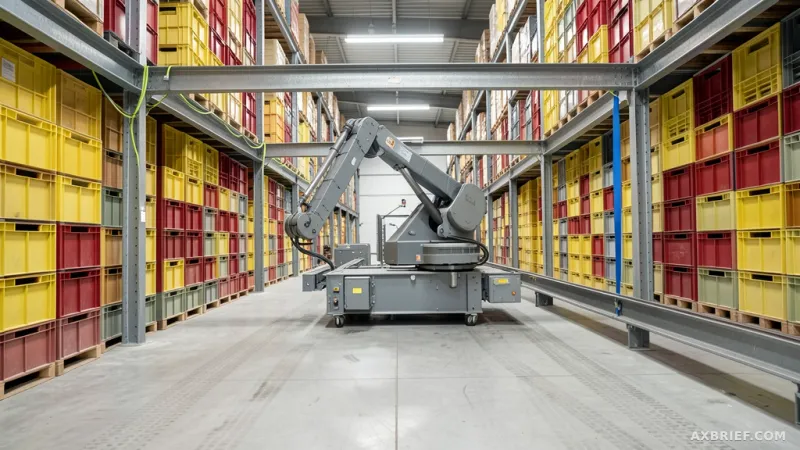
While the benchmark numbers are impressive, the real shift lies in the transition from generation to action. By integrating `FLUX 3 Action`, BFL is treating video generation not as a cinematic exercise, but as a predictive one. In this framework, predicting the next frame of a video is mathematically analogous to predicting the next physical movement of a robotic arm. This unification suggests that the same brain capable of rendering a hyper-realistic 20-second clip can also be used to control a robot's visual perception and motor actions in a physical environment.
However, a practical gap exists between this theoretical leap and market availability. While Gemini Omni Flash is already available via API with a clear pricing structure—costing approximately $0.10 per 10 seconds of 720p video—FLUX 3 remains behind a closed door. There is currently no public API access, no immediate weight downloads, and no published Service Level Agreements (SLA) or detailed pricing for enterprise users. This creates a tension for developers who are used to the immediate open-source nature of previous FLUX releases. The community must now wait for the early access queue or the year-end release of `FLUX 3 Dev` to implement these capabilities locally.
For enterprise partners, the value proposition is the reduction of operational complexity. Companies like Canva, Burda, Magnific, Krea, and Picsart are already testing the model to see if they can replace multi-model pipelines with a single point of entry. A workflow that previously required four different API calls to move from a storyboard to a final rendered video with sound could potentially be reduced to one. This consolidation doesn't just lower latency; it eliminates the drift that occurs when different models interpret the same prompt in slightly different ways.
The convergence of digital pixels and physical robotic actions suggests that the next era of AI will treat video not as a medium for entertainment, but as a simulation of reality itself.