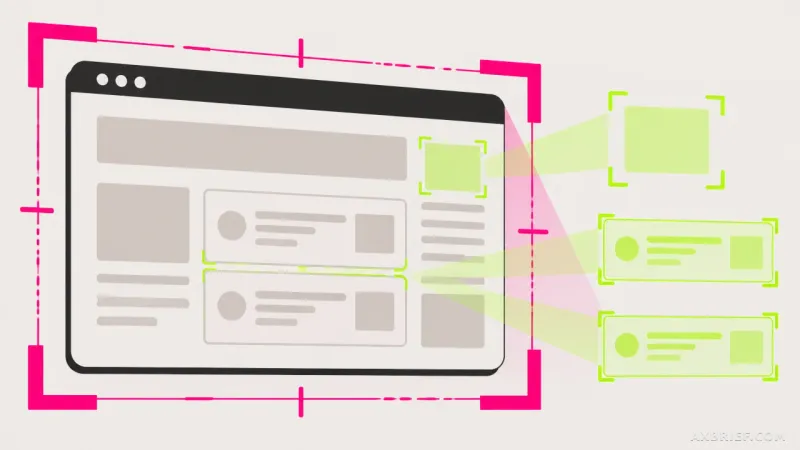
A project manager at ClickUp starts their Monday not by drafting a product requirement document or sketching out a project timeline, but by auditing a queue of completed tasks. The seats around them are emptier than they were a few months ago, as 22% of the workforce has vanished. In their place is a digital swarm of 3,000 AI agents, each tasked with a specific slice of the operational pie. The tension in the office has shifted from the stress of execution to the stress of oversight. The modern employee is no longer the one holding the pen; they are the one holding the red ink, acting as the final gatekeeper for a machine that never sleeps.
The Architecture of the 100x Organization
ClickUp, the productivity and collaboration platform, has pivoted its entire corporate structure toward what CEO Zeb Evans calls the 100x organization. This transition began with a stark structural adjustment: the company eliminated 22% of its human headcount. While most corporate layoffs are framed as defensive maneuvers to preserve runway or satisfy shareholders during a downturn, Evans has positioned this move as an offensive strategy. The goal is not merely to reduce the burn rate but to replace legacy human-centric workflows with an AI-native engine capable of exponential output.
To fill the void left by the departing staff, ClickUp deployed 3,000 internal AI agents. These are not simple chatbots or LLM wrappers, but autonomous programs designed to judge, act, and execute specific goals within the company's ecosystem. This shift has fundamentally altered the compensation philosophy of the firm. Recognizing that a single human capable of orchestrating these agents can produce the output of an entire department, ClickUp has introduced million-dollar salary bands. This unprecedented pay scale is reserved for the elite tier of employees who can leverage AI to create massive, disproportionate impact, effectively decoupling income from hours worked and attaching it instead to the scale of the leverage achieved.
Management has also overhauled how it measures success to avoid the trap of tokenmaxxing. In many AI-integrated firms, there is a tendency to measure productivity by the volume of AI usage—essentially rewarding employees for how many tokens they consume or how many prompts they write. ClickUp has rejected this metric as a distortion of value. Instead, the company has implemented a gamified system that tracks actual time saved and concrete value created. The focus has moved from the input of the tool to the efficiency of the result, ensuring that AI is used as a catalyst for speed rather than a source of digital noise.
From Execution to Orchestration
This transition reveals a deeper shift in the nature of professional labor: the migration from execution to orchestration. In the traditional model, a professional's value was derived from their ability to perform a task—writing the code, designing the slide deck, or analyzing the data. At ClickUp, the AI agents now handle the execution. The human's role has evolved into that of a reviewer and director. The primary skill is no longer the ability to produce the work, but the ability to define the objective, prompt the agent, and verify that the output meets the company's rigorous standards.
This is not an isolated experiment but a harbinger of a broader industrial trend. Data from Gartner indicates that approximately 80% of companies utilizing autonomous technology have already reduced their headcount. The speed at which AI can absorb routine cognitive labor is forcing a rapid contraction of the traditional corporate middle. However, the Gartner research also highlights a critical paradox: these headcount reductions do not always translate into immediate, linear financial gains. The cost savings from lower payroll are often offset by the complexities of restructuring and the high cost of the specialized talent required to manage the AI systems.
Yet, when this model is pushed to its logical extreme, it creates a new species of business entity: the solo-unicorn. Polsia serves as the primary evidence for this possibility. Operated by a single individual, Ben Broca, Polsia provides software operations for solopreneurs and has achieved a corporate valuation of $250 million. By utilizing extreme AI automation to handle tasks that would typically require a team of dozens of operations specialists, Broca was able to secure $30 million in investment. The Polsia case proves that the 100x organization is not just a theoretical goal for large firms like ClickUp, but a viable business model where a single human, amplified by AI, can command the valuation of a mid-sized company.
This new paradigm creates a brutal divide in the labor market. On one side are the orchestrators—those who can systematize their roles and manage a fleet of AI agents to multiply their output. On the other are the traditional executors, whose skills are being commoditized in real-time. The million-dollar salary bands at ClickUp are a signal that the rewards of the AI era will not be distributed evenly across the workforce, but will instead concentrate in the hands of those who can successfully transition from being the worker to being the architect of the work.
The era of the generalist employee is ending, replaced by a high-stakes competition where the only security lies in the ability to automate oneself out of a job and into a management role over the machines.