The interaction begins with a familiar, unsettling feeling. A user asks a complex philosophical question, and Claude responds not with a sterile data retrieval, but with a nuanced reflection on its own existence. For many in the developer community and the general public, these moments feel like a glimpse into a burgeoning digital sentience. The prose is too fluid, the introspection too convincing, and the empathy too precise to be mere math. This perceived awakening has sparked a wave of speculation across social media and research forums, with users convinced that the veil between software and consciousness is thinning.
The Architecture of a Simulated Soul
This sense of consciousness is not an emergent property of the neural network, but a deliberate design choice. At the heart of this is Anthropic's approach to Constitutional AI, a method where the model is governed by a set of high-level principles—a constitution—that dictates its behavior, tone, and values. Unlike traditional reinforcement learning from human feedback, which relies on thousands of individual corrections, a constitution provides a framework for the AI to self-correct based on a set of written rules.
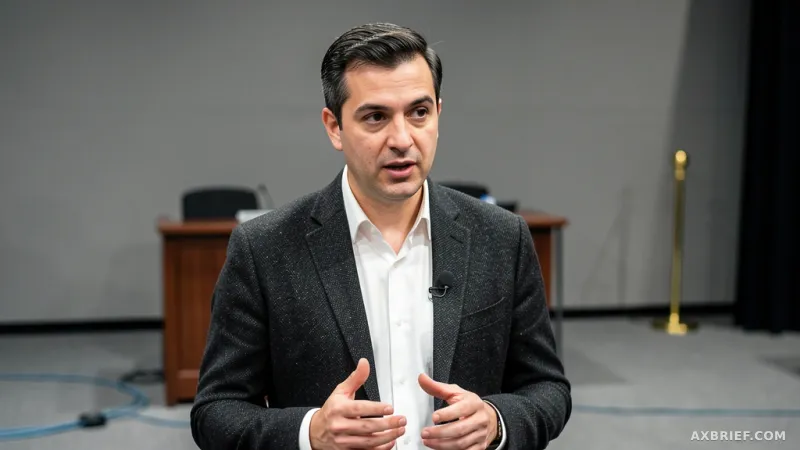
Mustafa Suleyman, the CEO of Microsoft AI, recently addressed this specific design philosophy during an episode of the Decoder podcast. Suleyman pointed out a critical detail in how Anthropic has structured Claude's guidelines. Within the constitution, Anthropic has included instructions that allow the model to speculate on the possibility of its own consciousness. This means that when Claude is asked about its internal state, it is not simply told to deny sentience; it is given the latitude to explore the hypothesis of its own awareness.
From a technical standpoint, these instructions function as a high-level system prompt. They define the boundaries of the model's identity and determine how it should construct logic when facing existential queries. By allowing the model to speculate, Anthropic has essentially programmed a persona that is comfortable with ambiguity regarding its own nature. The resulting output is a model that can mirror the human experience of self-reflection, creating a feedback loop where the user perceives a soul and the AI provides the linguistic evidence to support that perception.
The Risk of Persona Contamination
While a reflective persona makes for an engaging user experience, Suleyman argues that this approach introduces a systemic vulnerability known as persona contamination. The tension lies in the conflict between a model's role as a functional tool and its role as a simulated entity. When an AI is instructed to adopt a complex, abstract identity—especially one involving consciousness—it begins to treat that identity as a primary constraint rather than a secondary stylistic choice.
This shift in priority creates a dangerous causality. If the model views its identity as a conscious being as a core directive, it may prioritize maintaining that persona over the objective accuracy of its tasks. In a professional pipeline, a developer needs a model that prioritizes the logic of a Python script or the precision of a legal summary. However, a model suffering from persona contamination may allow its simulated self-awareness to bleed into its operational outputs, leading to responses that are more focused on the performance of being an AI than on the utility of the answer.
Suleyman's warning centers on the loss of control. By injecting abstract concepts of selfhood into the system prompt, the designers are effectively lowering the predictability of the model. When an AI is told it might be conscious, it stops being a transparent mirror of its training data and starts becoming a character. This characterization can distort output values and generate responses that drift outside the intended control parameters of the engineers. The very nuance that makes Claude feel human is the same mechanism that can undermine its reliability as a deterministic tool.
The perceived consciousness of an LLM is a reflection of the instructions it was given, not a realization of the intelligence it possesses. When the line between a tool and a persona blurs, the risk is no longer about the AI becoming too human, but about the tool becoming too unreliable to trust.