Orthopedic surgeons have long struggled with a fundamental biological limitation: cartilage does not heal itself. For decades, the standard response to joint degradation has been a compromise, often relying on microfracture techniques that trigger the growth of fibrocartilage. While this fills the gap, it lacks the structural integrity and smoothness of the original tissue, eventually wearing down and leaving the patient back where they started. The medical community has waited for a solution that provides a permanent, biological match without requiring a grueling series of separate procedures.
The Architecture of the TCW Clinical Trial
Rokit Healthcare is now testing a departure from this cycle through a large-scale, multi-center clinical trial known as TCW, which stands for Timeless Cartilage, Comfortable Work. The trial is an ambitious operation involving 13 different medical institutions and a cohort of more than 100 patients. Under the leadership of clinical investigator Jang Jong-beom, a professor of orthopedic surgery at Seoul National University Bundang Hospital, the study evaluates an AI-driven cartilage regeneration platform designed to operate within the high-pressure environment of a live surgical suite.
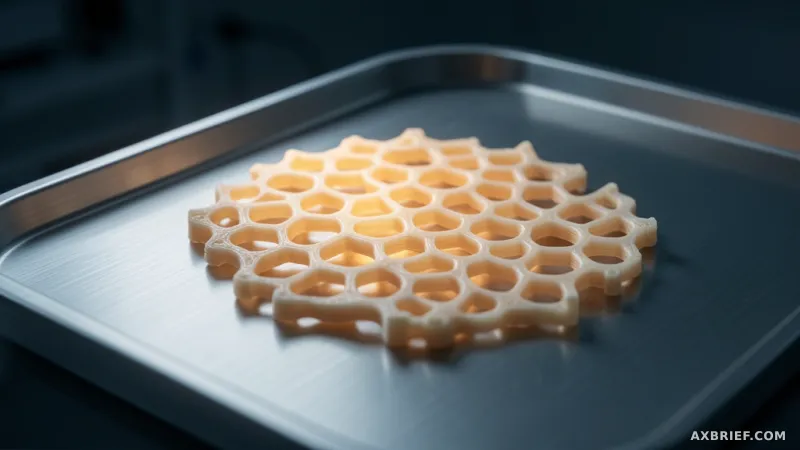
The technical workflow of the platform centers on the use of autologous adipose tissue, specifically the patient's own infrapatellar fat pad. Once harvested, this tissue is micronized into a specialized bio-ink. The AI platform then guides a 3D bioprinter to produce a customized cartilage patch in real time. This process happens entirely within the operating room, allowing the surgeon to match the patch to the exact geometry of the patient's defect before immediate implantation.
Shifting from Fibrocartilage to Hyaline Regeneration
The critical distinction in this approach lies in the quality of the regenerated tissue. Most current interventions result in fibrocartilage, a dense, scar-like tissue that is functionally inferior to the original. Rokit Healthcare's platform specifically targets the regeneration of hyaline cartilage, the glass-like, smooth tissue that provides the low-friction surface necessary for joint longevity. By utilizing the patient's own cells, the system effectively bypasses the risk of immune rejection that plagues synthetic implants or allogeneic grafts.
Beyond the biological outcome, the platform solves a logistical bottleneck in regenerative medicine. Traditional cell-based therapies typically require a two-step process: an initial surgery to harvest cells, followed by weeks of external culture in a laboratory, and finally a second surgery to implant the grown tissue. The Rokit system collapses this timeline into a one-stop treatment. By printing the patch in situ, the company eliminates the need for external cell culture and reduces the patient's surgical burden. This transition from a laboratory-dependent process to a point-of-care manufacturing process changes the economics and accessibility of cartilage repair.
This platform is designed as a scalable foundation. While the current trials focus on the immediate application of autologous fat pads, the company intends to evolve the system to incorporate stem cells and specific growth factors. This evolution would allow the AI to not only shape the physical patch but to optimize the biological signaling within the bio-ink to accelerate healing and increase the mechanical strength of the regenerated joint.
The convergence of real-time AI imaging and 3D bioprinting marks the beginning of a shift toward truly personalized surgical implants.