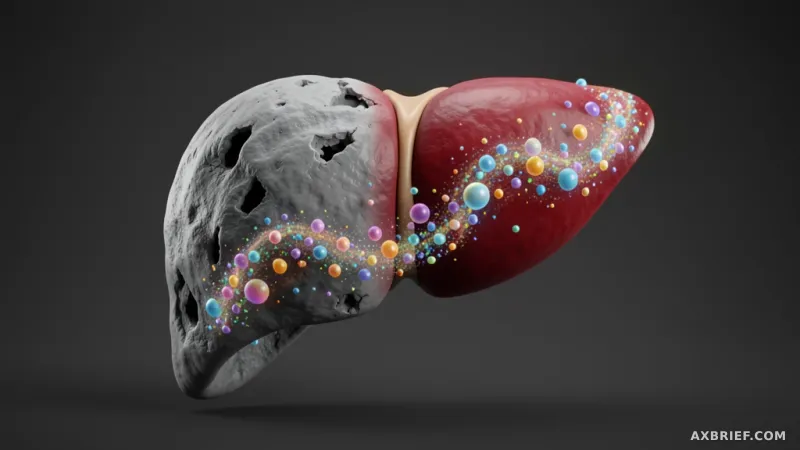
A researcher peering through a microscope at the liver tissue of an aged mouse sees a familiar, grim landscape. The slides reveal clear markers of chronic inflammation and advanced fibrosis, the structural scarring that signals a failing organ. As biological aging progresses, the intricate ecosystem of the gut microbiome collapses, leading to a sharp decline in the production of beneficial metabolites. This internal decay transforms the liver into a state of persistent inflammation, creating a fertile environment where malignant cells can take root and proliferate without resistance.
The Mechanics of Microbiome Restoration
To combat this age-related decline, a research team implemented a precise experimental protocol involving Fecal Microbiota Transplantation (FMT), a process that transfers microbial communities from a healthy donor to a recipient to reset the intestinal environment. The team collected fecal samples from eight young mice and stored them, later transplanting these same samples back into the mice once they reached old age. To establish a rigorous baseline, a control group of eight aged mice received a sterile fecal slurry, ensuring that any observed effects were due to the living microbes rather than the physical presence of the material.
The results were stark. By the end of the study, the group that received the young-donor FMT showed a liver cancer incidence rate of 0%. In contrast, the control group saw cancer develop in 2 out of the 8 mice. To understand the molecular driver of this protection, the researchers analyzed the expression of MDM2, a gene that regulates proteins critical to the onset of liver cancer. In both the naturally young mice and the aged mice treated with FMT, MDM2 levels remained low. However, the untreated aged mice exhibited significantly higher MDM2 expression. This genetic suppression coincided with a measurable drop in inflammation markers and a substantial reduction in overall liver damage within the FMT group.
From Symptom Management to Ecosystem Engineering
This shift in results represents a fundamental departure from traditional anti-aging strategies. For decades, the prevailing medical approach to aging has focused on fragmented prescriptions, such as inhibiting a specific protein or lowering a particular inflammatory marker. Such methods treat the symptoms of decay rather than the cause. This study instead treats the gut microbiome as a holistic ecosystem, attempting to revert the entire biological environment to a youthful state to restore organ function. While the sterile slurry given to the control group provided basic material supplementation, it failed to alter the microbial landscape.
The FMT group, however, demonstrated a systemic reversal of aging that extended beyond the liver. The researchers observed a simultaneous suppression of molecular aging markers, including the degradation of mitochondrial function, the wearing down of telomeres at the ends of chromosomes, and the accumulation of DNA damage. This suggests that the treatment is not merely masking symptoms but is effectively pushing back the biological clock. Interestingly, this breakthrough occurred serendipitously; the team was originally investigating improvements in cardiac function when they discovered a far more dramatic effect in the liver. This finding validates the Gut-Liver Axis, the bidirectional communication pathway where the gut and liver exchange signals that influence systemic health.
This evidence provides a scientific foundation for a broader shift in the biotechnology investment landscape. The industry is moving away from single-target anticancer drugs, which often face resistance or limited efficacy, toward microbiome-based systemic regenerative medicine. By controlling the Gut-Liver Axis, clinicians may eventually be able to manage systemic aging and prevent organ failure before it begins.
Microbiome control technology has evolved from a niche digestive treatment into the primary key for the massive market of systemic aging regulation.